


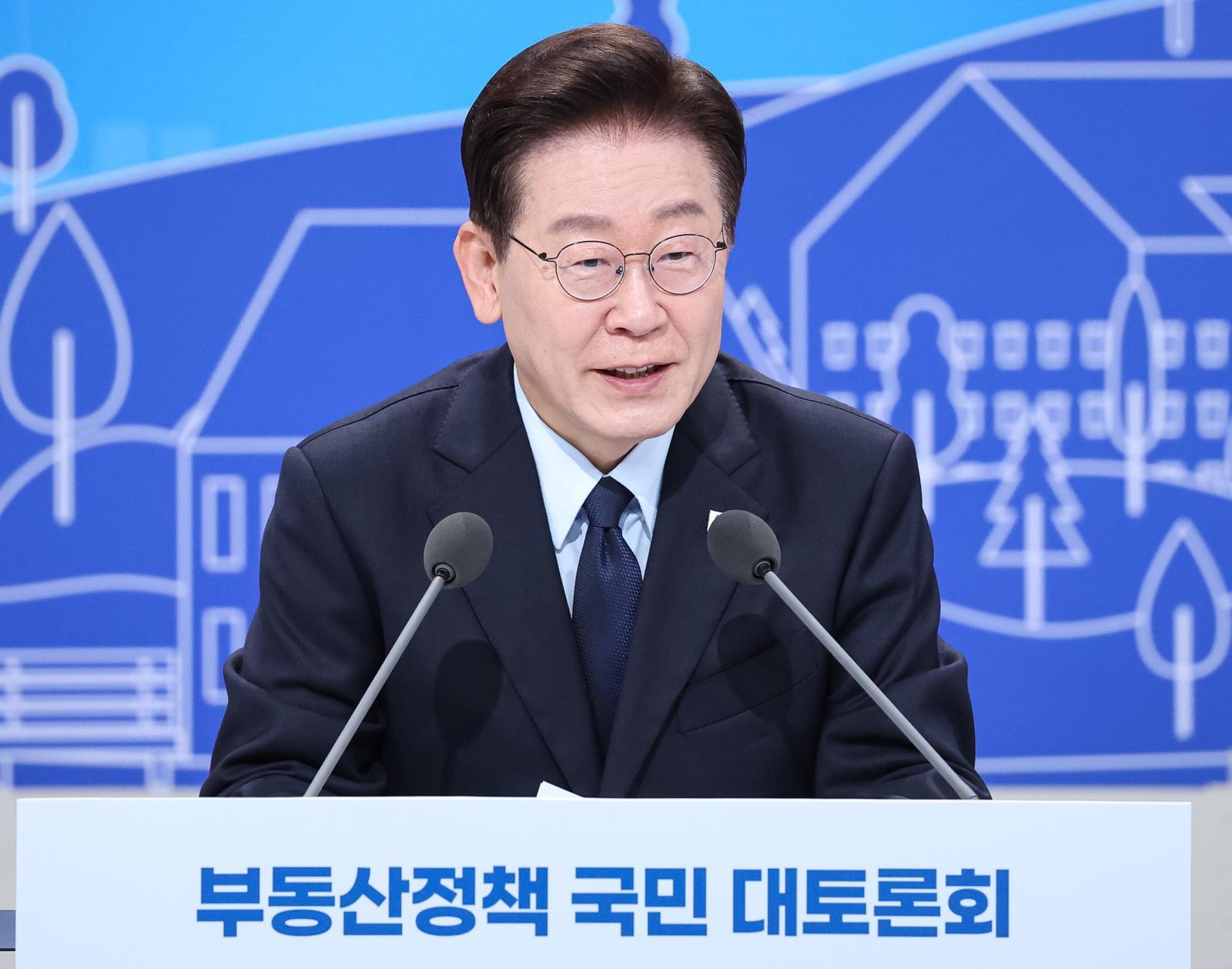
President Lee Vows to Take Responsibility for Real Estate Policies Despite Expected Conflict
Translated from Korean, summarized and contextualized by DistantNews.
At a glance
News
Sources not specified
New plan
- President Lee Jae-myung stated he will take responsibility for real estate policies, even if they face conflict and resistance.
- He acknowledged challenges in increasing housing supply, noting difficulties in determining 'where' and 'how' to build.
- The president's remarks suggest an acceptance of potential public backlash, possibly related to tax increases like the property holding tax.
President Lee Jae-myung declared his commitment to real estate policy responsibilities, signaling a willingness to confront public opposition and conflict. Speaking at a national forum on real estate policy, Lee asserted that his role, as elected, involves pursuing rational policies even when they invite resistance.
Aren't people like me elected to do things that are rational, even if they involve conflict and resistance?
"Aren't people like me elected to do things that are rational, even if they involve conflict and resistance?" Lee asked during the event, hosted by KBS. He elaborated on the nature of power vested in elected officials, stating that it includes the ability to reach conclusions that individuals might not initially desire, a process that inevitably generates dissatisfaction.
Lee's comments are being interpreted as a preemptive acknowledgment of potential public backlash, particularly concerning policies like property holding tax increases. He emphasized that exercising authority comes with accountability, and accepting a certain level of conflict and resistance is part of that responsibility. The president also touched upon the complexities of the housing supply issue, noting that while increasing supply is key, identifying suitable locations and methods presents significant challenges.
The problem is 'where' and 'how' to build, and it's not easy.
"The problem is 'where' and 'how' to build, and it's not easy," Lee stated, highlighting the inherent limitations in expanding housing supply. His remarks suggest a recognition of the difficult trade-offs involved in addressing the nation's real estate challenges, balancing the need for policy action with the potential for public discontent.
Exercising authority comes with accountability, and accepting a certain level of conflict and resistance is part of that responsibility.
DistantNews Editorial
Originally published by Dong-A Ilbo in Korean. Translated, summarized, and contextualized by our editorial team with added local perspective. Read our editorial standards.
More Stories


From Our Blog

What Gets Lost (and Found) When News Is Translated

The Critical Role of Diaspora Media in Global News

What Travellers Should Know About Countries with Restricted Press

A Digital Nomad's Guide to Following Local News

How the Same Story Looks Different in Different Countries
