


🇵🇱
Poland
Professor Tadeusz Pomianek: The Recipe for Self-Destruction - How Our Food Is Destroying Us and the Planet
Translated from Polish, summarized and contextualized by DistantNews.
At a glance
News
Named sources
Context piece
- Industrial agriculture, adopted half a century ago to feed a growing population, has led to a threefold increase in food production but at a significant environmental cost.
- Global corporations now control food production, externalizing environmental costs like soil degradation, water depletion, and greenhouse gas emissions, which are linked to livestock farming and monoculture.
- The current food production system, characterized by climate change, monocultures, and industrial farms, creates a "Bermuda Triangle" of environmental threats, with livestock farming being particularly water-intensive and generating substantial waste.
The global shift towards industrial agriculture, initiated 50 years ago to meet the demands of a growing population, has achieved remarkable success in boosting food production, nearly tripling it while expanding cultivated land by only a tenth. However, this quantitative triumph has come at a steep environmental price, as the system now works against humanity and the planet.
Global corporations have come to dominate food production, controlling over four-fifths of the world's agricultural input trade. These entities operate with a dangerous disregard for environmental consequences, a practice that would be unacceptable in other industries. A report by the FAO, "The State of Food and Agriculture 2023," highlights how these corporations omit the costs borne by the rest of the world from their economic calculations.
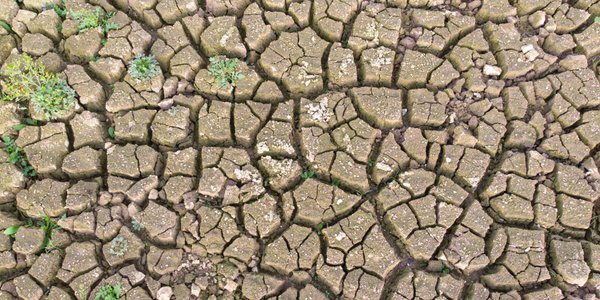
Monoculture farming, heavily reliant on artificial fertilizers and pesticides, systematically destroys soil's biological life. This degradation prevents soil from absorbing water effectively. Consequently, after prolonged droughts, heavy rainfall leads to surface runoff rather than absorption, increasing flood frequency while diminishing soil moisture. Degraded soils also transition from carbon sinks to carbon emitters, releasing not only CO₂ but also nitrous oxide, a greenhouse gas nearly 300 times more potent than CO₂.
Globally, one-third of arable land is already degraded, with over half in the European Union suffering the same fate. Industrial farms contribute significantly to this crisis, consuming 100,000 tons of antibiotics annually worldwide. Scientists warn that antibiotics may cease to be effective within two decades. Producing just one kilogram of meat requires an average of over 7 tons of water, consuming more than half of the world's total freshwater resources. Poland, facing water scarcity, produces nearly five times more meat per hectare of farmland than the global average.
This interconnected system of climate change, monocultures, and industrial farming forms a "Bermuda Triangle" of environmental threats. The food produced through monocultures is nutrient-poor, lacking essential micronutrients, vitamins, and antioxidants, while being laden with chemical agents. This unsustainable model poses an increasing danger to our existence.
DistantNews Editorial
Originally published by Rzeczpospolita in Polish. Translated, summarized, and contextualized by our editorial team with added local perspective. Read our editorial standards.
More Stories



From Our Blog

What Gets Lost (and Found) When News Is Translated

The Critical Role of Diaspora Media in Global News

What Travellers Should Know About Countries with Restricted Press

A Digital Nomad's Guide to Following Local News

How the Same Story Looks Different in Different Countries
