

Professor Warns of TikTok Videos Claiming Hanbok Originates from Chinese Hanfu
Translated from Korean, summarized and contextualized by DistantNews.
At a glance
News
Sources not specified
Context piece
- Professor Seo Kyung-duk highlighted the proliferation of TikTok videos claiming Hanbok originates from Chinese Hanfu.
- He explained the distinct differences between Hanbok and Hanfu, noting Hanbok's two-piece structure and its historical presence in Korean art.
- Seo urged Koreans to actively promote Hanbok globally to counter cultural distortion.
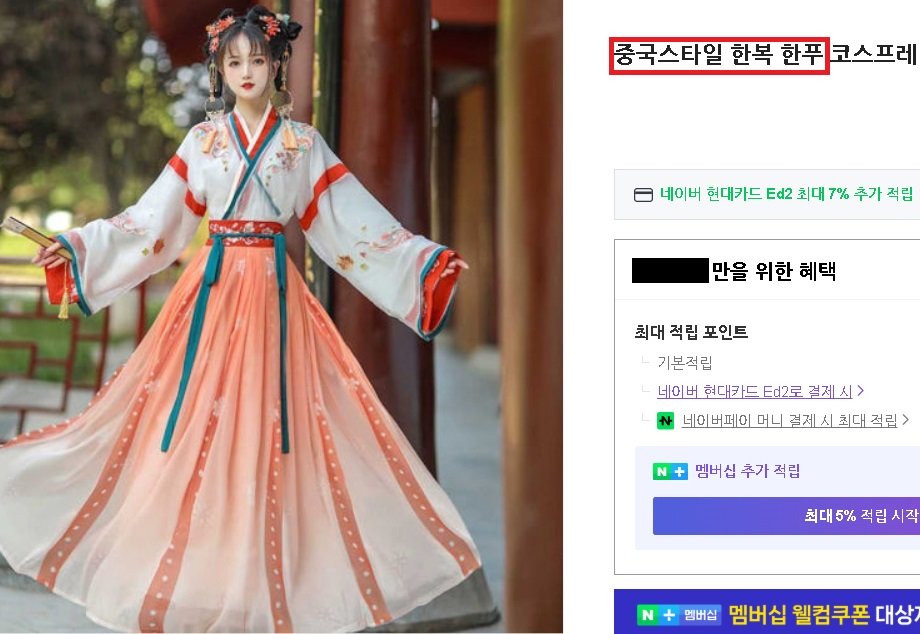
Professor Seo Kyung-duk of Sungshin Women's University has voiced serious concern over the growing number of videos on TikTok that falsely claim the Korean traditional clothing, Hanbok, originated from China's Hanfu. Seo pointed out that this issue has been exacerbated by Chinese influencers wearing Hanfu at Korean landmarks like Gyeongbok Palace, misleading foreign tourists.
Recently, Chinese influencers wearing Hanfu at Korean famous tourist spots like Gyeongbok Palace have caused controversy by misleading foreign tourists about Hanbok.
Seo emphasized the distinct nature of Hanbok, citing its presence in ancient Goguryeo tomb murals and its characteristic two-piece design, contrasting it with the one-piece Hanfu. He also referenced the prestigious Oxford English Dictionary, which clearly defines Hanbok as "traditional Korean clothing." Despite this, Seo noted that some Chinese netizens have persistently promoted a "cultural appropriation" narrative online for years, asserting Hanbok's roots in Hanfu.
Hanbok is Korea's traditional clothing, also found in Goguryeo tomb murals, and is a two-piece garment, while Hanfu is a one-piece dress, making them distinctly different.
Recalling past controversies, such as Baidu Encyclopedia misrepresenting Hanbok as "Joseon ethnic clothing," Seo attributed these "cultural engineering" efforts to a "cultural inferiority complex." He argued that as Korean culture, including Hanbok and traditional hats, gains global attention through the Korean Wave, some in China resort to such distortions. Seo concluded by stressing the need for Koreans not only to criticize China's cultural distortion but also to proactively promote Hanbok worldwide themselves.
However, for the past several years, some Chinese netizens have consistently engaged in 'cultural engineering' online, claiming that Hanbok originated from China's Hanfu.
DistantNews Editorial
Originally published by Dong-A Ilbo in Korean. Translated, summarized, and contextualized by our editorial team with added local perspective. Read our editorial standards.
More Stories


From Our Blog

What Gets Lost (and Found) When News Is Translated

The Critical Role of Diaspora Media in Global News

What Travellers Should Know About Countries with Restricted Press

A Digital Nomad's Guide to Following Local News

How the Same Story Looks Different in Different Countries
