


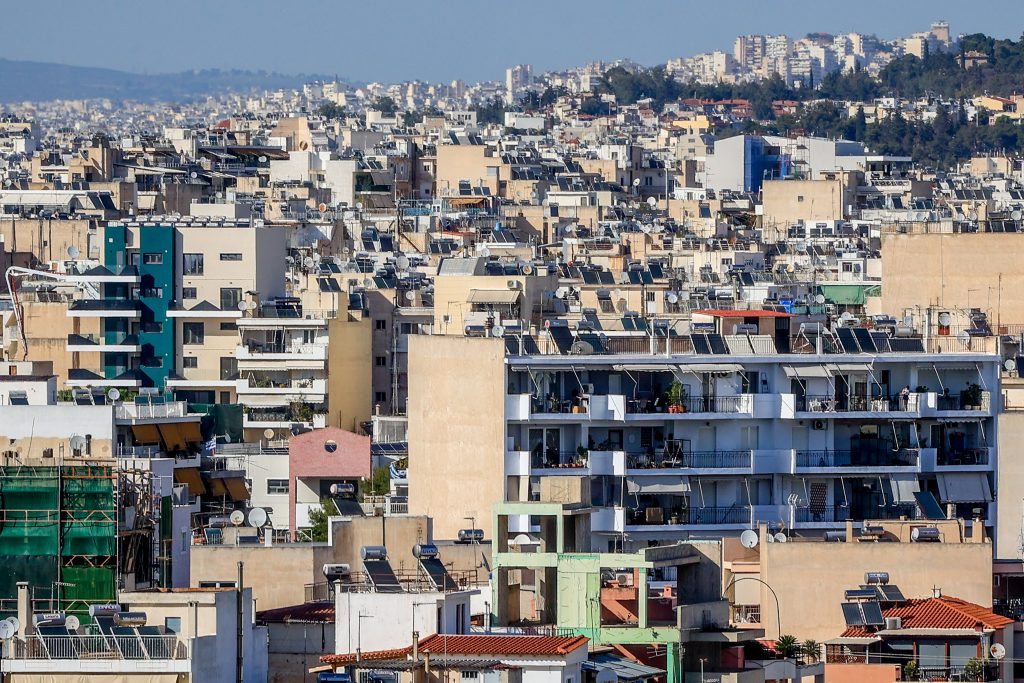
Property prices in Greece surge up to 85% in a decade
Translated from Greek, summarized and contextualized by DistantNews.
At a glance
News
Sources not specified
Context piece
- Property prices in Greece have surged by up to 85% over the last decade, making homeownership increasingly difficult.
- A 93 sq.m. apartment in Vyronas, without renovation or parking, costs 230,000 euros, averaging 2,500 euros per square meter.
- The International Monetary Fund notes a shortage of housing and significant inequalities in distribution, urging policy decisions based on data.
Acquiring property in Greece has become a luxury for most citizens, with homeownership transforming into an elusive dream. Over the past ten years, property prices have seen a dramatic increase of up to 85%, significantly hindering access to owning a home.
For instance, in the Vyronas area, a 93 square meter apartment on the fourth floor, lacking renovation and parking, is priced at 230,000 euros. This translates to approximately 2,500 euros per square meter. Newer properties in desirable areas can command prices starting from 3,000 euros and exceeding 5,000 euros per square meter, pushing many young adults to remain in their parents' homes well into their thirties.
Data reveals that 55% of properties listed for sale exceed 200,000 euros, a prohibitive amount for the majority of Greeks whose salaries barely cover essential expenses. Furthermore, one in three available rental properties are larger than 120 square meters, while demand is concentrated on smaller units. In Attica and Thessaloniki, only 30% of rental apartments are under 60 square meters, a figure that rises to 55% in other regions.
The International Monetary Fund (IMF) highlighted in its analysis that the Greek housing market faces not only a shortage of homes but also significant distribution inequalities. The housing problem stems from both reduced supply and the inefficient allocation of existing stock. The IMF stresses that policy decisions must be data-driven to effectively address the crisis.
While asking prices have risen, disposable income has increased by 47%. However, this growth is insufficient to offset the escalating housing costs. By 2025, median housing costs are projected to exceed one-third of disposable income, with nearly two out of five households expected to spend over 40% of their earnings on housing.
DistantNews Editorial
Originally published by Ta Nea in Greek. Translated, summarized, and contextualized by our editorial team with added local perspective. Read our editorial standards.
More Stories


From Our Blog

What Gets Lost (and Found) When News Is Translated

The Critical Role of Diaspora Media in Global News

What Travellers Should Know About Countries with Restricted Press

A Digital Nomad's Guide to Following Local News

How the Same Story Looks Different in Different Countries
