

PTI Leadership Cannot Evade Responsibility for Rawalpindi Shooting: Minister
Translated from English, summarized and contextualized by DistantNews.
At a glance
News
Sources not specified
Under investigation
- Pakistan's Minister of State for Interior, Tallal Chaudhry, stated that the PTI leadership cannot escape responsibility for a fatal shooting incident in Rawalpindi.
- The incident involved a man allegedly firing on security forces, who was then shot dead by law enforcement.
- Chaudhry criticized the PTI's "politics of hatred and anarchy," suggesting it influenced the alleged assailant.
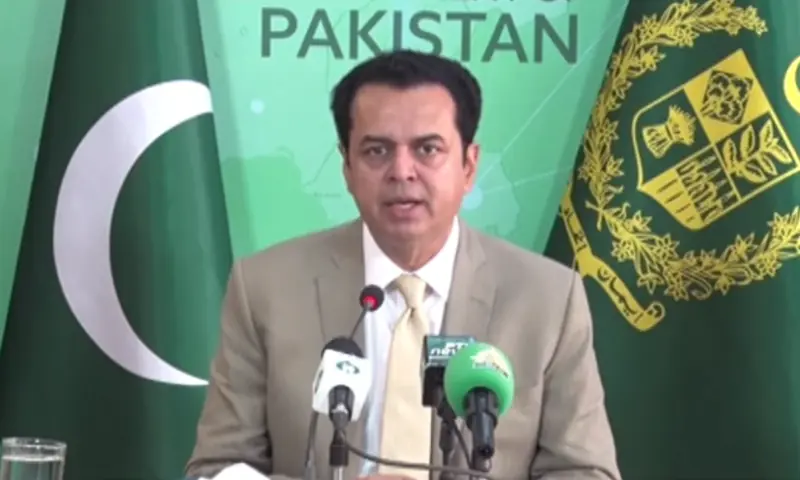
Pakistan's Minister of State for Interior, Tallal Chaudhry, asserted that the leadership of the Pakistan Tehreek-e-Insaf (PTI) party cannot evade responsibility following a fatal shooting incident in Rawalpindi. The event occurred when law enforcement officials shot and killed a man on Mall Road after he allegedly opened fire on security forces.
For years, the PTI leadership has been told not to perpetuate the politics of hatred and anarchy.
Information Minister Attaullah Tarar had previously condemned the PTI's "politics of violence." However, the PTI has distanced itself from the incident, denying any connection to terrorism and accusing others of attempting to link the party to the event.
When a young person fills his mind with such hatred and anarchy, he expresses it somewhere in his own way. Yesterday’s incident is an example [of this].
During a press conference in Islamabad, Chaudhry criticized the PTI's long-standing promotion of "hatred and anarchy." He suggested that such ideologies, once ingrained in young minds, manifest in destructive ways, citing the Rawalpindi incident as an example. "The PTI leadership cannot absolve themselves of responsibility by saying that they had no association with the worker," Chaudhry stated, questioning the party's role in shaping the views of its members.
The PTI leadership cannot absolve themselves of responsibility by saying that they had no association with the worker.
Chaudhry further challenged the PTI's claim that the deceased individual was mentally unstable. He questioned why, if that were the case, the individual would target security forces rather than his own family or party members, or inflict self-harm. The minister implied that the actions were a direct result of the "vision" and "information" provided by the PTI leadership.
Who trained the political workers? Who provided them with a vision? Who stuffed their minds with all the information?
DistantNews Editorial
Originally published by Dawn in English. Translated, summarized, and contextualized by our editorial team with added local perspective. Read our editorial standards.
More Stories


From Our Blog

What Gets Lost (and Found) When News Is Translated

The Critical Role of Diaspora Media in Global News

What Travellers Should Know About Countries with Restricted Press

A Digital Nomad's Guide to Following Local News

How the Same Story Looks Different in Different Countries
