


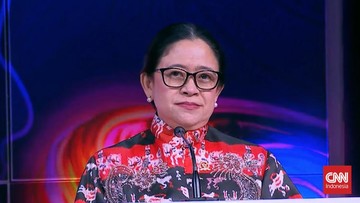
Puan ensures Election Bill won't be discussed secretly
Translated from Indonesian, summarized and contextualized by DistantNews.
TLDR
- The Speaker of the Indonesian House of Representatives, Puan Maharani, assured that the Election Bill will not be discussed secretly.
- Discussions are ongoing between political parties, involving both formal and informal communication channels.
- The bill aims to ensure fair and democratic elections, with key issues including electoral system changes, parliamentary thresholds, and vote conversion systems.
Speaker of the Indonesian House of Representatives, Puan Maharani, has moved to quell concerns regarding the upcoming Election Bill (RUU Pemilu), assuring the public that its deliberations will not be conducted behind closed doors. Speaking at the parliamentary complex on Tuesday, Maharani emphasized that political party communications are ongoing, encompassing both formal and informal exchanges. This transparency is crucial, she noted, as the bill's fundamental aim is to foster elections that are honest, fair, and uphold democratic principles, ensuring they do not disadvantage the nation.
Political party communications are still being conducted, and they are not done in secret; communication can be done formally and informally.
Her statement comes amidst ongoing internal discussions and simulations within the DPR (House of Representatives) factions. Deputy Speaker Sufmi Dasco Ahmad highlighted the cautious approach being taken, stating a desire to avoid rushing the process to prevent the bill from facing legal challenges at the Constitutional Court (MK), a fate that has befallen previous legislation. This measured pace reflects a commitment to producing a robust and legally sound piece of legislation.
The spirit is that in the future, elections can run honestly and fairly, and run well, and the spirit of democracy should not harm the nation and state.
Member of Commission II of the DPR, Ahmad Doli Kurnia, detailed ten key issues under consideration for amendment. These include potential shifts in the legislative election system (from open-list proportional representation to closed-list or a mixed system), adjustments to parliamentary and presidential thresholds (the latter mandated for removal by the MK), modifications to electoral district seat allocations, and the vote-to-seat conversion mechanism. Other critical points involve separating national and local elections, improving systems to combat vote-buying and political செலவு (money politics), integrating digitalization into election stages, reforming the election organizing bodies (which have faced criticism regarding professionalism and integrity), and establishing a special judicial body for election dispute resolution. The Indonesian perspective, as articulated by these leaders, prioritizes a stable and legitimate electoral process that strengthens democracy and national interests, learning from past experiences to ensure future elections are both credible and widely accepted.
We don't want to rush or hurry the Election Law, lest it be challenged again.
DistantNews Editorial
Originally published by CNN Indonesia in Indonesian. Translated, summarized, and contextualized by our editorial team with added local perspective. Read our editorial standards.
More Stories


From Our Blog

What Gets Lost (and Found) When News Is Translated

The Critical Role of Diaspora Media in Global News

What Travellers Should Know About Countries with Restricted Press

A Digital Nomad's Guide to Following Local News

How the Same Story Looks Different in Different Countries
