


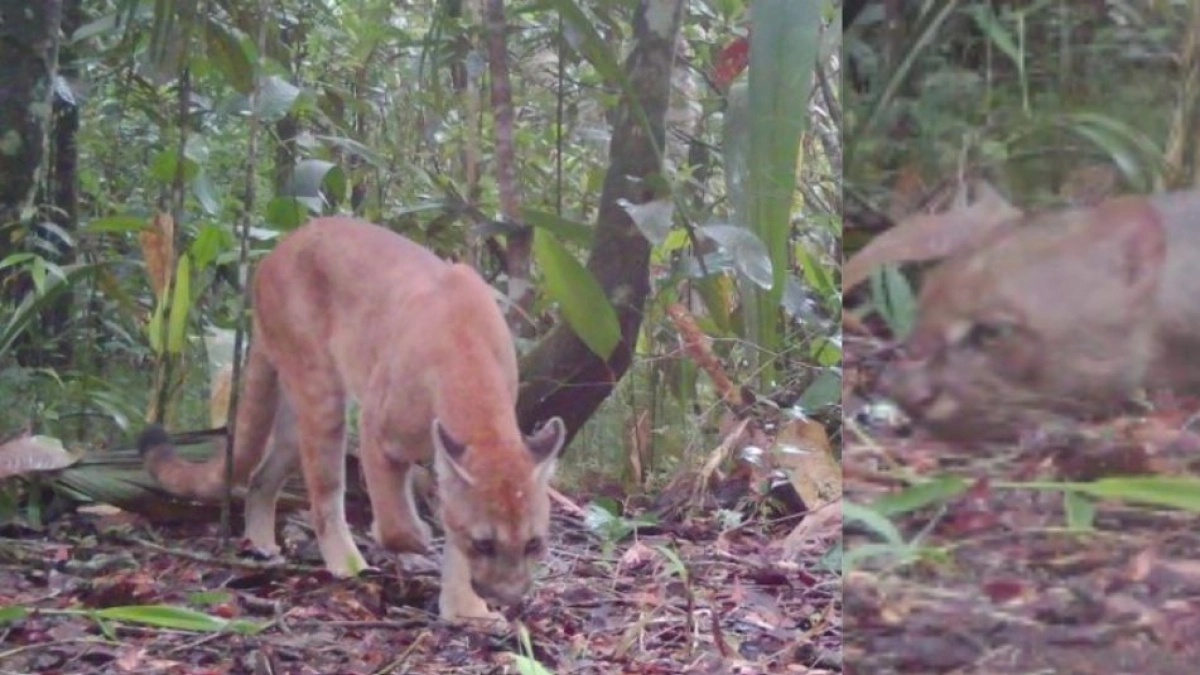
Puma and yaguarundí captured by camera traps in Tinigua National Natural Park in Meta
Translated from Spanish, summarized and contextualized by DistantNews.
At a glance
News
Official statement
Outcome reported
- Camera traps in Colombia's Tinigua National Natural Park captured images of a puma and a yaguarundí.
- The sightings confirm the park's healthy ecosystem and its suitability for these sensitive predator species.
- Tinigua serves as a vital biological corridor connecting the Amazon, Orinoquía, and Andes regions, supporting significant biodiversity.
Wildlife cameras have captured rare images of a puma and a yaguarundí within Colombia's Tinigua National Natural Park, located in the Meta department. Officials from National Natural Parks shared the sightings, which show the two animals in a forested area of the protected reserve.
The monitoring equipment not only revealed the robust health of the park's ecosystem but also confirmed that it provides adequate conditions for these species. The presence of a Puma concolor and a yaguarundí in the park's biological corridors serves as evidence of its well-preserved state, according to park officials.
The camera traps installed by our park rangers recorded the presence of a Puma concolor and a yaguarundí in the park's biological corridors, evidence of the good conservation status of its ecosystems.
These animals, which are predators in the Amazonian, Andean, and Orinoquía ecosystems, require extensive territories for hunting and sustenance. Their sensitivity to human presence makes their appearance in Tinigua a strong indicator of good conservation. National Natural Parks officials highlighted that these records underscore Tinigua's importance as the last remaining biological corridor linking the Amazon, Orinoquía, and Colombian Andes.
Declared a protected area in 1989, Tinigua National Natural Park is situated within an environmentally critical territorial planning zone in the Meta department. Its proximity to other protected areas like Sierra de La Macarena and Páramo de Sumapaz contributes to its high biodiversity. The park functions as a natural corridor, ensuring the continuity of ecosystems, biodiversity, and environmental services across these diverse regions, featuring vast tropical rainforests.
These records confirm the importance of Tinigua as the last biological corridor connecting the Amazon, Orinoquía, and the Colombian Andes, allowing species, forests, and ecological processes to remain connected.
DistantNews Editorial
Originally published by El Tiempo in Spanish. Translated, summarized, and contextualized by our editorial team with added local perspective. Read our editorial standards.
More Stories


From Our Blog

What Gets Lost (and Found) When News Is Translated

The Critical Role of Diaspora Media in Global News

What Travellers Should Know About Countries with Restricted Press

A Digital Nomad's Guide to Following Local News

How the Same Story Looks Different in Different Countries
