

Putin's dilemma: Will he risk a conflict with NATO?
Translated from Greek, summarized and contextualized by DistantNews.
At a glance
Analysis
Sources not specified
Context piece
- Russian President Vladimir Putin faces a critical juncture as the war in Ukraine strains the Russian economy and his popularity.
- Concerns are rising about potential escalation, with fears Russia might open a new front in Europe against NATO allies.
- Russia's current position shows weaknesses, including reliance on hydrocarbon exports and dependence on China, but also demonstrates adaptation through its war industry and propaganda efforts.
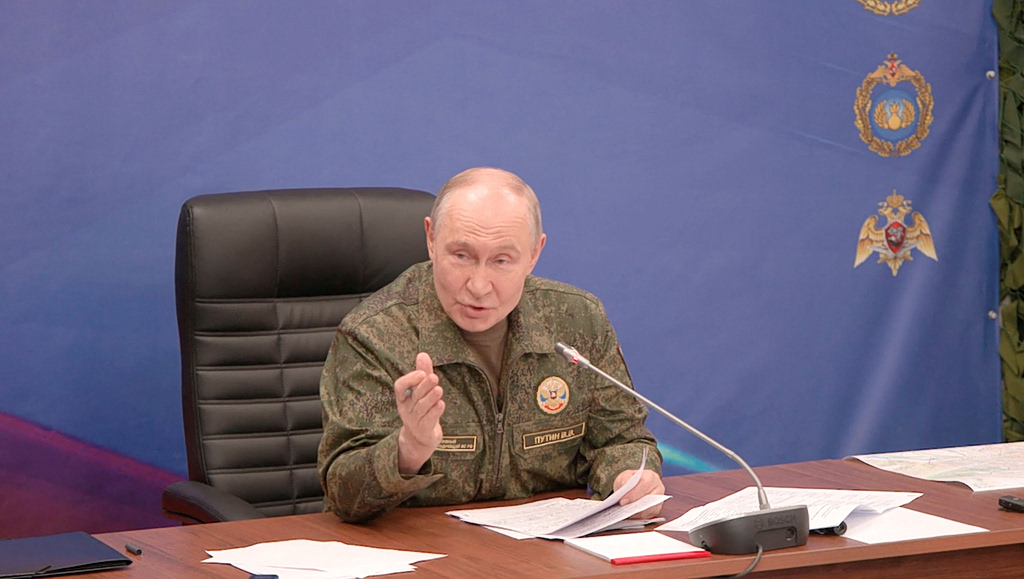
Russian President Vladimir Putin appears to be at his most difficult position since the war began, leading to questions about whether he will risk a confrontation with NATO. As a summit in Ankara approaches, the conflict, now in its fifth year, is increasingly burdening Russia's economy and impacting Putin's popularity.
Ukraine's continued missile and drone attacks are causing natural gas shortages and extensive damage, prompting scrutiny of Putin's potential reactions to Kyiv's evolving military capabilities. The central question is whether the Russian president will further escalate the conflict, not only against Ukraine but also against its NATO allies.
Fears are mounting that Russia could open a new front in Europe. Reports indicate the United States has warned Poland about a potential limited attack, possibly involving drones or hybrid warfare tactics, a scenario previously considered unthinkable. Estonia has reported Russian military personnel near its borders, while unidentified drones caused airport closures in Denmark. Oslo is concerned about the Russian settlement in Barentsburg, Svalbard, and Putin's decision to grant Russian passports to residents of Transnistria in Moldova has raised further alarms.
Following his 2022 invasion of Ukraine, based on flawed intelligence and an underestimated military, many believe Putin could make another high-risk decision. Russia's current situation reveals weaknesses: Moscow is in a different position than in 2022 and cannot afford further mistakes. The country, reliant on hydrocarbons, is forced to import gasoline due to Ukrainian attacks on refineries. It is depleting foreign exchange reserves to mitigate economic impacts and emptying prisons to fill troop gaps.
Furthermore, Russia has become dependent on Beijing and seeks military aid from North Korea and Iran. The Kremlin prioritizes air defense, even for Moscow's protection. On the other hand, Russia projects an image of adaptation. Factories continuously supply the war industry, students meet veterans, and state television functions as a propaganda tool. The war has become part of daily life for Russians, while remaining a distant problem for NATO citizens. A broader conflict with the North Atlantic Alliance could provide Putin with a justification for domestic mobilization.
DistantNews Editorial
Originally published by Ta Nea in Greek. Translated, summarized, and contextualized by our editorial team with added local perspective. Read our editorial standards.
More Stories
From Our Blog

What Gets Lost (and Found) When News Is Translated

The Critical Role of Diaspora Media in Global News

What Travellers Should Know About Countries with Restricted Press

A Digital Nomad's Guide to Following Local News

How the Same Story Looks Different in Different Countries
