

Quang Ngai targets forest carbon development for green growth
Translated from Vietnamese, summarized and contextualized by DistantNews.
At a glance
News
Sources not specified
New plan
- Quang Ngai province in Vietnam has significant potential for forest carbon development, aiming to drive green growth and reduce greenhouse gas emissions.
- The province possesses approximately 881,000 hectares of forest, including natural and planted areas, which can be leveraged for carbon sequestration.
- Officials are developing a roadmap for forest carbon credit projects, focusing on sustainable forest management and conservation to enhance economic value and environmental benefits.
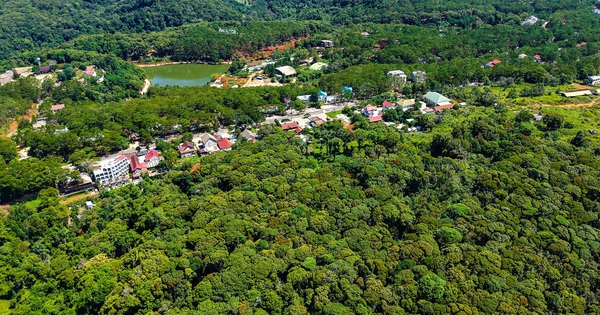
Quang Ngai province is poised to develop its forest carbon potential, leveraging its vast forest resources to foster green growth and generate new revenue streams. With an estimated 881,000 hectares of forest cover, including over 659,000 hectares of natural forest and nearly 221,000 hectares of planted forest, the province is recognized for its significant capacity to absorb and store carbon.
Quang Ngai has the potential to develop forest carbon with about 881,000 hectares of forest, including more than 659,000 hectares of natural forest and nearly 221,000 hectares of planted forest.
During a recent conference, provincial officials highlighted forest carbon development as a crucial resource for reducing greenhouse gas emissions and enhancing sustainable forest management. Vice Chairman of the Quang Ngai Provincial People's Committee, Do Tam Hien, stated that effectively harnessing this resource could directly contribute to the province's GRDP growth and improve incomes for those involved in forestry.
The Vietnam Academy of Forest Sciences, collaborating with the province, defined forest carbon as the carbon absorbed and stored within forest ecosystems, encompassing biomass, soil, and other organic matter. Forest carbon credits are generated through activities that reduce emissions and increase carbon absorption. The academy identified favorable conditions in Quang Ngai for developing these credits through measures like protecting natural forests, preventing deforestation, restoring degraded areas, and improving the quality of planted forests.
This is an important resource for implementing activities to reduce greenhouse gas emissions, increase carbon absorption capacity, contributing to forest protection and sustainable development.
However, the implementation requires a cautious approach with a clear roadmap, reliable data, and alignment with sustainable forest management goals. The academy proposed establishing a provincial coordination unit, standardizing forest data, assessing carbon potential, and initiating pilot projects before wider implementation. Vice Chairman Hien emphasized that forest carbon development aligns with green growth objectives and the reduction of greenhouse gas emissions, underscoring its potential to increase the economic value derived from forests.
Forest carbon is the amount of carbon absorbed and stored in the carbon sinks of the forest ecosystem, including above- and below-ground biomass, shrubs, litter, dead wood, and organic carbon in the soil.
DistantNews Editorial
Originally published by Thanh Niên in Vietnamese. Translated, summarized, and contextualized by our editorial team with added local perspective. Read our editorial standards.
More Stories

From Our Blog

What Gets Lost (and Found) When News Is Translated

The Critical Role of Diaspora Media in Global News

What Travellers Should Know About Countries with Restricted Press

A Digital Nomad's Guide to Following Local News

How the Same Story Looks Different in Different Countries
