


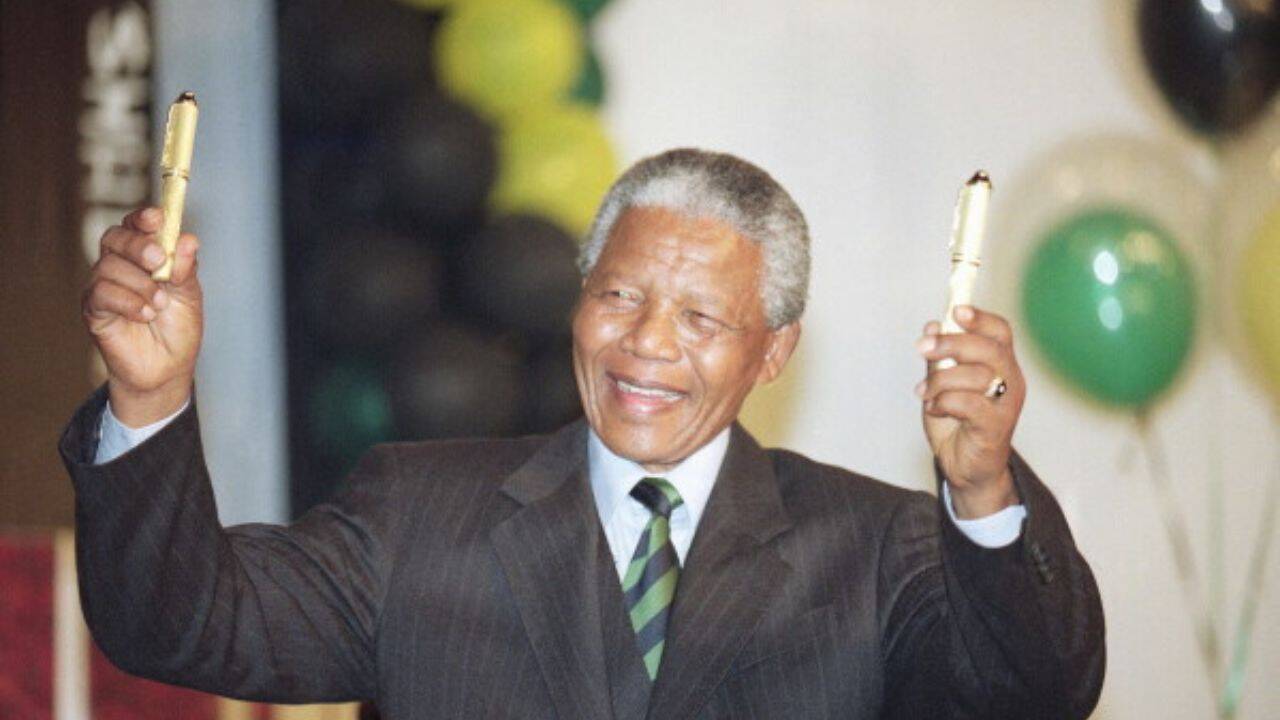
Quote of the day by Nelson Mandela: "A nation should not be judged by how it treats its highest citizens, but…"
Summarized and contextualized by DistantNews.
At a glance
Analysis
Sources not specified
Context piece
- Nelson Mandela believed a nation's true measure lies in how it treats its most vulnerable citizens, not its elites.
- He argued that judging a country by its economic growth or landmarks offers an incomplete picture.
- Mandela's perspective stems from his 27 years of imprisonment and his fight against South Africa's apartheid system.
Nelson Mandela famously asserted that a nation's character is revealed not by its treatment of its most prominent citizens, but by its care for the least powerful. He contended that external markers of success, such as skylines, universities, or economic growth, provide only a superficial view of a country.
Mandela's profound statement, "It is said that no one truly knows a nation until one has been inside its jails," and his subsequent observation, "A nation should not be judged by how it treats its highest citizens, but its lowest ones," carry immense weight. Coming from a man who endured 27 years of imprisonment before leading South Africa as its first democratically elected Black president, these words resonate with the authority of direct experience.
A nation should not be judged by how it treats its highest citizens, but its lowest ones.
While many nations gauge success through economic rankings or iconic structures, Mandela proposed a more revealing metric: the treatment of those living in poverty, facing discrimination, or marginalized by society. He suggested that extending respect to the wealthy or privileged is a simple task for any society, but offering the same dignity to those with nothing tangible to offer is the true test of a nation's values.
Mandela's decades-long opposition to South Africa's apartheid regime and his extensive prison sentence provided him with an intimate understanding of systemic injustice. Upon his release in 1990, he championed reconciliation over retribution, a principle that guided his presidency from 1994. His focus extended beyond dismantling apartheid to strengthening democratic institutions and fostering national unity, reflecting his belief that true leadership is measured by the well-being of the most vulnerable.
It is said that no one truly knows a nation until one has been inside its jails.
DistantNews Editorial
Originally published by Times of India. Summarized and contextualized by our editorial team with added local perspective. Read our editorial standards.
More Stories


From Our Blog

What Press Freedom Means for the News You Read

What Gets Lost (and Found) When News Is Translated

The Critical Role of Diaspora Media in Global News

What Travellers Should Know About Countries with Restricted Press

A Digital Nomad's Guide to Following Local News
