


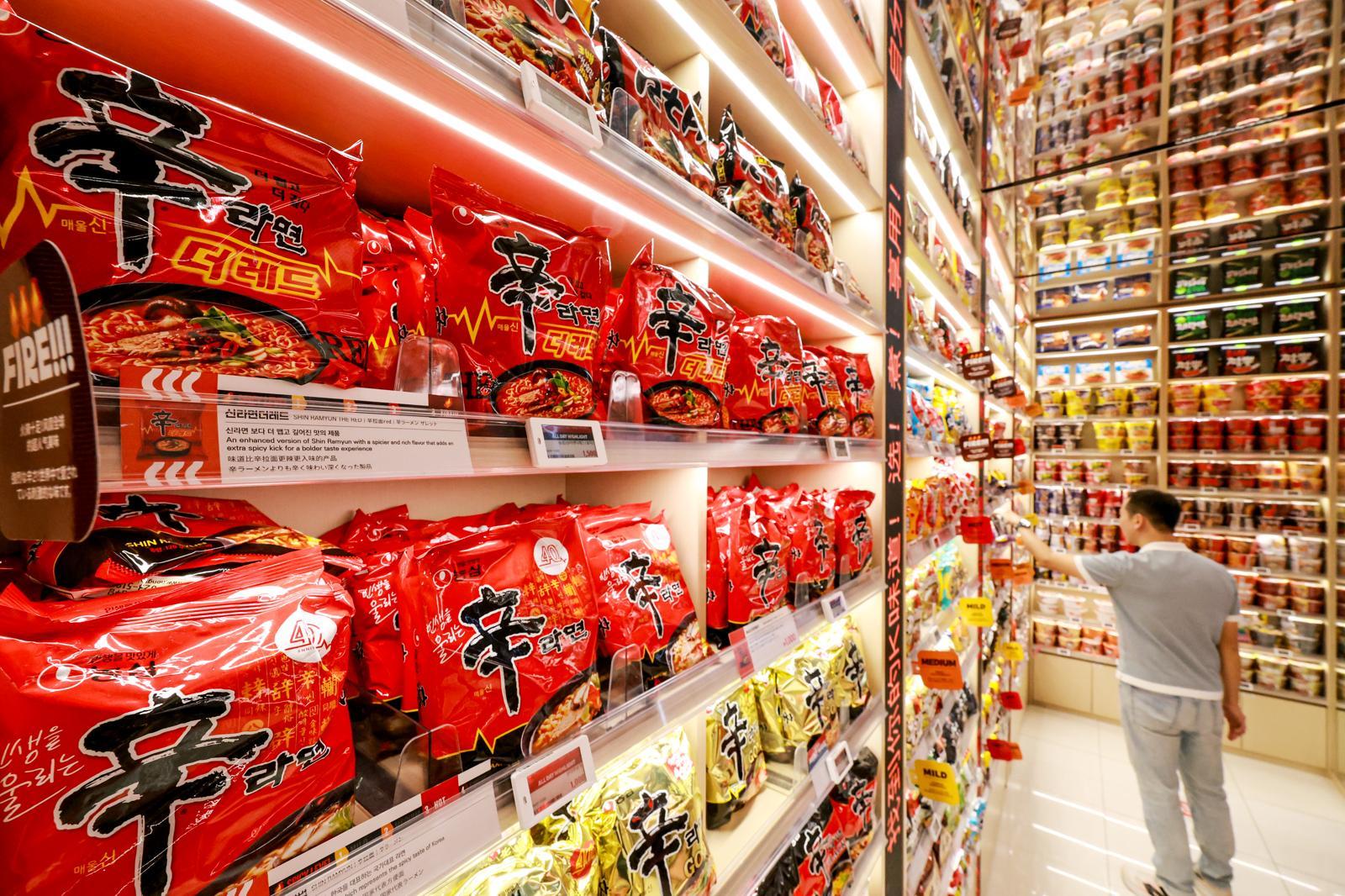
Ramen is the Pinnacle of Science: A Critic Who Has Eaten 2,300 Varieties
Translated from Korean, summarized and contextualized by DistantNews.
At a glance
In-depth
Sources not specified
Context piece
- Ramen critic Ji Young-jun argues that instant noodles represent the pinnacle of science and technology, calling the Korean ramen industry the world's strongest.
- Ji, who has tasted over 2,300 varieties, left his teaching job to become a full-time ramen critic, aiming to professionally introduce Korean ramen.
- He seeks to correct misconceptions about ramen, emphasizing its nutritional value and the safety of MSG, and dreams of establishing a ramen museum and academic department.
Instant noodles, often perceived as a simple, quick meal, are in fact the "cutting edge of industry," packed with immense science and technology, according to ramen critic Ji Young-jun. "Just as Korean semiconductors are the world's strongest, the Korean ramen industry is also the world's strongest," Ji stated in a recent interview. He explained that the ingredients in a single packet of ramen, the powder soup, dried toppings, and noodles, are the result of extensive research by numerous individuals over many years.
Just as Korean semiconductors are the world's strongest, the Korean ramen industry is also the world's strongest.
Ji, who has tasted and reviewed more than 2,300 types of ramen, transitioned from his career as an elementary school teacher to become a full-time ramen critic in 2023. His passion for ramen began during his military service, where he found solace in the convenience store noodles. He started sharing his experiences in 2013 under the moniker 'Ramen Conqueror Pikki.' Ji felt a void in the professional introduction of Korean ramen, despite its global recognition and popularity among Koreans, prompting his career change. He consumes 15-20 ramen packs weekly, purchasing them himself without sponsorships, to ensure objective reviews.
Ramen is a product of science, with extreme automation and efficiency achieved for taste and cost-effectiveness.
His recent book, "The Science of Ramen," published in 2024, delves into the scientific aspects of ramen production, following his previous work, "The History of Ramen." Ji interviewed food science professors, researchers, and industry professionals to explain the science behind ramen's curly, yellow noodles, and how the soup base and toppings are made. Facing limitations as a non-expert, he is now pursuing a degree in Food and Nutrition at Korea National Open University and aims for graduate studies.
Ramen companies removed MSG not because it's bad for you, but because consumers dislike it.
Ji is particularly dedicated to dispelling common myths surrounding ramen. He expressed dismay at the perception of ramen as unhealthy and lacking nutrition, noting its origins as a food staple designed to combat food shortages. According to the Korean Nutrition Society's 2020 standards, ramen had an ideal ratio of carbohydrates, protein, and fat. He clarified that while the 2025 standards suggest a slight deficiency in protein, adding eggs or meat can create a balanced meal. Ji also addressed concerns about MSG, explaining that ramen companies removed it not due to health risks, but consumer preference. He highlighted that MSG, when used with salt, enhances savory flavors, potentially reducing overall sodium intake. Ji asserted that Korean ramen has one of the lowest sodium contents globally relative to its portion size and is not harmful within permissible limits, potentially even beneficial by enabling reduced salt consumption.
Korean ramen has one of the lowest sodium contents in the world relative to its portion size.
DistantNews Editorial
Originally published by Dong-A Ilbo in Korean. Translated, summarized, and contextualized by our editorial team with added local perspective. Read our editorial standards.
More Stories



From Our Blog

What Gets Lost (and Found) When News Is Translated

The Critical Role of Diaspora Media in Global News

What Travellers Should Know About Countries with Restricted Press

A Digital Nomad's Guide to Following Local News

How the Same Story Looks Different in Different Countries
