


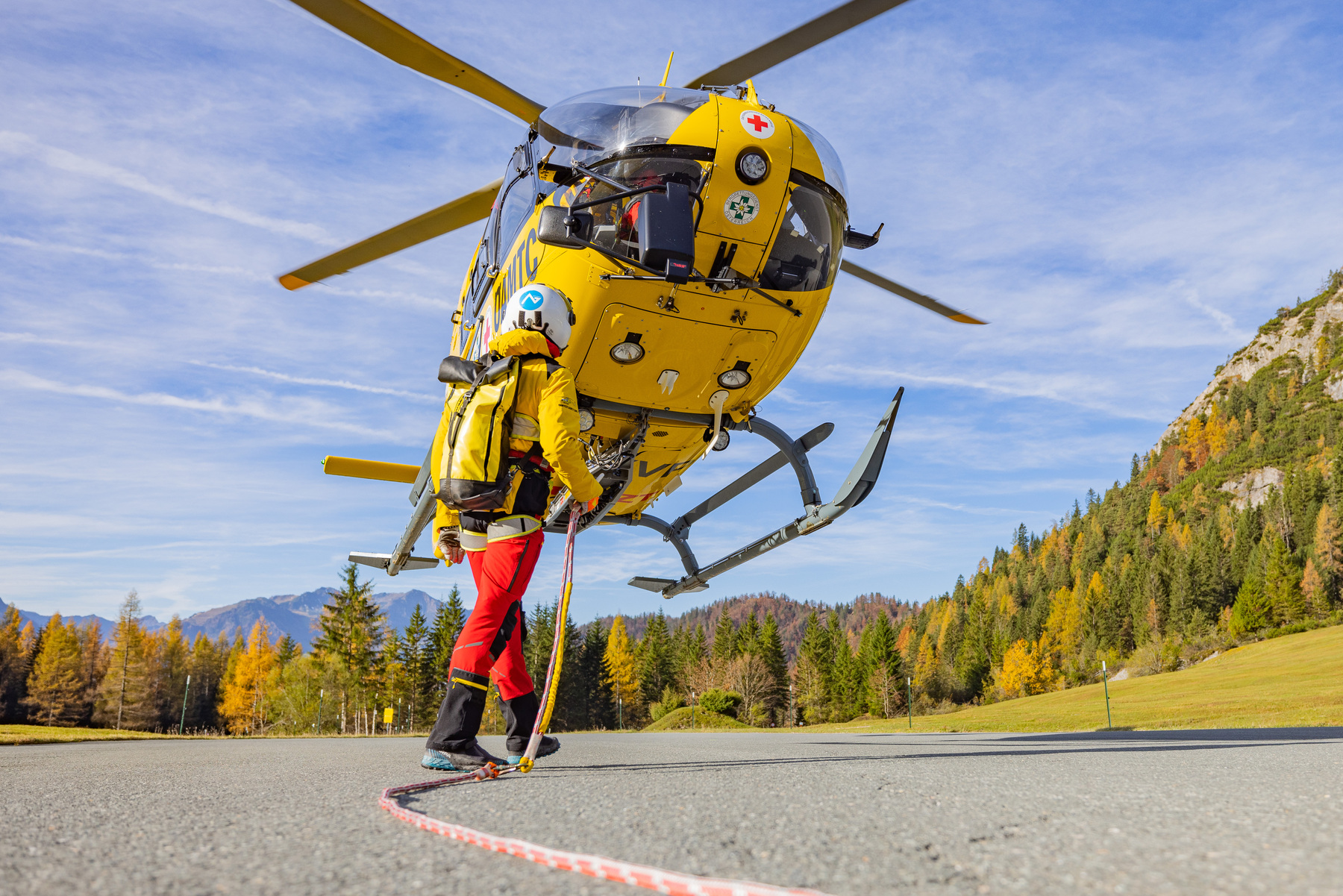
Rapid response: Austria's air ambulance crew provides high-tech emergency care
Translated from German, summarized and contextualized by DistantNews.
At a glance
In-depth
Sources not specified
Context piece
- Three crew members of an ÖAMTC air ambulance helicopter in Graz, Austria, rely on extensive training and trust to perform critical missions.
- The team, including a doctor, rescue technician, and pilot, emphasizes teamwork and mutual reliance, comparing their bond to family.
- Advanced medical equipment and techniques, including night vision and mobile ultrasound, enhance their ability to provide rapid, high-tech care in challenging terrains.
In Graz, Austria, the three-person crew of an ÖAMTC air ambulance helicopter operates as a highly trained and cohesive unit, ready to respond to emergencies ranging from severe accidents to medical crises. Their daily routine begins with a thorough check of the helicopter, safety equipment, and medical supplies, followed by a team breakfast where they foster a sense of family and ensure everyone is mentally prepared for the day's potential missions.
Our big advantage is that we are quickly at the patient, often in five, six minutes.
Lead emergency physician Thomas Bößner-Weiss highlights the helicopter's critical advantage: rapid response times, often reaching patients within five to six minutes. Flight rescuer Martin Kamper, who also holds mountain rescue training, explains the complexities of operations in difficult terrain. "We first assess the terrain from the helicopter and decide which rope length we need. Then we land at an intermediate landing site, clear out the helicopter as much as possible, and attach ourselves with the rope, rescue bag, or triangle and emergency equipment to the heli," he described.
We are like a family. In case of an emergency, we have to function and rely on each other.
"We are not heroes, but we bring high-tech medicine to the patient," Bößner-Weiss stated, detailing the advanced medical equipment available, such as mobile ultrasound devices for diagnosing internal bleeding. The pilot, Helmut Holler, who has decades of experience, ensures safe navigation, especially during challenging extractions from vertical rock faces where rotor blade proximity is a constant concern. The team makes all decisions about risky missions collectively; if any member objects, they remain grounded.
We are not heroes, but we bring high-tech medicine to the patient.
Technological advancements over the past decade have significantly expanded their capabilities, including night flying. However, the crew adheres to strict safety protocols, refusing to fly in adverse weather conditions like thunderstorms, hail, or strong winds. Each mission, which can total up to ten per day, is followed by a debriefing session to process the events and refine their procedures, underscoring their commitment to continuous improvement and patient safety.
You have to be very careful that the rotor blades do not touch the rock.
DistantNews Editorial
Originally published by Die Presse in German. Translated, summarized, and contextualized by our editorial team with added local perspective. Read our editorial standards.
More Stories



From Our Blog

What Gets Lost (and Found) When News Is Translated

The Critical Role of Diaspora Media in Global News

What Travellers Should Know About Countries with Restricted Press

A Digital Nomad's Guide to Following Local News

How the Same Story Looks Different in Different Countries
