


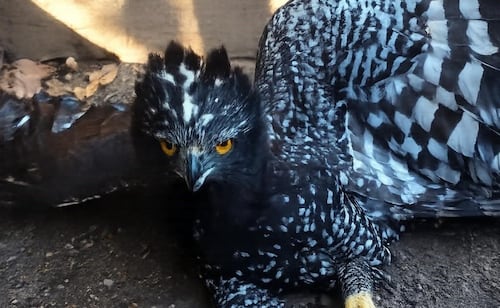
Rare eagle sighting in Querétaro highlights need for stronger conservation
Translated from Spanish, summarized and contextualized by DistantNews.
At a glance
News
Official statement
New plan
- The National Commission for Natural Protected Areas (Conanp) reported the first documented sighting of the critically endangered Black-and-chestnut Eagle in Mexico's Sierra Gorda Biosphere Reserve in Querétaro.
- This apex predator plays a vital role in tropical ecosystems and its presence indicates the good conservation status of the region's habitats.
- Conanp urged continued conservation efforts for the species and its habitat, noting its importance for maintaining ecological balance.
In an unprecedented sighting, Mexico's National Commission for Natural Protected Areas (Conanp) has documented the first Black-and-chestnut Eagle (Spizaetus tyrannus) within the Sierra Gorda Biosphere Reserve in Querétaro. This marks a significant event for the critically endangered raptor.
The discovery was made possible through ongoing biological monitoring and wildlife surveillance efforts by the reserve's personnel. Conanp highlighted the eagle's crucial role as an apex predator in tropical ecosystems, emphasizing that its presence serves as an indicator of the healthy conservation status of the Sierra Gorda's diverse habitats.
This sighting was achieved through collaboration between Conanp staff and local residents from the ejido of Ayutla in Arroyo Seco municipality. The information gathered is vital for understanding the distribution and presence of this ecologically important species. The Black-and-chestnut Eagle, typically found in the Sierra Madre Oriental, is listed as "endangered" under Mexico's Official Standard NOM-059-SEMARNAT-2025.
Conanp has called for sustained conservation actions to protect the species and its environment. The agency stressed the eagle's significant biological function within forest ecosystems, particularly in regulating other species populations and maintaining ecological equilibrium. The presence of this eagle signifies the robust health of the reserve's canyon systems, oak forests, and seasonally dry tropical forests, which form part of the Sierra Madre Oriental's biological corridor. This record is considered a historical milestone, as the eagle's original distribution is located over 150 kilometers away on the Gulf of Mexico slope.
Its presence indicates the good state of conservation of the Biosphere Reserve's ecosystems, as well as the ecological functionality of the habitats present in the region, characterized by canyon systems with oak forests and seasonally dry tropical forests that are part of the Sierra Madre Oriental biological corridor.
DistantNews Editorial
Originally published by El Universal in Spanish. Translated, summarized, and contextualized by our editorial team with added local perspective. Read our editorial standards.
More Stories


From Our Blog

What Press Freedom Means for the News You Read

What Gets Lost (and Found) When News Is Translated

The Critical Role of Diaspora Media in Global News

What Travellers Should Know About Countries with Restricted Press

A Digital Nomad's Guide to Following Local News
