


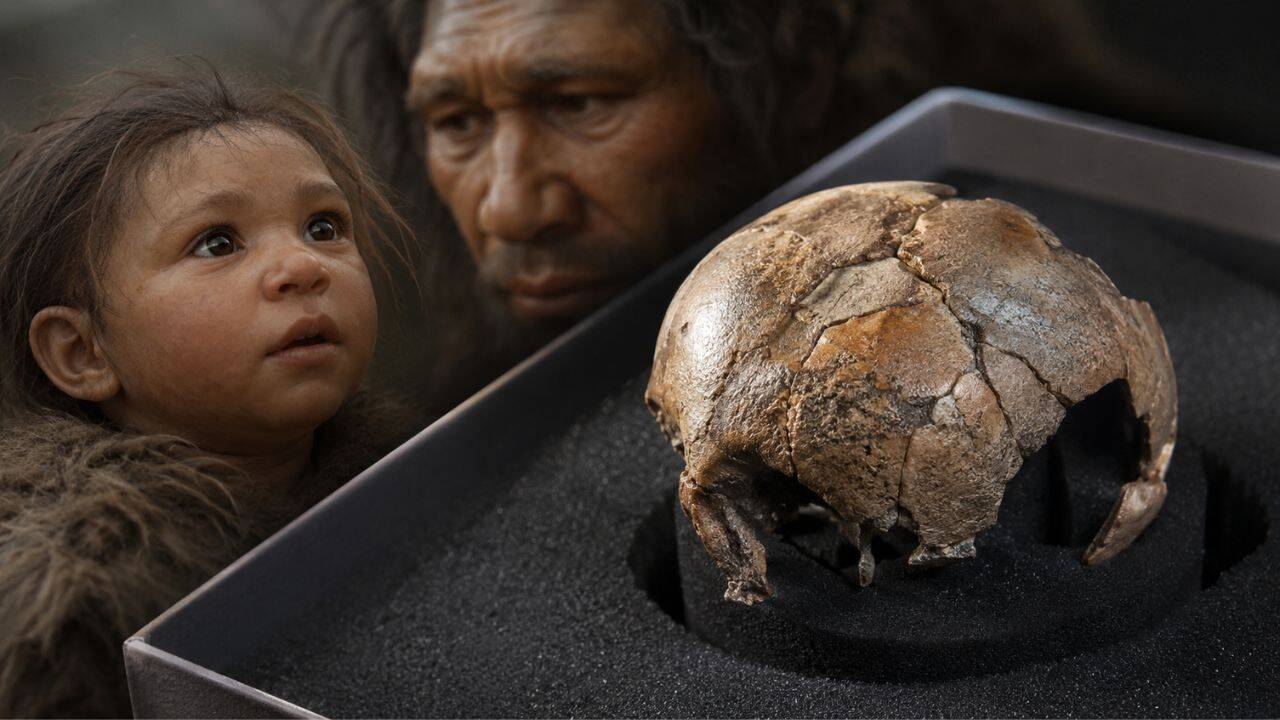
Rare Neanderthal baby fossil reveals our ancient relatives may have begun life much like modern humans
Summarized and contextualized by DistantNews.
At a glance
News
Sources not specified
Context piece
- A rare fossil of a Neanderthal infant has been discovered, offering new insights into their early lives.
- The fossil suggests Neanderthal babies may have developed similarly to modern human infants.
- This finding challenges previous assumptions about Neanderthal development and life stages.
Paleontologists have unearthed a rare fossil of a Neanderthal infant, providing a unique glimpse into the early lives of our ancient relatives. The discovery suggests that Neanderthal babies may have experienced developmental stages similar to those of modern humans.
This finding challenges long-held assumptions about Neanderthal development. Previously, it was thought that Neanderthals might have had different growth patterns compared to Homo sapiens. The infant fossil, however, indicates a potentially shared trajectory in early life, suggesting a more familiar biological foundation than previously understood.
The implications of this discovery extend to our understanding of Neanderthal social structures and parental care. If their infants developed in a manner comparable to our own, it could imply similar nurturing behaviors and family dynamics. Further research on this fossil promises to shed more light on the complex lives of Neanderthals and their relationship to modern humans.
DistantNews Editorial
Originally published by Times of India. Summarized and contextualized by our editorial team with added local perspective. Read our editorial standards.
More Stories


From Our Blog

What Press Freedom Means for the News You Read

What Gets Lost (and Found) When News Is Translated

The Critical Role of Diaspora Media in Global News

What Travellers Should Know About Countries with Restricted Press

A Digital Nomad's Guide to Following Local News
