


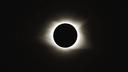
Rare total solar eclipse to dazzle Spain after more than a century
Translated from Croatian, summarized and contextualized by DistantNews.
At a glance
News
Sources not specified
Context piece
- Spain will witness a rare total solar eclipse on August 12, the first on its mainland in over a century.
- This event coincides with the peak of the Perseid meteor shower and a six-planet alignment, promising a spectacular celestial display.
- The eclipse will be visible in partial form across North America, Europe, and Africa, with experts urging the use of protective eyewear.
Spain is preparing for a rare astronomical spectacle as a total solar eclipse is set to grace its skies on August 12, marking the first time the mainland has witnessed such an event in over 100 years. This celestial phenomenon is particularly significant, as the last total solar eclipse visible from continental Spain, excluding the Canary Islands, occurred just two days before the Titanic sank in 1912. Some consider the last true total solar eclipse in the country to have been in 1905, as the 1912 event was a hybrid eclipse with only brief moments of totality in certain areas.
This year's event promises to be even more impressive, coinciding with the peak of the Perseid meteor shower and a rare alignment of six planets. The eclipse will begin near the North Pole, tracing a path of approximately 8,260 kilometers over the Atlantic Ocean before ending over the Mediterranean Sea. The total phase will last a maximum of two minutes and 18 seconds, with the longest duration of darkness visible west of the Icelandic coast.
While the full spectacle will be best observed from Spain, Greenland, and Iceland, hundreds of millions more will experience a partial eclipse. Its visibility will extend to Alaska and Siberia, encompassing Canada, the northern United States, and large parts of Europe and western Africa. The closer observers are to the path of totality, the more of the Sun's disk will be obscured by the Moon. For instance, Dublin will see about 94% of the Sun covered, Oslo 83%, Montreal 18%, New York 9%, and Norfolk, Virginia, around 2%.
Astronomers and space agencies are organizing live broadcasts and public viewing events. The European Space Agency (ESA) will stream the event from the Javalambre Astrophysical Observatory in Spain, with a public event in León. NASA and the Italian project Virtual Telescope are also preparing their own broadcasts. Experts strongly advise using special protective glasses for viewing, even when only a small portion of the Sun is obscured, to prevent eye damage.
DistantNews Editorial
Originally published by Večernji List in Croatian. Translated, summarized, and contextualized by our editorial team with added local perspective. Read our editorial standards.
More Stories



From Our Blog

What Gets Lost (and Found) When News Is Translated

The Critical Role of Diaspora Media in Global News

What Travellers Should Know About Countries with Restricted Press

A Digital Nomad's Guide to Following Local News

How the Same Story Looks Different in Different Countries
