


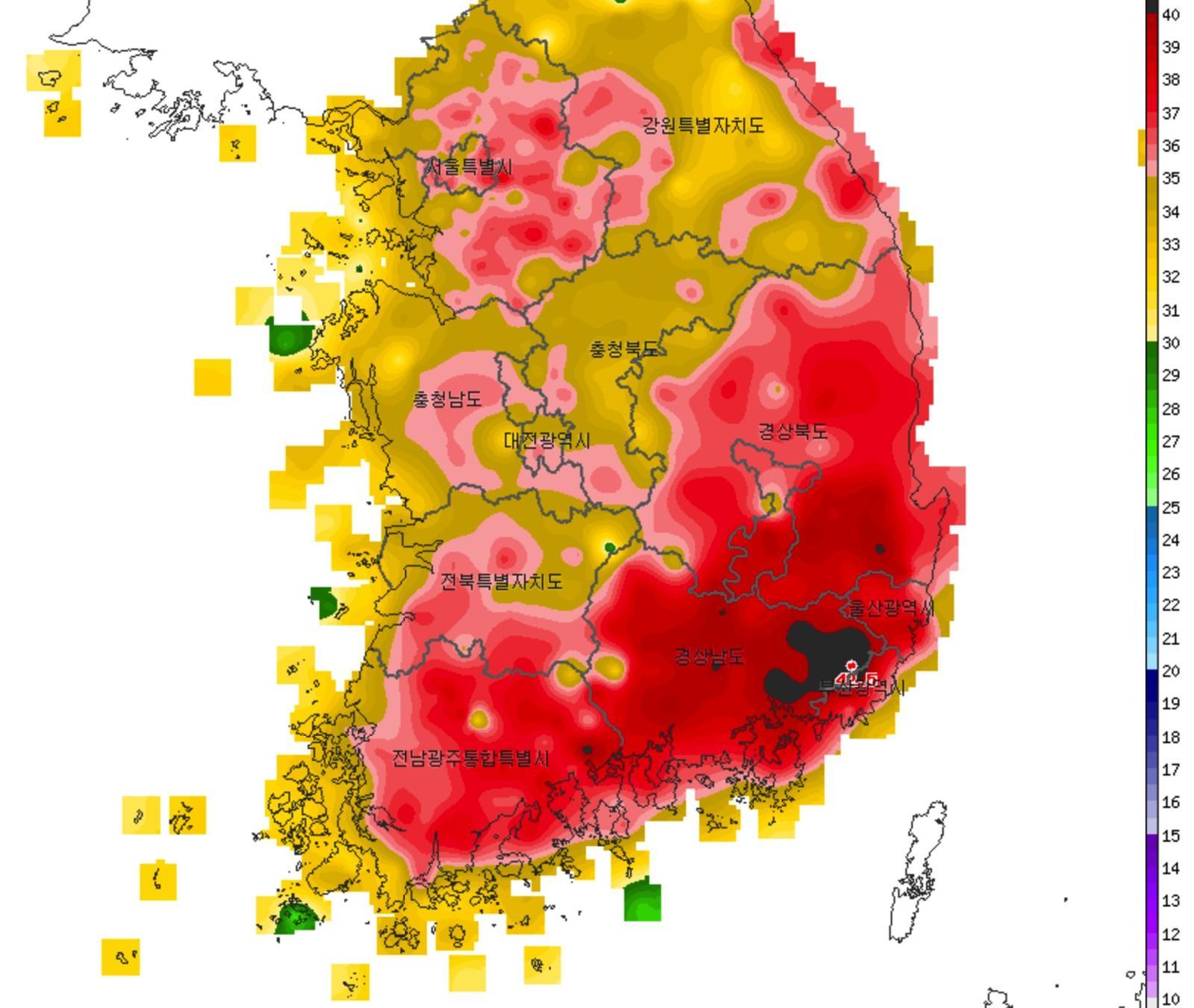
Record Heatwave in South Korea: Gyeongnam Sees More Heatstroke Cases Than Seoul
Translated from Korean, summarized and contextualized by DistantNews.
At a glance
News
Named sources
Context piece
- Gyeongnam province in South Korea recorded more heatstroke patients than Seoul, despite having one-third of the population.
- Yangsan registered a record high of 42.5 degrees Celsius (108.5 Fahrenheit) amid a severe heatwave affecting the region.
- Provincial authorities are mobilizing resources to protect vulnerable populations, including the elderly and outdoor workers, and extending operating hours for cooling centers.
South Korea's southeastern Gyeongnam province is grappling with a severe heatwave, reporting more heatstroke patients than the capital, Seoul, despite having only a third of its population. As of Sunday, the nation had recorded 1,886 heatstroke cases, including 14 deaths, since the monitoring period began on May 15.
On Saturday alone, Gyeongnam reported 174 heatstroke cases, including three fatalities. This figure surpassed Seoul's 162 cases on the same day. The previous day, Gyeongnam saw 161 cases, exceeding Seoul's 158 and marking the first time this year the province reported more cases than the capital.
The extreme temperatures, with Yangsan reaching a record 42.5 degrees Celsius (108.5 Fahrenheit) on Monday, have led to a surge in heat-related illnesses. Nine out of Gyeongnam's 18 cities and counties, including Changwon, Jinju, Gimhae, and Miryang, are under a severe heatwave "major alert."
In response, Gyeongnam province is deploying all available resources to protect vulnerable groups such as the elderly, single-person households, farmers, and outdoor workers. Authorities are conducting regular check-ins, disseminating heatwave safety tips via emergency alerts and village broadcasts, and extending operating hours for 7,211 public cooling centers. Over 300 centers will remain open until 10 p.m. or on weekends.
You must strictly follow the heatwave action guidelines, such as refraining from outdoor activities during the day and staying hydrated.
DistantNews Editorial
Originally published by Dong-A Ilbo in Korean. Translated, summarized, and contextualized by our editorial team with added local perspective. Read our editorial standards.
More Stories



From Our Blog

What Gets Lost (and Found) When News Is Translated

The Critical Role of Diaspora Media in Global News

What Travellers Should Know About Countries with Restricted Press

A Digital Nomad's Guide to Following Local News

How the Same Story Looks Different in Different Countries
