


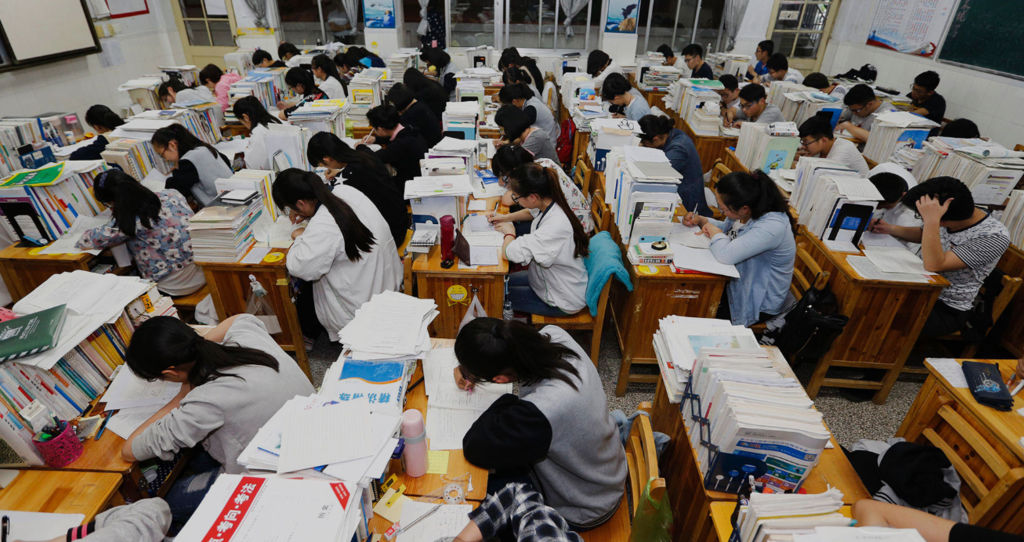
Record low in China's college entrance exams as students shun degrees for jobs
Translated from Greek, summarized and contextualized by DistantNews.
At a glance
News
Named sources
Context piece
- China's national college entrance exam, the 'gaokao,' will see a record low of 12.9 million students this year, a decrease of 450,000 from last year.
- This decline is attributed to a shrinking youth population and a challenging job market with over 16% youth unemployment.
- More students are opting for vocational training programs that offer quicker pathways to employment, as the number of university graduates entering the workforce reaches a record high.
A record-low 12.9 million students are set to take China's national college entrance exam, the 'gaokao,' starting Sunday. This figure represents a significant drop of 450,000 participants compared to last year, signaling a notable shift in educational and career aspirations among Chinese youth.
The declining number of exam takers is linked to several factors, including a shrinking adolescent population eligible for higher education. More critically, it reflects the difficult job market, where unemployment among those aged 16-24 has surpassed 16%. Analysts predict this unemployment rate could worsen, especially as a record 12.7 million graduates are expected to enter the workforce this summer.
This marks the second consecutive year of declining gaokao registrations, following a decrease of 70,000 candidates in 2024. The trend indicates a growing preference among students to bypass traditional university routes. Instead, many are turning towards vocational training programs, which often provide a more direct and immediate path to securing full-time employment.
Evidence of this shift is visible in cities like Beijing, where hundreds of parents recently queued for limited spots at vocational schools. In Shanghai, vocational colleges have reported a 15% increase in enrollments compared to three years ago. Amidst these trends, the Ministry of Education has pledged to enhance security measures for the gaokao, including advanced surveillance systems to prevent cheating using modern technology like mobile phones and smart glasses.
will eliminate any illegal or irregular acts, such as misleading advertising, exorbitant tuition fees, organized fraud, or plagiarism.
DistantNews Editorial
Originally published by Ta Nea in Greek. Translated, summarized, and contextualized by our editorial team with added local perspective. Read our editorial standards.
More Stories



From Our Blog

What Gets Lost (and Found) When News Is Translated

The Critical Role of Diaspora Media in Global News

What Travellers Should Know About Countries with Restricted Press

A Digital Nomad's Guide to Following Local News

How the Same Story Looks Different in Different Countries
