

Red alert in Peru: Over 9 million at very high risk from El Niño floods and droughts
Translated from Spanish and summarized by DistantNews. Read the original for the full story.
At a glance
News
From a news agency
Ongoing story
- Over 9 million people in Peru face a very high risk of floods, landslides, and droughts due to the El Niño phenomenon.
- The northern coastal regions are most vulnerable to intense rains and flooding, while the southern highlands face drought risks.
- Piura department shows the highest risk for floods and landslides, with Puno leading in drought risk.
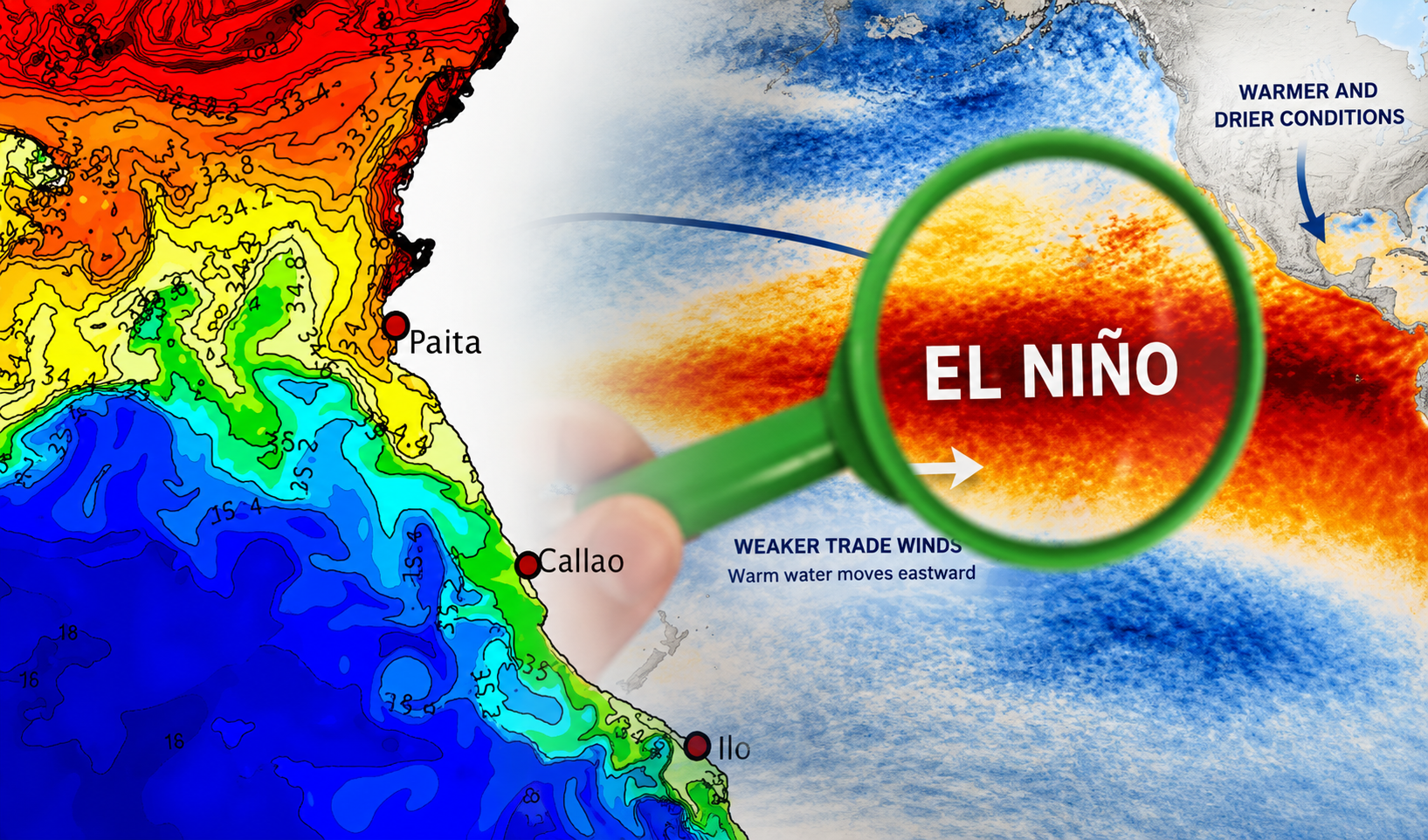
More than 9 million Peruvians are facing a very high risk of severe weather events linked to the El Niño phenomenon, including floods, landslides, and droughts. The National Center for the Estimation, Prevention, and Reduction of Disaster Risk (Cenepred) has released scenarios detailing these threats across different regions of the country.
The assessment, which incorporates meteorological and hydrological data from Senamhi, highlights distinct vulnerabilities. Peru's northern coast is particularly susceptible to intense rainfall and subsequent flooding. Conversely, areas in the southern highlands are at a heightened risk of precipitation scarcity and drought conditions.
Cenepred's data indicates that the Piura department has the highest concentration of people at risk from floods and landslides, with over 1.3 million individuals in 27 districts facing significant danger. Additionally, 20 districts in Piura are also among those most vulnerable to landslides and mass movements, affecting around 280,000 people.
In terms of drought, the southern highlands are the primary concern. Puno department leads this risk category, with 465,890 inhabitants across 29 districts potentially facing water scarcity. In total, 622,301 people in eight departments are at very high risk of drought due to El Niño's impact.
Cenepred continuously updates these evaluations based on new scientific reports and provides technical assistance to regional and local governments. This support is crucial for developing effective prevention plans, risk reduction strategies, and community education programs to prepare for potential emergencies.
About this summary
Originally published by La República in Spanish. Translated, summarized, and contextualized automatically by DistantNews, with a note on how the source frames the story. Not individually reviewed before publishing. How this works.
More Stories
From Our Blog

What Gets Lost (and Found) When News Is Translated

The Critical Role of Diaspora Media in Global News

What Travellers Should Know About Countries with Restricted Press

A Digital Nomad's Guide to Following Local News

How the Same Story Looks Different in Different Countries
