

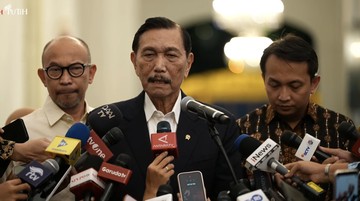

Regarding Potential Hajj Costs for 2027: President Only Nodded
Translated from Indonesian, summarized and contextualized by DistantNews.
At a glance
News
Sources not specified
Context piece
- Indonesia's Minister of Religious Affairs, Mochamad Irfan Yusuf, informed President Prabowo Subianto about a potential increase in Hajj pilgrimage costs for 2027.
- The President acknowledged the information by nodding but has not yet provided a formal response.
- The government aims to keep Hajj costs from becoming an excessive burden on pilgrims, despite rising expenses like the rupiah's exchange rate and flight prices.
Indonesia's Minister of Religious Affairs, Mochamad Irfan Yusuf, has briefed President Prabowo Subianto on the potential for Hajj pilgrimage costs to rise in 2027. The President acknowledged the information with a nod but has not yet issued a formal response, according to Yusuf.
Despite the potential increase, Yusuf stated that President Prabowo remains committed to ensuring the Hajj costs do not become an undue financial burden for pilgrims. This commitment comes amid projections of rising expenses, including a weaker rupiah against the US dollar and increased flight prices. The government is actively exploring measures to mitigate these cost hikes.
He just nodded, he hasn't given a response yet.
During a working meeting on July 7, 2026, the government proposed an increase in the Hajj operational cost (BPIH) to Rp 107.3 million per pilgrim. This represents an increase of approximately Rp 19.9 million compared to the Rp 87.4 million BPIH for 2026. The proposed figure was calculated using an exchange rate of Rp 17,500 per US dollar and Rp 4,666 per Saudi Riyal, aiming for efficiency and service quality.
Whatever happens, we will try not to burden the pilgrims.
Yusuf detailed that the proposed 2027 BPIH allocation would split costs: 56.7% for expenses in Saudi Arabia (Rp 60,891,068) and 43.27% for domestic expenses (Rp 46,449,103), including average flight costs per pilgrim. The potential increase is attributed to the rupiah's weak exchange rate and rising costs for health programs, accommodation, and visa financing for pilgrims who cancel or are replaced.
To ease the financial strain on pilgrims, the Ministry of Hajj and Umrah has proposed a 60:40 scheme. Under this proposal, 60% of the costs would be covered by the Hajj Financial Management Agency's (BPKH) benefit funds, with the remaining 40% to be borne by the pilgrims.
This proposal is submitted to alleviate the financial burden on pilgrims amid projected increases.
DistantNews Editorial
Originally published by Tempo in Indonesian. Translated, summarized, and contextualized by our editorial team with added local perspective. Read our editorial standards.
More Stories


From Our Blog

What Gets Lost (and Found) When News Is Translated

The Critical Role of Diaspora Media in Global News

What Travellers Should Know About Countries with Restricted Press

A Digital Nomad's Guide to Following Local News

How the Same Story Looks Different in Different Countries
