


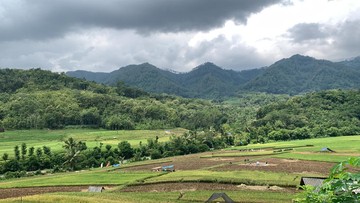
Regency Welcomes Geopark Klaten Designation, Ready to Boost Local Economy
Translated from Indonesian, summarized and contextualized by DistantNews.
At a glance
News
Official statement
New plan
- Klaten Regency's efforts to establish a Geopark have received a boost with the designation of geological sites as Protected Geological Areas (KCAG).
- This designation is expected to enhance special interest tourism and stimulate the local economy.
- The Geopark Klaten, centered in Bayat, comprises 15 sites, including ancient hills, metamorphic rock sites, and unique springs.
The Klaten Regency in Indonesia is taking a significant step towards establishing the Klaten Geopark, following the Ministry of Energy and Mineral Resources' designation of several geological sites as Protected Geological Areas (KCAG). This official recognition, formalized by a Ministerial Decree, provides a new foundation for Klaten's ambitions to develop specialized tourism and boost its local economy.
Regent Hamenang Wajar Ismoyo expressed his enthusiasm for the designation, viewing it as crucial momentum for the Klaten Regency government's ongoing development of the KCAG Klaten, widely known as Geopark Klaten. He anticipates that the area will become a "new destination for geological special interest tourism, which can then create a multiple effect for the improvement of the community's economy."
The KCAG designation is considered a vital stage in Klaten's pursuit of a tourism destination rooted in its geological heritage. Beyond fostering geowisata development, the status provides a legal framework for preserving the naturally formed geological sites. Geopark Klaten encompasses 15 distinct objects, with its main area located in Bayat. These include 13 sites in Bayat featuring ancient hills and metamorphic/old rock sites often used for geological research. Additionally, there is a Nummulites fossil site in Wedi and a unique water source, Umbul Brondong, in Kebonarum.
DistantNews Editorial
Originally published by CNN Indonesia in Indonesian. Translated, summarized, and contextualized by our editorial team with added local perspective. Read our editorial standards.
More Stories


From Our Blog

What Gets Lost (and Found) When News Is Translated

The Critical Role of Diaspora Media in Global News

What Travellers Should Know About Countries with Restricted Press

A Digital Nomad's Guide to Following Local News

How the Same Story Looks Different in Different Countries
