


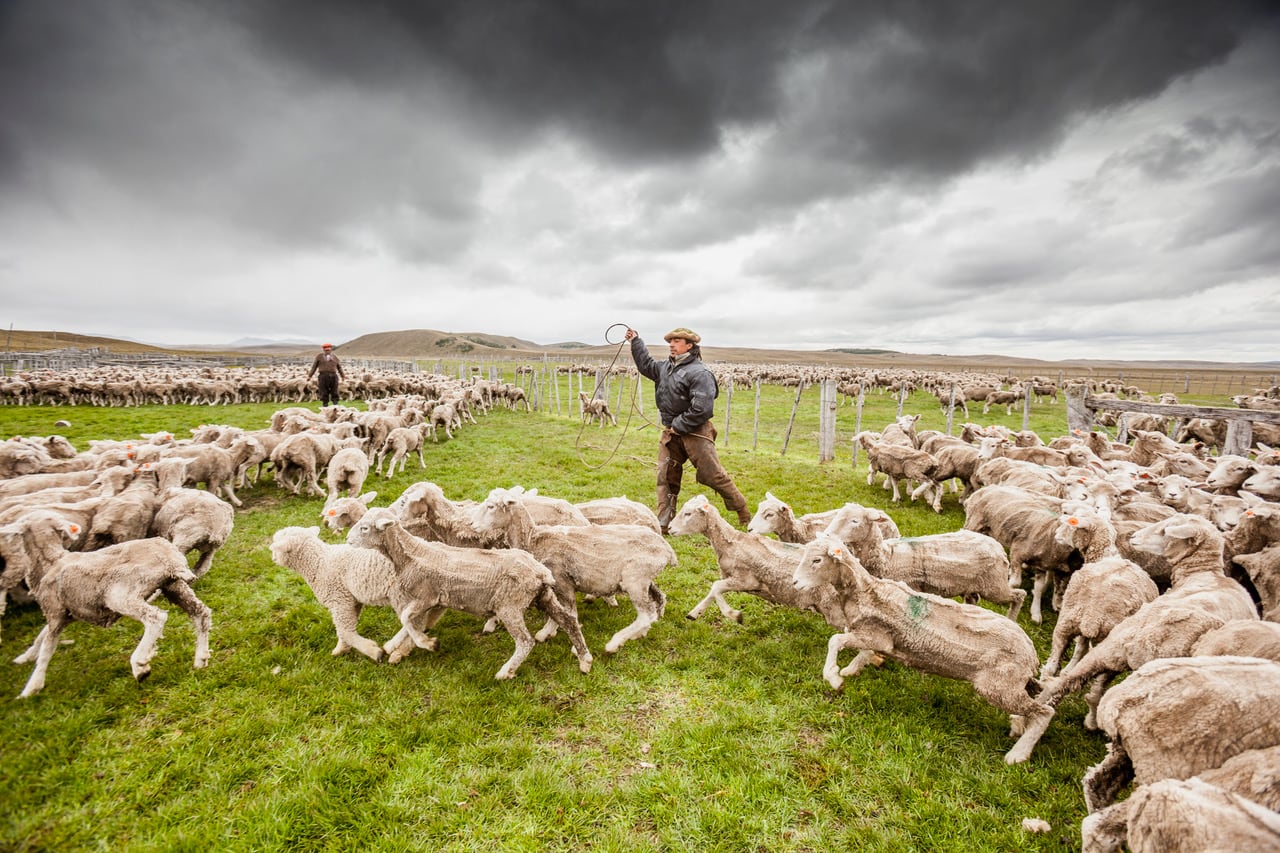
Repopulating Patagonia: The titanic mission to attract families and prove a dream is not lost
Translated from Spanish, summarized and contextualized by DistantNews.
At a glance
In-depth
Named sources
Context piece
- A foundation aims to repopulate rural Patagonia by resettling 150 families within three years.
- The initiative, Fundación Patagonia Rural Sustentable, focuses on diversifying the economy through regenerative agriculture, tourism, and renewable energy.
- The plan emphasizes strategic intervention on a small percentage of land to achieve significant benefits, involving local producers in the process.
Rafael Martínez de Sanzo, driven by a deep connection to Patagonia's vast landscapes, is spearheading an ambitious effort to combat rural depopulation. He co-founded the Fundación Patagonia Rural Sustentable (FPRS) with a clear mission: to prove that production, conservation, science, and social development can mutually reinforce each other.
The foundation plans to resettle at least 150 rural families over the next three years. Their strategy involves establishing productive hubs and diversifying the regional economy. Key areas of focus include regenerative livestock farming, natural fibers, tourism, food with distinct regional identity, renewable energy sources, and the knowledge economy.
Martínez de Sanzo, who first visited the Patagonian steppe over thirty years ago, was captivated by its immensity. He and his brother own two ranches in Santa Cruz province, where he has witnessed firsthand the persistent trend of depopulation. However, he is inspired by the resilience of the local ranchers who remain and continue to invest in agricultural activities.
"The dream is that Patagonia will be repopulated," Martínez de Sanzo stated. He believes that significant positive change can be achieved with minimal intervention. "We believe that it is not necessary to completely transform a 20,000-hectare ranch to change its future. Strategically intervening on between 0.1% and 0.5% of the surface area can generate disproportionate benefits when these areas are designated for fodder reserves, water infrastructure, or productive innovation," he explained.
He highlights the potential of technology and new tools to make previously impossible initiatives feasible. Crucially, he emphasizes that this revitalization must be a collaborative effort with the long-standing inhabitants of the region. "This must be done hand-in-hand with those who created and sustained it until these days; the dream is not lost, it is alive," he affirmed.
DistantNews Editorial
Originally published by La Nación in Spanish. Translated, summarized, and contextualized by our editorial team with added local perspective. Read our editorial standards.
More Stories



From Our Blog

What Gets Lost (and Found) When News Is Translated

The Critical Role of Diaspora Media in Global News

What Travellers Should Know About Countries with Restricted Press

A Digital Nomad's Guide to Following Local News

How the Same Story Looks Different in Different Countries
