


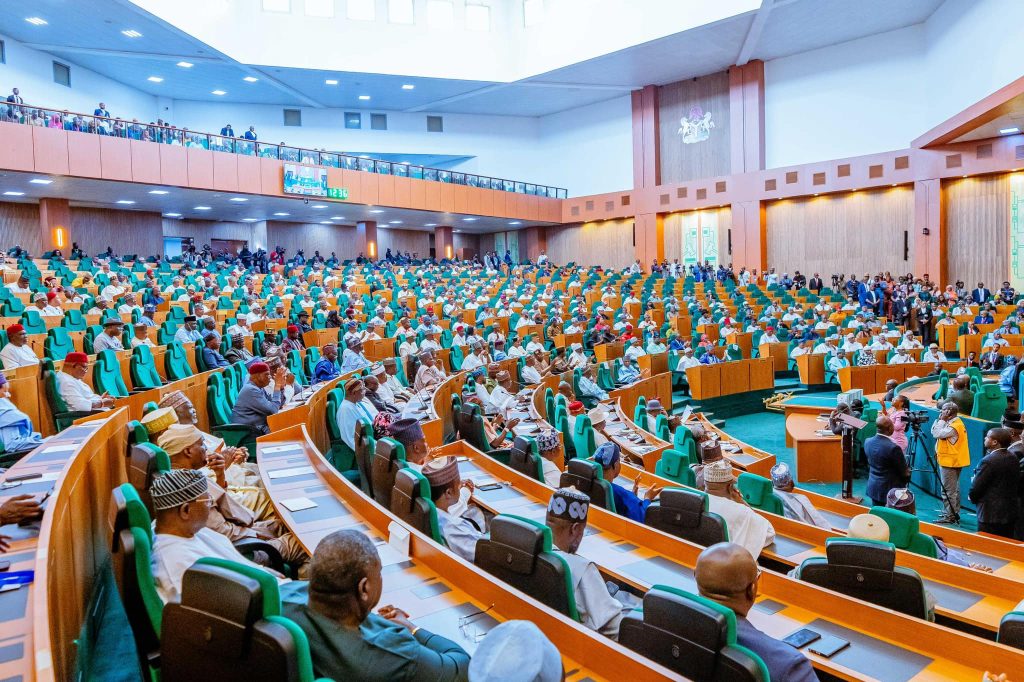
Reps seek crackdown on ransom financing, tighter oversight of BDCs, POS operators
Summarized and contextualized by DistantNews.
At a glance
News
Named sources
Approved/passed
- The House of Representatives urged the Federal Government to intensify efforts against criminal financial networks by strengthening intelligence coordination and tightening oversight of BDCs and POS operators.
- Lawmakers cited reports indicating Nigerians paid an estimated ₦2.23 trillion in ransom between January 2021 and June 2025, fueling organized crime.
- The House called for an inter-agency framework to disrupt ransom financing, stricter law enforcement, and increased funding for financial intelligence infrastructure.
The Nigerian House of Representatives has called for a robust crackdown on the financial channels enabling kidnapping, banditry, and terrorism. Lawmakers urged the Federal Government to bolster financial intelligence coordination and enhance regulatory oversight of Bureau de Change (BDC) operators, Point-of-Sale (POS) operators, and other financial intermediaries.
The resolution, stemming from a motion sponsored by Hon. Ademorin Kuye, highlighted the escalating "ransom economy" as a significant threat to national security and economic stability. Kuye emphasized the government's constitutional duty to protect citizens and the financial system. He pointed to existing legislation, such as the Money Laundering (Prevention and Prohibition) Act and the Terrorism (Prevention and Prohibition) Act of 2022, which empower agencies to combat illicit financial activities.
Nigerians reportedly paid an estimated ₦2.23 trillion in ransom between January 2021 and June 2025.
Citing data from the Nigeria Financial Intelligence Unit (NFIU) and other security organizations, the report indicated that Nigerians may have paid as much as ₦2.23 trillion in ransom between January 2021 and June 2025. This substantial flow of funds reportedly fuels organized criminal activities, allowing kidnappers and terrorist groups to expand their reach. Findings from the National Counter Terrorism Centre also suggest that POS operators and other financial channels are being exploited to facilitate ransom payments and obscure financial trails, complicating investigations and asset recovery efforts.
Lawmakers expressed deep concern that inadequate financial intelligence coordination and weak enforcement of anti-money laundering regulations expose Nigeria to severe security risks. This situation undermines public confidence and contributes to the country's continued presence on the Financial Action Task Force (FATF) grey list. In response, the House urged President Bola Tinubu to establish a coordinated inter-agency framework to disrupt ransom financing and foster collaboration among security, financial, and regulatory bodies. They also advocated for stricter enforcement of laws against ransom payments and terrorism financing, alongside enhanced cooperation among victims, financial institutions, and law enforcement.
The House expressed concern that weak financial intelligence coordination and poor enforcement of anti-money laundering regulations continue to expose Nigeria to significant security risks, undermine public confidence and contribute to the country’s continued placement on the Financial Action Task Force (FATF) grey list.
DistantNews Editorial
Originally published by Vanguard. Summarized and contextualized by our editorial team with added local perspective. Read our editorial standards.
More Stories


From Our Blog

How the Same Story Looks Different in Different Countries

What Gets Lost (and Found) When News Is Translated

The Critical Role of Diaspora Media in Global News

What Travellers Should Know About Countries with Restricted Press

A Digital Nomad's Guide to Following Local News
