


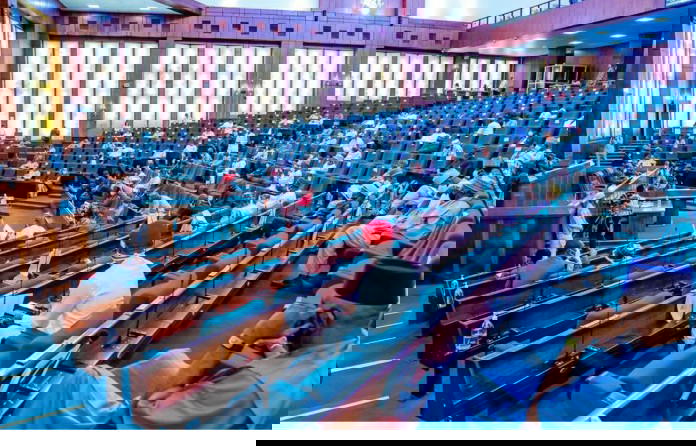
Reps step down bill seeking ban on unbranded, unfortified Edible Oils
Summarized and contextualized by DistantNews.
At a glance
News
Named sources
New plan
- A bill to ban unbranded and unfortified edible oils was deferred in Nigeria's House of Representatives.
- Lawmakers debated the bill's public health aims versus its potential economic impact on small producers.
- Concerns were raised about duplicating the roles of existing regulatory agencies like NAFDAC.
Nigeria's House of Representatives has deferred a bill that sought to prohibit the production, importation, distribution, sale, and consumption of unbranded and unfortified edible oils. The decision followed divergent views among lawmakers regarding the legislation's implications.
This is a matter of life and death. It is a call to protect the health of Nigerians.
The bill, sponsored by Rep. Chike Okafor, aimed to address public health risks associated with consuming unbranded oils, citing that about 67% of Nigerians consume them, while only 31% of available oils are fortified. Okafor highlighted the World Health Organization's stance on food fortification as a cost-effective strategy for improving public health.
However, some representatives opposed the bill, fearing it would negatively impact thousands of small-scale palm oil producers. Rep. Paschal Agbodike argued that the legislation could undermine the livelihoods of rural communities dependent on local palm oil production. He stressed the importance of considering the economic well-being of these communities.
This bill is not okay. Many of my people are into the local production of palm oil. We must be careful about the laws we make because the livelihoods of people in rural areas are very important.
Further opposition came from lawmakers who felt the bill might duplicate the functions of existing regulatory bodies. Rep. Gaza Gbefwi pointed out that the National Agency for Food and Drug Administration and Control (NAFDAC) already has the statutory responsibility to regulate edible oils. He suggested strengthening existing laws and oversight rather than introducing new legislation. Rep. Wale Raji echoed this sentiment, noting NAFDAC's existing role.
I do not think we need to over-legislate. Instead, we should strengthen existing laws and oversight. We already have NAFDAC and the Standards Organisation of Nigeria. If there are gaps in their enabling Acts, we can amend them.
DistantNews Editorial
Originally published by Vanguard. Summarized and contextualized by our editorial team with added local perspective. Read our editorial standards.
More Stories



From Our Blog

How the Same Story Looks Different in Different Countries

What Gets Lost (and Found) When News Is Translated

The Critical Role of Diaspora Media in Global News

What Travellers Should Know About Countries with Restricted Press

A Digital Nomad's Guide to Following Local News
