


Rescuers still blocked from Trishuli-3A tunnel by mud and water
Translated from English and summarized by DistantNews. Read the original for the full story.
At a glance
News
Named sources
Ongoing story
- Rescuers have been unable to enter the tunnel leading to the underground powerhouse at Nepal’s 60-megawatt Trishuli-3A hydropower project because of mud and water.
- Officials said 40 to 42 engineers were working inside when flooding stopped power generation and disabled the pumps that normally remove seepage.
- Rescuers have found no signs of the trapped workers, but officials say oxygen and possible access to water could leave a chance of survival if the powerhouse is not buried.
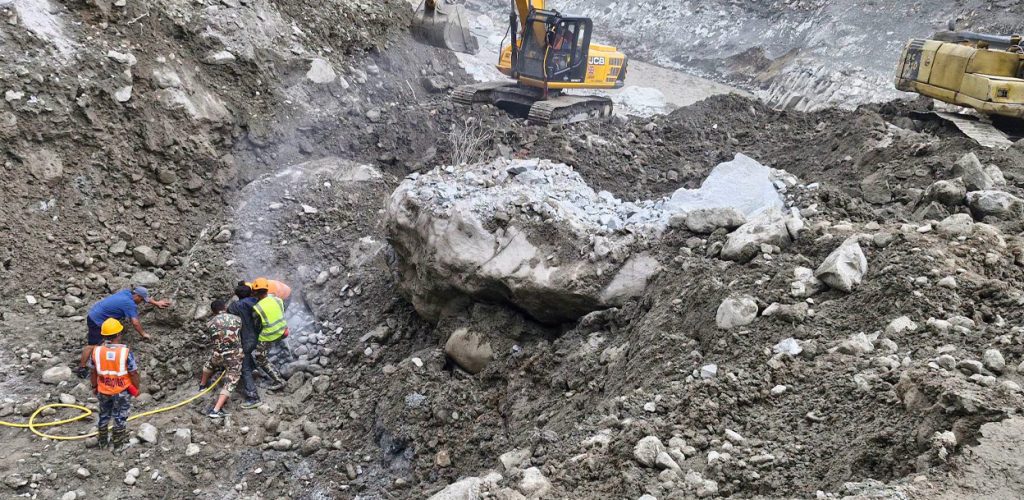
Mud and water are still preventing rescuers from reaching the underground powerhouse at Nepal’s Trishuli-3A hydropower project, where 40 to 42 engineers were working when flooding shut down the facility.
We are working at the access tunnel, and the powerhouse is 183 metres inside from the point where we are cutting. If the employees are alive, we hope to find them in the powerhouse. That is why we are making every possible effort to enter.
The team discovered a cable access tunnel on Sunday and hoped to use it to reach the powerhouse. But Nepal Electricity Authority Deputy Executive Director Madan Timsina said the tunnel was filled with water and mud when rescuers tried to enter on Monday. Water continued seeping through as the team excavated, forcing workers to cut farther through the tunnel wall. The powerhouse lies 183 metres beyond the point where they were cutting.
Flooding also stopped electricity generation and disabled the pumps normally used to remove water from the underground facility. Mud has continued to accumulate inside the access tunnel. Rescuers have worked continuously for three days since reaching the site, but so far they have detected no signs from anyone trapped inside.
We are continuing maximum efforts because we believe there is still a possibility of rescuing people alive.
Timsina said the operation continued because rescuers believed people could still be alive. A source involved in the rescue said the powerhouse could contain enough oxygen for about 15 days, and that trapped workers might have access to water if mud had not entered and buried the facility. Rescuers hoped to clear the passage by Tuesday if the debris was not extensive.
If the mud has not entered and buried the powerhouse, there is greater hope that people could still be rescued alive. There is enough oxygen in the powerhouse for around 15 days, and if they have been able to get water, there is a possibility they could still be alive.
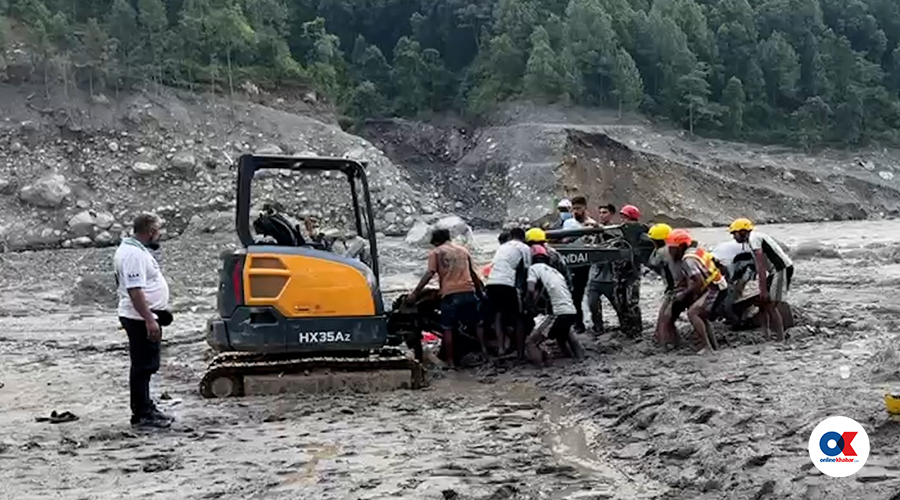
The operation initially moved slowly because equipment and manpower did not arrive in sufficient numbers. Rescuers repaired two broken excavators found nearby, while the Army brought a third excavator on Monday. An official said there was no longer a major equipment shortage, although the work could have advanced faster with more excavators from the start.
We could not initially bring an excavator from elsewhere. We repaired two excavators that were found nearby but had broken down and started work with them. The Army finally brought a third excavator on Monday.
About this summary
Originally published by OnlineKhabar English in English. Translated, summarized, and contextualized automatically by DistantNews, with a note on how the source frames the story. Not individually reviewed before publishing. How this works.
More Stories

From Our Blog

What Gets Lost (and Found) When News Is Translated

The Critical Role of Diaspora Media in Global News

What Travellers Should Know About Countries with Restricted Press

A Digital Nomad's Guide to Following Local News

How the Same Story Looks Different in Different Countries
