


Research: Where House Longhorn Beetles and Termites Abound
Translated from German, summarized and contextualized by DistantNews.
TLDR
- The Materialprüfanstalt Brandenburg GmbH (MPA) in Eberswalde cultivates wood-destroying insects like house longhorn beetles and termites under controlled tropical conditions.
- These insects are used to test the efficacy of wood preservatives for global manufacturers and to assess pest control measures in historical buildings.
- MPA is one of Europe's few institutions specializing in a broad spectrum of wood protection testing, building on Eberswalde's long forestry research tradition.
In Eberswalde, a region with deep roots in forestry, the Materialprüfanstalt Brandenburg GmbH (MPA) is conducting vital research into wood protection. As reported by dpa and featured in Die Zeit, this institution is not just a testing facility; it's a hub for understanding and combating the persistent threat of wood-destroying insects like the house longhorn beetle and termites. The work done here is crucial for manufacturers worldwide and for the preservation of our cultural heritage.
The house longhorn feels particularly comfortable in warmth and often infests roof structures.
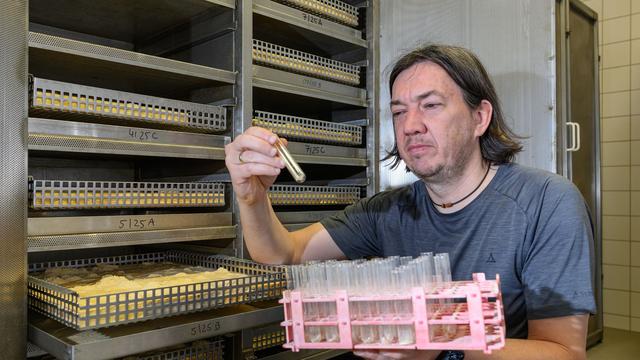
Thomas Kolling at MPA meticulously cultivates thousands of house longhorn larvae in steel cabinets, creating an ideal environment for their rapid development. These larvae, which would normally take years to mature in the wild, complete their cycle in about 14 months under MPA's controlled conditions. This accelerated development allows for efficient testing of wood preservatives. Manufacturers send their products to MPA to be tested against these voracious pests. The process involves exposing treated wood to newly hatched larvae or treating infested wood to determine the effectiveness of the protective agents.
We have ideal conditions here for the larvae.
Beyond product testing, MPA also plays a critical role in assessing pest control strategies for heritage sites. For churches and museums, where traditional methods might be too damaging, fumigation is often the only viable option. MPA provides "test beams" infested with larvae, which are placed in these buildings during fumigation. Afterward, the beams are opened to verify if the insects have been eradicated, providing essential proof of the treatment's success. This service is invaluable for protecting irreplaceable historical structures and artifacts.
Either we place freshly hatched larvae on treated wood and check if they die. Or we treat wood that already contains pests and see after a certain time if the larvae are dead.
According to managing director Robby Wegner, MPA is one of the few institutions in Europe, alongside the BAM in Berlin, capable of offering such a comprehensive range of wood protection tests. Their specialization in this area is a testament to Eberswalde's historical significance in forestry research. The company's origins trace back to the first half of the 20th century, evolving from institutes focused on wood durability in infrastructure projects. This long-standing tradition ensures that MPA remains at the forefront of wood protection science, safeguarding structures from the silent, destructive work of insects.
In churches or museums, rooms can often only be fumigated to protect the valuable furnishings.
DistantNews Editorial
Originally published by Die Zeit in German. Translated, summarized, and contextualized by our editorial team with added local perspective. Read our editorial standards.
More Stories



From Our Blog

What Gets Lost (and Found) When News Is Translated

How the Same Story Looks Different in Different Countries

The Critical Role of Diaspora Media in Global News

What Travellers Should Know About Countries with Restricted Press

A Digital Nomad's Guide to Following Local News
