


Revisiting Polish-German friendship: Updating a 35-year-old treaty amid geopolitical shifts
Translated from Polish, summarized and contextualized by DistantNews.
At a glance
Analysis
Sources not specified
Context piece
- The article discusses the 35th anniversary of the treaty of friendship between Poland and Germany, a milestone in modern bilateral cooperation.
- It questions how to update this treaty in the face of geopolitical shifts, Russian threats, and populist propaganda.
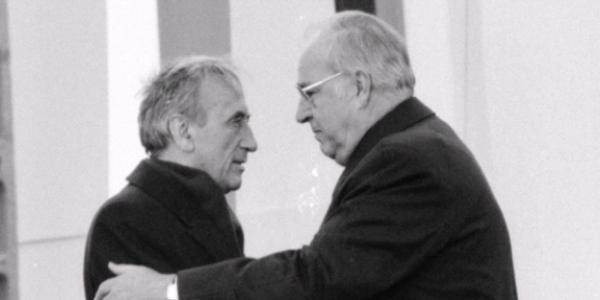
- The piece references the "reconciliation mass" in 1989 where Chancellor Helmut Kohl and Prime Minister Tadeusz Mazowiecki exchanged a "sign of peace," symbolizing a new era after the fall of the Berlin Wall.
Thirty-five years ago, Poland and Germany forged an unprecedented treaty of friendship, a pivotal moment in contemporary cooperation between the two nations. The article reflects on how to revitalize this agreement amidst current geopolitical upheavals, the looming threat from Russia, and the pervasive influence of populist propaganda.
The text recalls the "reconciliation mass" on November 12, 1989, where West German Chancellor Helmut Kohl and Polish Prime Minister Tadeusz Mazowiecki exchanged a "sign of peace." This symbolic gesture occurred shortly after the fall of the Berlin Wall on November 9, 1989, an event that dismantled the post-World War II Yalta order which had placed Poland within the Soviet Union's sphere of influence.
Kohl's visit to Poland was abruptly cut short as he returned to Berlin on November 9, 1989, the very day the Berlin Wall began to crumble. Erected in 1961, the wall had long stood as a stark symbol of the division between the NATO and Soviet blocs. Its collapse signaled the end of the Yalta order, fundamentally altering the geopolitical landscape for Poland and Eastern Europe.
The article poses a critical question: how can the spirit and framework of the 1989 treaty be updated to address the complex challenges of today? It suggests that the ongoing geopolitical tremors, the persistent Russian threat, and the rise of populist narratives necessitate a re-evaluation and strengthening of the Polish-German relationship, moving beyond historical reconciliation to address contemporary security and political realities.
DistantNews Editorial
Originally published by Rzeczpospolita in Polish. Translated, summarized, and contextualized by our editorial team with added local perspective. Read our editorial standards.
More Stories

From Our Blog

What Gets Lost (and Found) When News Is Translated

The Critical Role of Diaspora Media in Global News

What Travellers Should Know About Countries with Restricted Press

A Digital Nomad's Guide to Following Local News

How the Same Story Looks Different in Different Countries
