


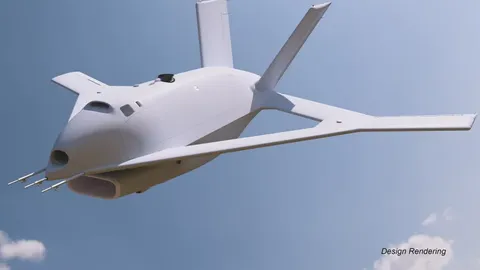
Revolutionary aircraft with no moving parts may fly this year
Translated from Estonian, summarized and contextualized by DistantNews.
At a glance
News
Sources not specified
Ongoing story
- A revolutionary aircraft with no moving control surfaces is nearing completion and aims for its first flight by the end of 2026.
- Developed by DARPA and Aurora Flight Sciences, the X-65 features a unique triangular wing design and is expected to be more aerodynamic, lighter, and have fewer failure points.
- The technology could pave the way for next-generation drones or commercial aircraft.
A groundbreaking aircraft, the X-65, is on the cusp of its maiden flight, potentially revolutionizing aviation. Aurora Flight Sciences is currently integrating the triangular wings of the X-65 onto its fuselage at their Virginia assembly plant. This milestone brings DARPA, the Pentagon's advanced research arm, and Aurora closer to their goal of achieving the first flight before the end of 2026.
The X-65 distinguishes itself with its lack of moving control surfaces, a design choice that promises enhanced aerodynamics, reduced weight, and fewer points of potential failure. This innovative approach could significantly influence the development of future unmanned aerial vehicles and even commercial airliners.
The successful completion of the X-65's first flight would mark a significant advancement in aerospace technology, opening new possibilities for aircraft design and performance.
DistantNews Editorial
Originally published by Postimees in Estonian. Translated, summarized, and contextualized by our editorial team with added local perspective. Read our editorial standards.
More Stories
/nginx/o/2026/07/02/17757040t1he479.jpg)


From Our Blog

What Gets Lost (and Found) When News Is Translated

The Critical Role of Diaspora Media in Global News

What Travellers Should Know About Countries with Restricted Press

A Digital Nomad's Guide to Following Local News

How the Same Story Looks Different in Different Countries
