


Rhine River levels continue to drop after historic lows
Translated from German, summarized and contextualized by DistantNews.
At a glance
News
From a news agency
Ongoing story
- The Rhine River in Germany is experiencing historically low water levels, with further drops expected in the coming days.
- Several key measuring points, including Cologne, Düsseldorf, and Duisburg-Ruhrort, are predicted to reach new record lows by Friday.
- The low water levels are significantly impacting shipping and navigation on Europe's crucial waterway.
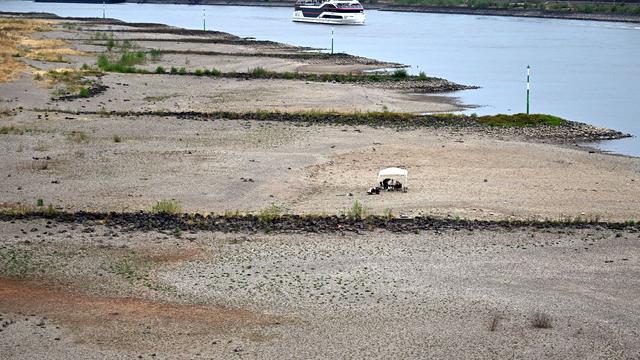
Water levels on the Rhine River in Germany are continuing to fall after reaching historic lows, with forecasters predicting even more drastic drops in the coming days. The situation is particularly critical in North Rhine-Westphalia, where several key measuring stations are expected to hit new record lows by Thursday and Friday.
Moritz Axt, a spokesperson for the Waterways and Shipping Office Rhine, stated that the situation is expected to worsen. At the Cologne gauge, water levels are predicted to fall to just 63 centimeters by Friday, surpassing the previous historical low of 69 centimeters recorded on October 23, 2018. Similarly, Düsseldorf is forecast to see levels drop to 17 centimeters by Friday, down from a recent measurement of 20 centimeters, which itself was below the 2018 record of 23 centimeters.
The Duisburg-Ruhrort gauge has already recorded a new historical low of 149 centimeters, significantly lower than the previous record of 153 centimeters from 2018. Forecasts indicate a further drop to 144 centimeters. At Emmerich, the water level is so low that the gauge's float is reportedly dry, with current measurements at minus six centimeters, well below the August 18, 2022, record of minus one centimeter. These extreme low water levels pose significant challenges for shipping and navigation on one of Europe's most important commercial waterways.
Everything is likely to become even more acute.
DistantNews Editorial
Originally published by Die Zeit in German. Translated, summarized, and contextualized by our editorial team with added local perspective. Read our editorial standards.
More Stories


From Our Blog

What Gets Lost (and Found) When News Is Translated

How the Same Story Looks Different in Different Countries

The Critical Role of Diaspora Media in Global News

What Travellers Should Know About Countries with Restricted Press

A Digital Nomad's Guide to Following Local News
