


Rhine River Levels Hit New Record Lows in Germany
Translated from German, summarized and contextualized by DistantNews.
At a glance
News
From a news agency
Context piece
- Rhine river water levels in North Rhine-Westphalia have hit new record lows at all four major measuring stations.
- The Düsseldorf gauge recorded 15 centimeters, significantly below its previous record, while Duisburg-Ruhrort reached 145 centimeters.
- Forecasts indicate no significant recovery in water levels in the coming days, impacting shipping capacity.
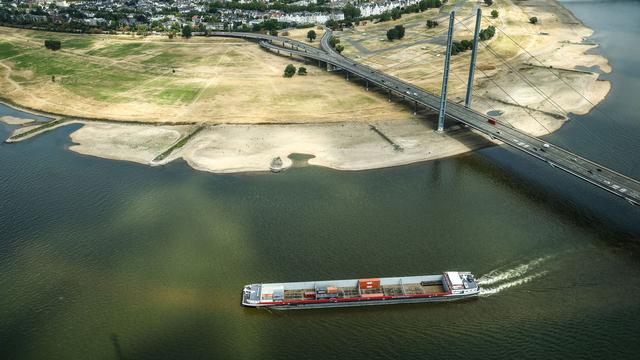
Water levels on the Rhine River in North Rhine-Westphalia have plunged to unprecedented lows, setting new historical records at all four major measurement points. In Düsseldorf, the water level dropped to a mere 15 centimeters, surpassing the previous record set just days earlier by a significant margin. Similarly, the Duisburg-Ruhrort gauge registered 145 centimeters, falling below its prior record of 148 centimeters from the previous Sunday.
Further downstream, the situation is equally critical. In Cologne, the water level fell to 60 centimeters, down from a recent historical low of 67 centimeters recorded just days before. The Emmerich gauge has been in negative territory for days, with the probe now reading a new low of minus six centimeters. Projections suggest this level could drop further to minus eight centimeters by Saturday.
Unfortunately, any significant recovery in water levels is not anticipated in the immediate future. Forecasts predict only minor increases of a few centimeters by Tuesday, meaning the river will remain at critically low levels. While ships can still navigate the Rhine, their cargo capacity is severely restricted compared to normal conditions. The depth of the main shipping channel is considerably greater than the measured water level at the banks; for instance, in Cologne, it is 1.11 meters deeper. This disparity means vessels must carry much less freight than usual, impacting riverine transport and related industries.
DistantNews Editorial
Originally published by Die Zeit in German. Translated, summarized, and contextualized by our editorial team with added local perspective. Read our editorial standards.
More Stories


From Our Blog

What Gets Lost (and Found) When News Is Translated

How the Same Story Looks Different in Different Countries

The Critical Role of Diaspora Media in Global News

What Travellers Should Know About Countries with Restricted Press

A Digital Nomad's Guide to Following Local News
