

'Robin Hood's Oak' dies after 1,000 years; what will happen to it
Translated from Romanian, summarized and contextualized by DistantNews.
At a glance
News
Named sources
Outcome reported
- The Major Oak, a 1,000-year-old symbol of Sherwood Forest, has died after failing to bud or produce leaves this year.
- The ancient tree was famously associated with the legend of Robin Hood, said to have sheltered him and his Merry Men.
- Factors contributing to its decline include soil compaction, changes in groundwater levels, and climate change impacts like recent heatwaves and droughts.
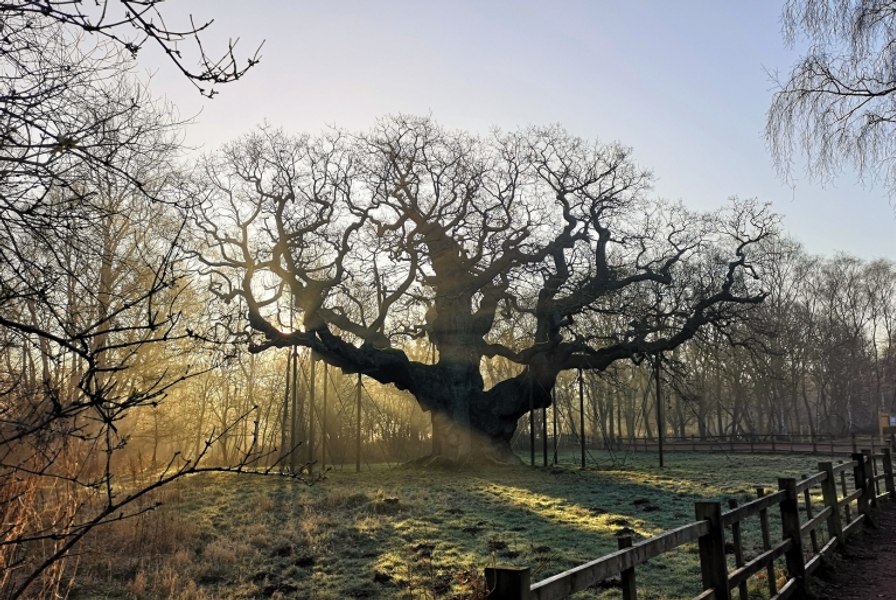
The Major Oak, an iconic symbol of England's Sherwood Forest and estimated to be over 1,000 years old, has died. The ancient tree, famous for its association with the legend of Robin Hood, failed to produce buds or leaves this spring, signaling the end of its long life, according to The Guardian.
For centuries, the Major Oak was believed to have provided shelter to Robin Hood and his band of outlaws as they evaded the Sheriff of Nottingham. With a trunk circumference of approximately 11 meters and a crown spread of nearly 28 meters, it stood as one of Europe's largest and oldest oak trees.
Specialists attribute the tree's decline to a combination of factors accumulated over two centuries. These include soil compaction from the high volume of visitors, alterations in groundwater levels, and the effects of climate change, particularly the increasingly hot and dry summers in recent years. Arborist Reg Harris noted that the lack of rainfall and record temperatures significantly contributed to its degradation, with the tree showing minimal leaf growth in 2025 and none this year.
Despite its death, the Major Oak will not be removed. Experts state that dead wood continues to provide a habitat for numerous insect species, fungi, and other organisms dependent on old trees. Conservation organizations are using the tree's demise to highlight the vulnerability of ancient woodlands. The Woodland Trust points out that such trees lack special legal protection in the UK, and many ecologically and historically significant trees are lost annually.
The lack of rainfall in recent years and record temperatures have significantly contributed to its degradation.
DistantNews Editorial
Originally published by Adevărul in Romanian. Translated, summarized, and contextualized by our editorial team with added local perspective. Read our editorial standards.
More Stories



From Our Blog

What Gets Lost (and Found) When News Is Translated

The Critical Role of Diaspora Media in Global News

What Travellers Should Know About Countries with Restricted Press

A Digital Nomad's Guide to Following Local News

How the Same Story Looks Different in Different Countries
