


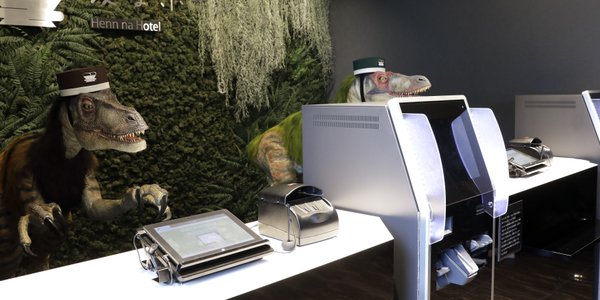
Robots will revolutionize hotels, but won't replace empathy
Translated from Polish, summarized and contextualized by DistantNews.
At a glance
News
Documents & data
Context piece
- Robots and AI are increasingly being integrated into the hospitality industry, driven by cost pressures and the need for operational efficiency.
- Studies show that AI investments in hotels can yield a positive return on investment within three years, improving efficiency by over 38% and reducing room delivery times by 34%.
- While automation handles repetitive tasks, experts emphasize that human empathy and relationship-building remain crucial for traditional hospitality.
The hospitality sector is witnessing a significant boom in artificial intelligence and robotics, driven by a pragmatic need for economic optimization rather than mere technological novelty. A study by the International Archives of Science and Research highlights that investments in AI-powered service robots in hotels can achieve a positive return on investment in under three years. This integration leads to a substantial increase in overall operational efficiency, estimated at over 38%.
Automation is particularly impactful in areas like room delivery, where robotic systems can reduce service times by an average of 34%. Unlike human staff, robots can operate continuously without distraction, significantly speeding up order fulfillment. Furthermore, guest preferences are shifting, with a notable 42% of surveyed guests indicating a preference for interacting with robots for simple tasks typically handled by concierge staff.
However, experts stress that the primary goal of automation in hotels is to alleviate the workload of human employees, not to replace them entirely. Elżbieta Lendo, president of the Polish Independent Hotels Foundation, confirms that automation will advance rapidly in hospitality due to cost pressures and the drive for efficiency. Robots are expected to handle repetitive tasks, enabling hotels to better utilize resources and maintain high service standards.
Lendo emphasizes that technology will serve as a support for human staff, enhancing their ability to build guest relationships rather than replacing the core element of human hospitality. While Europe's approach to automation focuses on cleaning and internal logistics, with successful implementations like autonomous cleaning robots in Hunguest Hotels, the underlying principle remains to augment human capabilities, not to eliminate the essential human touch in guest services.
Hotelarstwo należy do branż, w których automatyzacja będzie postępowała bardzo dynamicznie, przede wszystkim ze względu na rosnącą presję kosztową i potrzebę zwiększania efektywności operacyjnej.
DistantNews Editorial
Originally published by Rzeczpospolita in Polish. Translated, summarized, and contextualized by our editorial team with added local perspective. Read our editorial standards.
More Stories



From Our Blog

What Gets Lost (and Found) When News Is Translated

The Critical Role of Diaspora Media in Global News

What Travellers Should Know About Countries with Restricted Press

A Digital Nomad's Guide to Following Local News

How the Same Story Looks Different in Different Countries
