


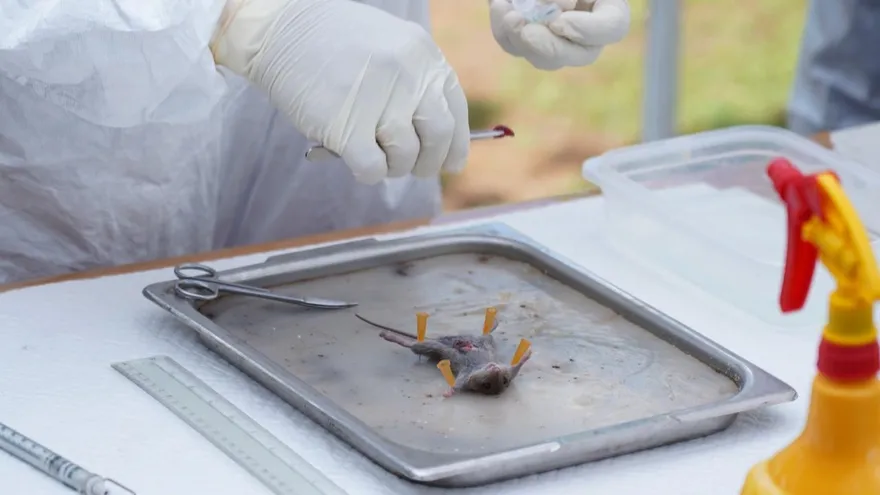
Rodent characterization in Montijo strengthens hantavirus surveillance
Translated from Spanish, summarized and contextualized by DistantNews.
At a glance
News
Named sources
Ongoing story
- Health authorities are conducting rodent characterization in Montijo, Veraguas, to strengthen surveillance against hantavirus.
- The initiative involves specialists from the Gorgas Memorial Institute and the Ministry of Health.
- The southern area of Veraguas is considered endemic for hantavirus, with cases recorded since 2003.
Health authorities are intensifying efforts to combat hantavirus by conducting a comprehensive rodent characterization in the Montijo district of Veraguas province. The initiative, led by the Gorgas Memorial Institute for Health Studies (ICGES) in collaboration with the Ministry of Health (MINSA), aims to identify rodent species in the region and bolster epidemiological surveillance.
Specialists from the Gorgas Institute and technical staff from the Veraguas Regional Health Office are engaged in fieldwork throughout the week. Their work focuses on identifying rodent species and gathering scientific data to enhance prevention and control strategies for hantavirus. This effort is part of an ongoing research and training process for regional Vector Control personnel, emphasizing ecological factors linked to the disease.
Blas Armien of the Gorgas Institute explained that the goal is to deepen the technical team's understanding of rodent behavior, habitats, and their role in virus transmission. This knowledge is crucial for improving community prevention measures. The southern part of Veraguas, encompassing the districts of Soná, Las Palmas, Montijo, and Mariato, is recognized as an endemic zone for hantavirus, with a history of cases dating back to 2003.
The region possesses the three essential elements for studying the disease: the presence of rodents as reservoirs, identified virus strains, and documented human cases. The research is expected to strengthen the capabilities of health personnel and provide updated information on rodent populations in the province. This collaborative work between the Gorgas Institute and MINSA is seen as a significant opportunity to refine zoonotic disease prevention strategies.
The objective is to expand the technical team's knowledge about the behavior of rodents, their habitat, and the relationship they maintain with the transmission of the virus, key information to improve prevention actions in communities.
DistantNews Editorial
Originally published by TVN Panamá in Spanish. Translated, summarized, and contextualized by our editorial team with added local perspective. Read our editorial standards.
More Stories

From Our Blog

What Gets Lost (and Found) When News Is Translated

The Critical Role of Diaspora Media in Global News

What Travellers Should Know About Countries with Restricted Press

A Digital Nomad's Guide to Following Local News

How the Same Story Looks Different in Different Countries
