


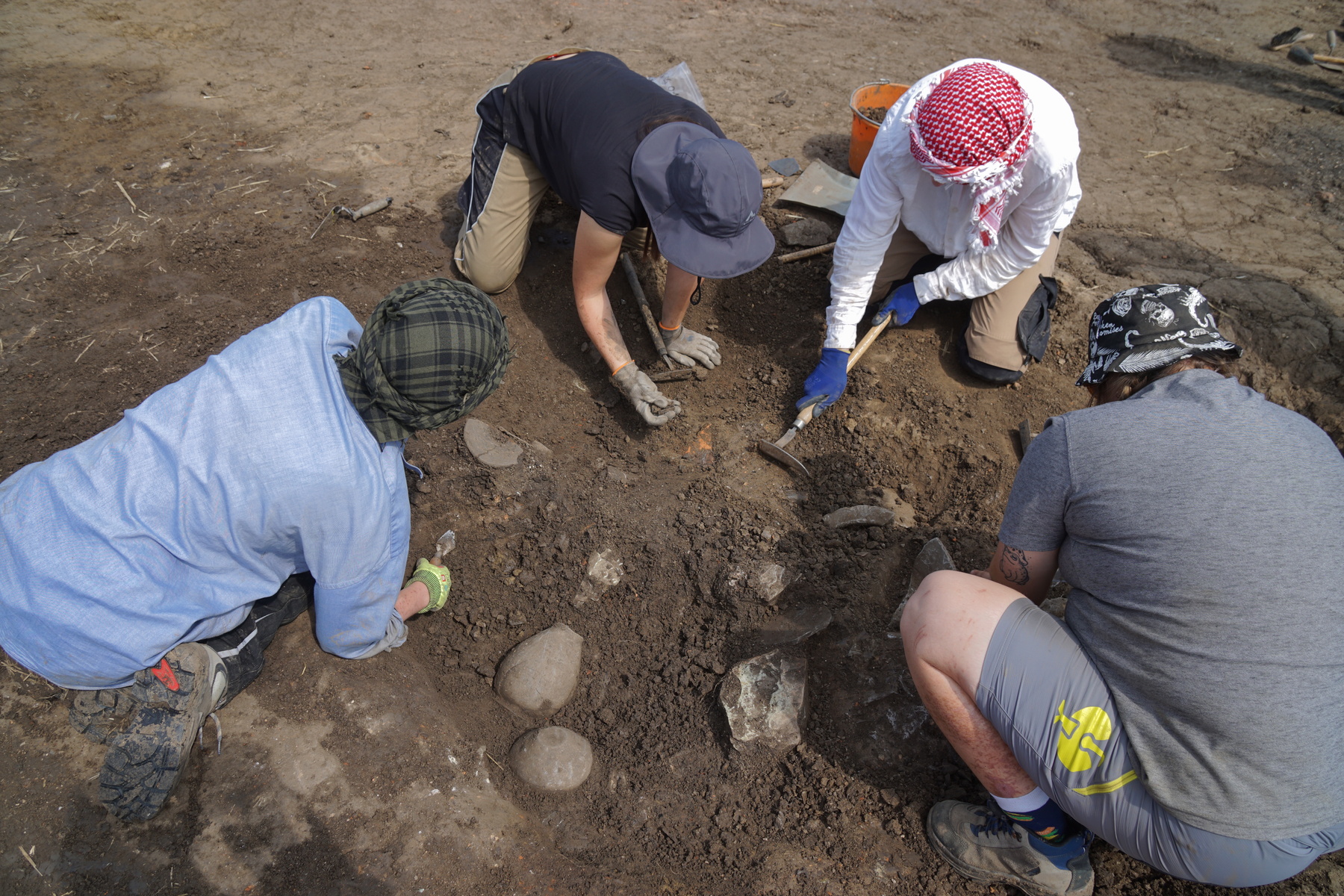
Roman ceramic factory discovered in Burgenland
Translated from German, summarized and contextualized by DistantNews.
At a glance
News
Sources not specified
Context piece
- Archaeologists discovered two Roman-era kilns and waste pits filled with ceramic debris during excavations in Burgenland, Austria.
- Geomagnetic surveys suggest approximately 100 more kilns may lie beneath the surface, indicating a large-scale production site.
- The findings, including well-preserved vessels and evidence of specialized production, offer insights into Roman pottery manufacturing.
University of Vienna students unearthed a significant Roman-era ceramic factory during excavations in Hannersdorf, Burgenland, Austria. The site yielded two kilns and pits full of ceramic waste, with geomagnetic surveys indicating the potential presence of around 100 more kilns underground.
So many will they never see again in their entire lives.
Grabungsleiterin Basema Hamarneh, a professor of classical archaeology at the University of Vienna, described the find as "unbelievable" and a unique opportunity for students. The kilns, measuring two to 2.5 meters in diameter and found only 40 centimeters deep, featured a two-level structure: a firing chamber with clay pillars below and a kiln chamber above, resembling a pizza oven.
Our expectations were exceeded.
"We are dealing with a huge organizational structure here," Hamarneh stated, noting that such large-scale operations are rare, with most finds involving smaller kilns from local communities. A similarly sized ceramic factory is known only from Hrtovci-Gomolava in Serbia. The kilns, dating from the mid-first to mid-second century AD, varied in size and were specialized for specific products, such as plates or larger forms.
Their structure consists of two levels: a firing chamber with clay pillars arranged in a circle below and a firing chamber – similar to a pizza oven – with a dome above.
The discovery of numerous misfired pieces provides valuable insights into the production processes. The site also yielded imported "Terra Sigillata," a fine, glossy orange ceramic primarily produced in North Africa, Gaul, and the Rhineland. The extensive findings suggest a large-scale operation catering to demand beyond local needs.
We are dealing with a huge organizational structure here.
DistantNews Editorial
Originally published by Die Presse in German. Translated, summarized, and contextualized by our editorial team with added local perspective. Read our editorial standards.
More Stories



From Our Blog

What Gets Lost (and Found) When News Is Translated

The Critical Role of Diaspora Media in Global News

What Travellers Should Know About Countries with Restricted Press

A Digital Nomad's Guide to Following Local News

How the Same Story Looks Different in Different Countries
