


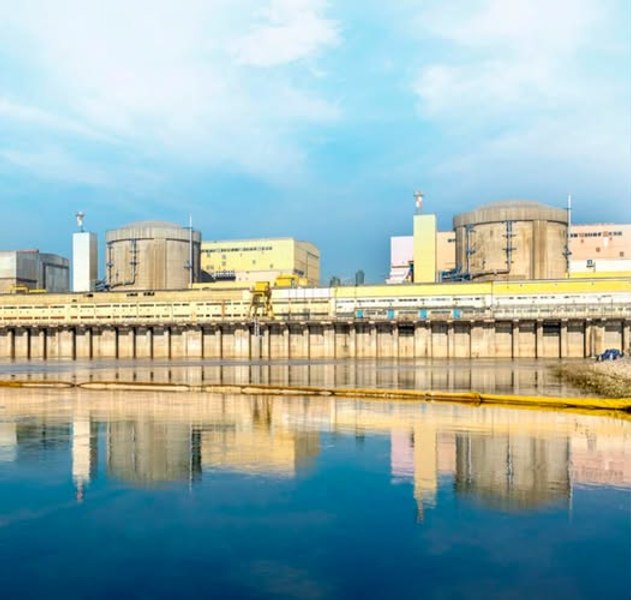
Romania Acts to Secure Cooling Water for Cernavodă Nuclear Plant Amid Record Low Danube Flow
Translated from Romanian, summarized and contextualized by DistantNews.
At a glance
News
Official statement
New plan
- Romania's National Committee for Emergency Situations approved measures to ensure sufficient water flow for cooling at the Cernavodă Nuclear Power Plant.
- The Danube River is experiencing its lowest flow rate in recent history, prompting urgent dredging and construction of a spur to divert water.
- Additional water will be released from Olt River reservoirs, and emergency pumps will be mobilized if needed to maintain operational water levels.
Romania's National Committee for Emergency Situations (CNSU) has approved urgent measures to secure adequate water flow for cooling at the Cernavodă Nuclear Power Plant, as the Danube River reaches its lowest level in recent history. The decision addresses the critical need to maintain operational capacity at the plant amid environmental challenges.
To combat the low water levels, authorities will undertake emergency dredging of the Danube's course near Cernavodă. Additionally, a spur will be constructed on the Old Danube channel to redirect water towards the canal connecting the Danube to the Black Sea, ultimately supplying the power plant's cooling systems. Military specialists will assist with topobatimetric and geodetic measurements, as well as underwater work.
Further bolstering the water supply, the Ministry of Energy and Hidroelectrica will release additional water from Olt River reservoirs starting August 22, 2026, for five days. This supplementary water will also be used for increased electricity production. The Danube-Black Sea canal will serve as an operational reserve, with the National Agency for Water Resources managing water release to the plant's intake.
In response to potential needs, the Department for Emergency Situations will deploy high-capacity pumps to ensure the Cernavodă plant maintains its required water levels. These measures stem from analyses conducted by responsible institutions and specialists consulted during the inter-ministerial committee meeting focused on unblocking the Bala 2 project.
DistantNews Editorial
Originally published by Adevărul in Romanian. Translated, summarized, and contextualized by our editorial team with added local perspective. Read our editorial standards.
More Stories

From Our Blog

What Gets Lost (and Found) When News Is Translated

The Critical Role of Diaspora Media in Global News

What Travellers Should Know About Countries with Restricted Press

A Digital Nomad's Guide to Following Local News

How the Same Story Looks Different in Different Countries
