


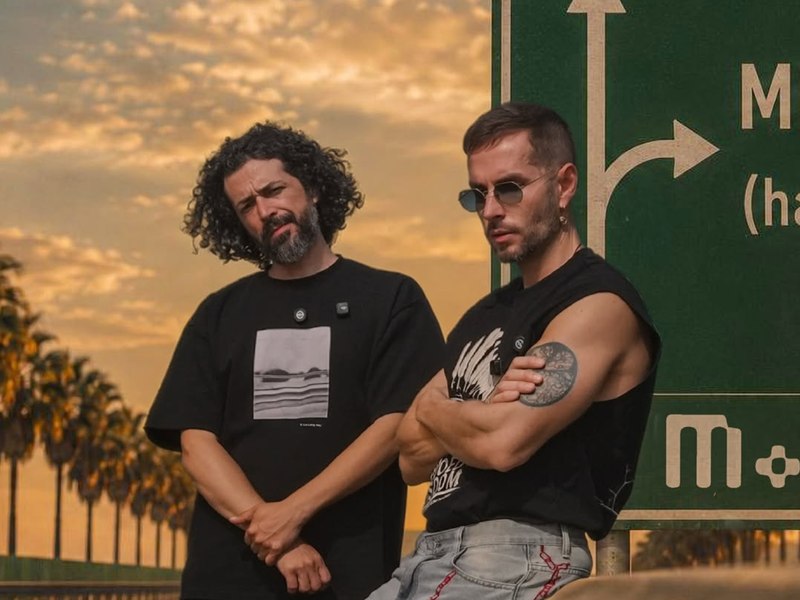
Romania criticizes band Morandi's concert in Georgia's Abkhazia region; band cites humanity over politics
Translated from Romanian, summarized and contextualized by DistantNews.
At a glance
News
Sources not specified
Context piece
- Romania's Ministry of Foreign Affairs strongly criticized a concert by the band Morandi held in Sukhumi, Abkhazia, a separatist region of Georgia.
- The ministry reaffirmed Romania's non-recognition of Abkhazia and its support for Georgia's territorial integrity.
- Morandi defended their performance, stating that political correctness is often prioritized over basic humanity and that music should transcend borders and divisions.
Romania's Ministry of Foreign Affairs has issued a strong condemnation of a concert performed by the Romanian band Morandi in Sukhumi, the capital of the breakaway Abkhazian region of Georgia. The ministry declared its firm disagreement with the August 7th performance, reiterating Romania's policy of non-recognition of Abkhazia as a separate entity and its unwavering support for Georgia's sovereignty and territorial integrity within internationally recognized borders.
The Romanian MFA expresses its firm disagreement with the concert of the band Morandi, scheduled for August 7 in Sukhumi, Georgia, in the separatist region of Abkhazia. Romania reaffirms its policy of non-recognition of Abkhazia as a separate entity and its firm support for the sovereignty and territorial integrity of Georgia, within internationally recognized borders.
In response to the criticism, Morandi members Marius Moga and Andrei Ropcea (Randi) posted a message on Instagram defending their decision. They argued that the world is often more pragmatic than artists might wish, a place where political correctness too frequently overshadows the simple fact of being human. The band expressed a belief in the potential for humanity to improve and stated that they do not claim to fully understand the world's complexities.
To those who have condemned us for bringing our music where it was most needed... We have never claimed to understand the world in all its complexity. Maybe we never will. We are simply artists and maybe the idealists in us still dare to believe that humanity can become better than it is today.
The band further elaborated that there have been times when political correctness led to silence, silence to indifference, and indifference caused humanity to lose a part of its soul. They refuse to believe that compassion should have boundaries, asserting that music has one homeland: the human heart. Morandi recounted experiences of strangers singing their lyrics with tears, embracing without a common language, moments devoid of enemies, nations, or divisions, where people remembered their shared humanity.
We refuse to believe that compassion should have boundaries. We are artists. We don't choose the places where our music is needed – people do.
Morandi concluded by stating that borders, nations, and differences should not define or divide people, as beneath flags and frontiers lie shared emotions, hopes, and needs. While acknowledging humanity's terrible mistakes, they emphasized that artists must not lose faith in people, as it is their role to remind the world of its potential. The band clarified that their music was not intended to take sides but to bring people together beyond political divides.
Music has only one homeland: the human heart.
DistantNews Editorial
Originally published by Adevărul in Romanian. Translated, summarized, and contextualized by our editorial team with added local perspective. Read our editorial standards.
More Stories



From Our Blog

What Gets Lost (and Found) When News Is Translated

The Critical Role of Diaspora Media in Global News

What Travellers Should Know About Countries with Restricted Press

A Digital Nomad's Guide to Following Local News

How the Same Story Looks Different in Different Countries
