

Romania Faces Record Heat: Summers Becoming Increasingly Suffocating
Translated from Romanian, summarized and contextualized by DistantNews.
At a glance
News
Sources not specified
Ongoing story
- Romania is bracing for intense heatwaves, with temperatures potentially reaching 37°C in some regions and exceeding 40°C in urban areas.
- Climatologist Roxana Bojariu warns that increasingly hot summers and tropical nights are becoming the new reality, requiring adaptation.
- While the absolute temperature record of 44.5°C from 1951 is a benchmark, the frequency of days with high thermal discomfort is rising due to climate change.
Romania is on the verge of experiencing a new thermal record as an intense heatwave grips the country, bringing exceptionally high temperatures and pronounced thermal discomfort. Climatologist Roxana Bojariu warns that these conditions, including tropical nights, are indicative of a new reality to which Romanians must adapt, with summers expected to grow progressively hotter and potentially surpass previous temperature records.
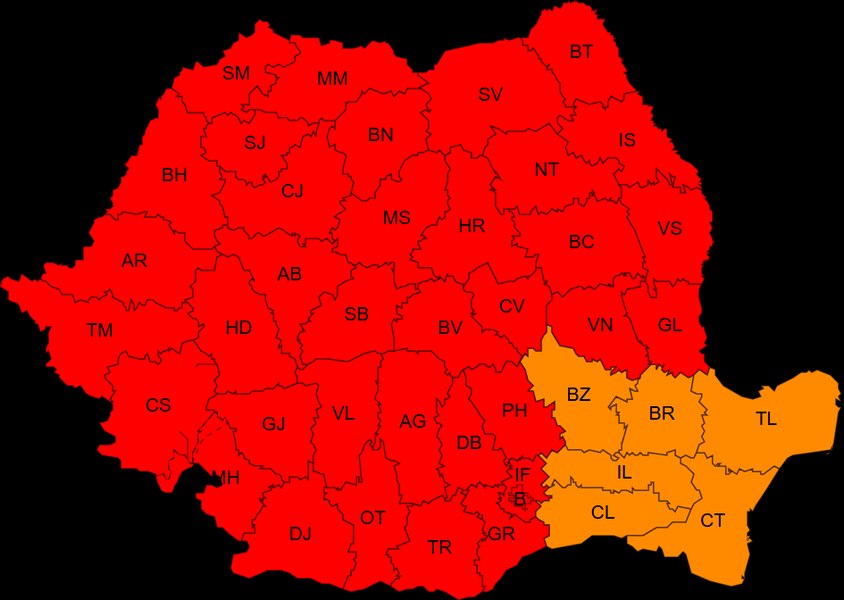
Forecasters predict temperatures could reach 37°C in western and central counties, with actual temperatures felt in direct sunlight in cities likely exceeding 40°C. A red code alert for heatwave has been issued for northwestern and parts of central Romania, where maximum temperatures may reach 40°C, leading to a perceived temperature close to 45°C. These conditions are exacerbated by the increasing frequency of extreme heat events, with summers in 2024, 2022, 2012, and 2025 noted for their intensity.
Răspunsul la aceasta întrebare depinde și de felul în care reușim sa reducem emisiile de gaze cu efect de seră, de felul în care vom reuși sa atingem țintele asumate de reducere a gazelor cu efect de seră.
Bojariu explained that while pinpointing the exact date for breaking Romania's absolute temperature record of 44.5°C, set in 1951, is impossible, the probability increases with global warming. She emphasized that reducing greenhouse gas emissions is crucial in mitigating future temperature rises. However, thermal discomfort is not solely determined by temperature; it is also influenced by atmospheric humidity. The Temperature-Humidity Index (THI), used by meteorological institutions, combines these two variables to assess heat stress.
Dar nu doar temperatura singura contribuie la disconfortul termic. Stresul termic e determinat și de creșterea temperaturii, dar și a cantității de vapori de apă din atmosfera.
DistantNews Editorial
Originally published by Adevărul in Romanian. Translated, summarized, and contextualized by our editorial team with added local perspective. Read our editorial standards.
More Stories



From Our Blog

What Gets Lost (and Found) When News Is Translated

The Critical Role of Diaspora Media in Global News

What Travellers Should Know About Countries with Restricted Press

A Digital Nomad's Guide to Following Local News

How the Same Story Looks Different in Different Countries
