

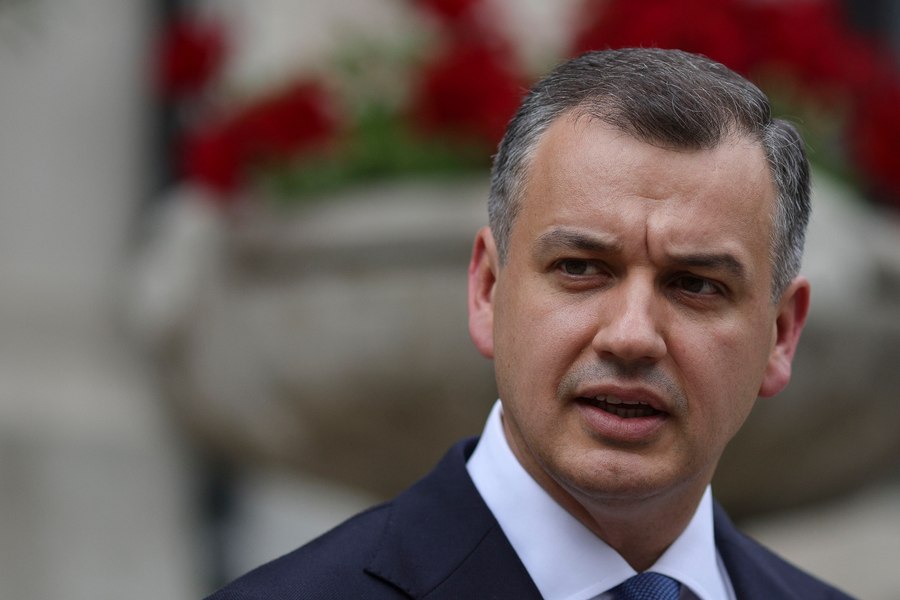

Romania's government enters constitutional gray area as interim mandates expire
Translated from Romanian, summarized and contextualized by DistantNews.
At a glance
News
Named sources
Context piece
- Romania's government faces a "gray area" as interim ministerial mandates expire on June 10, creating constitutional uncertainty.
- Former Constitutional Court judge Petre Lăzăroiu explained the Prime Minister can appoint new interim ministers to ensure continuity.
- The situation arises after the PSD party withdrew from the government, leaving it in a caretaker role pending a new cabinet formation.
Romania's government is navigating a constitutional gray area as the mandates of six interim ministers expire on Wednesday, June 10. These ministers were appointed to fill roles vacated by members of the PSD party after its withdrawal from the ruling coalition.
Former Constitutional Court judge Petre Lăzăroiu explained to Digi24 that while the constitution does not explicitly detail the steps following the 45-day interim period, Prime Minister Ilie Bolojan has the authority to ensure governmental continuity. "Logically, the interim ministers should leave, but at the same time, the government, which is not yet interim itself, was dismissed by a motion of no confidence, but it remains until the new government is installed, and the prime minister can appoint other interim ministers in place of those who held the interim positions," Lăzăroiu stated.
The government, though dismissed by a no-confidence vote, continues to function until a new cabinet is sworn in. Lăzăroiu emphasized that this specific type of interim government has a distinct legal status and can persist indefinitely, depending on political negotiations, attempts to form a new government, or the potential for early elections.
In the absence of full ministerial authority, ministry operations could fall to general secretaries, who have limited powers. They can approve administrative and financial acts, such as salary payments, but cannot make strategic or political decisions. This limitation risks creating decision-making blockages, particularly for initiatives requiring political commitment and governmental responsibility. The interim ministers were initially appointed on April 23, and the government has been operating in a provisional capacity since then, awaiting the formation of a new parliamentary majority. Sources indicate the PSD leadership was considering a referral to the Constitutional Court regarding the government's situation after the interim deadline.
Logically, the interim ministers should leave, but at the same time, the government, which is not yet interim itself, was dismissed by a motion of no confidence, but it remains until the new government is installed, and the prime minister can appoint other interim ministers in place of those who held the interim positions.
DistantNews Editorial
Originally published by Adevărul in Romanian. Translated, summarized, and contextualized by our editorial team with added local perspective. Read our editorial standards.
More Stories


From Our Blog

What Gets Lost (and Found) When News Is Translated

The Critical Role of Diaspora Media in Global News

What Travellers Should Know About Countries with Restricted Press

A Digital Nomad's Guide to Following Local News

How the Same Story Looks Different in Different Countries
