

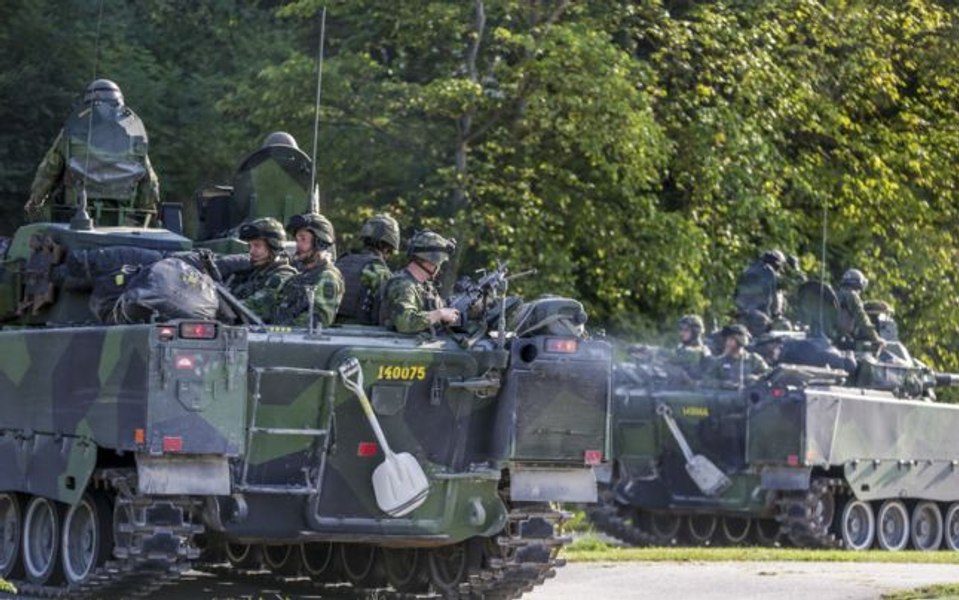

Romania's NATO summit participation hampered by political instability
Translated from Romanian, summarized and contextualized by DistantNews.
At a glance
News
Named sources
Context piece
- Romania's President is set to attend the NATO summit in Ankara without a fully empowered government, raising concerns about negotiation capacity.
- The country faces internal political instability, with no government in place for three months.
- Key Romanian representatives, including the interim Defense Minister and the Chief of Defense Staff, will participate despite delicate legal and political situations.
Romania's President is scheduled to participate in the NATO summit of heads of state and government in Ankara on July 7-8, 2026. However, the delegation's ability to negotiate effectively is questionable due to Romania's ongoing internal political instability, now entering its third month without a fully empowered government. Geopolitical analyst Cătălin Buciumeanu warns that this lack of a strong governing mandate could hinder Romania's strategic objectives at the summit. President Nicușor Dan will be accompanied by interim National Defense Minister Radu Miruță and General Gheorghiță Vlad, the Chief of Defense Staff, who is currently facing charges in a DNA investigation. Despite General Vlad's legal challenges, he is slated to present Romania's priorities for strengthening the Eastern Flank, with a particular focus on the Black Sea. The interim Defense Minister will also attend meetings with defense ministers from NATO member states and Indo-Pacific partners. Delegations from various Romanian ministries and defense industry representatives will also be present. Buciumeanu emphasizes that Romania's strategic relevance within NATO remains crucial, especially concerning the Black Sea and the reinforcement of allied military presence on the Eastern Flank. He also highlights the importance of maintaining strong ties with the United States amidst shifting American commitments in Europe and integrating Romania into new logistical corridors. However, the analyst stresses that Romania's capacity to translate discussions into concrete actions is significantly limited by its internal political vacuum.
For Romania, maintaining strategic relevance within NATO is an essential objective, and this is supported by at least five fundamental directions. The first is keeping the Black Sea on the Alliance's agenda, an element that Romania risks losing after four years of war in Ukraine, due to the focus shifting to the Baltic states and Poland, which is why our country must insist on European interest in this area. The second direction concerns the consolidation of allied military presence in Romania.
DistantNews Editorial
Originally published by Adevărul in Romanian. Translated, summarized, and contextualized by our editorial team with added local perspective. Read our editorial standards.
More Stories
From Our Blog

What Gets Lost (and Found) When News Is Translated

The Critical Role of Diaspora Media in Global News

What Travellers Should Know About Countries with Restricted Press

A Digital Nomad's Guide to Following Local News

How the Same Story Looks Different in Different Countries
