


Romania's Two Decades in EU: Economic Gains and Future Challenges
Translated from Romanian, summarized and contextualized by DistantNews.
At a glance
News
Sources not specified
Context piece
- Romania has experienced significant economic growth and improved living standards since joining the EU 20 years ago.
- Benefits include over 100 billion euros in EU funds and a fourfold increase in GDP.
- However, challenges like fiscal deterioration, educational issues, demographic decline, and economic imbalances persist, requiring internal reforms.
Two decades after joining the European Union, Romania stands as a profoundly transformed economy, marked by substantial progress in living standards, productivity, consumption, and poverty reduction. Yet, this period of integration has also exposed vulnerabilities that could impede future development, including a worsening fiscal situation, persistent educational problems, demographic decline, and economic imbalances.
Accession to the EU is, more than likely, the most important event in Romania's recent history. Once our country entered this state union, it went through the most extensive economic evolution in its history.
Economists largely view Romania's EU accession as a clear positive, but they caution that the advantages of European integration alone are no longer sufficient. The country is entering a new phase where internal reforms are crucial for sustained growth. Adrian Negrescu, an economic analyst, described EU accession as the most significant economic event in Romania's recent history, facilitating the nation's most extensive economic evolution.
The economic benefits generated by EU membership exceed 250 billion euros, taking into account the investments made by foreign companies in our country.
Since joining the EU, Romania has benefited from over 100 billion euros in European funds. When factoring in foreign investments, the total economic impact of EU membership is estimated to exceed 250 billion euros. Negrescu highlighted the visible transformation across nearly all sectors, noting that Romania has modernized at one of the fastest rates within the EU, with its GDP increasing approximately fourfold and average incomes rising by over 800% compared to the pre-accession period.
Romania has visibly changed from all points of view and we see this everywhere. From infrastructure to services, we have modernized at the fastest pace among EU countries.
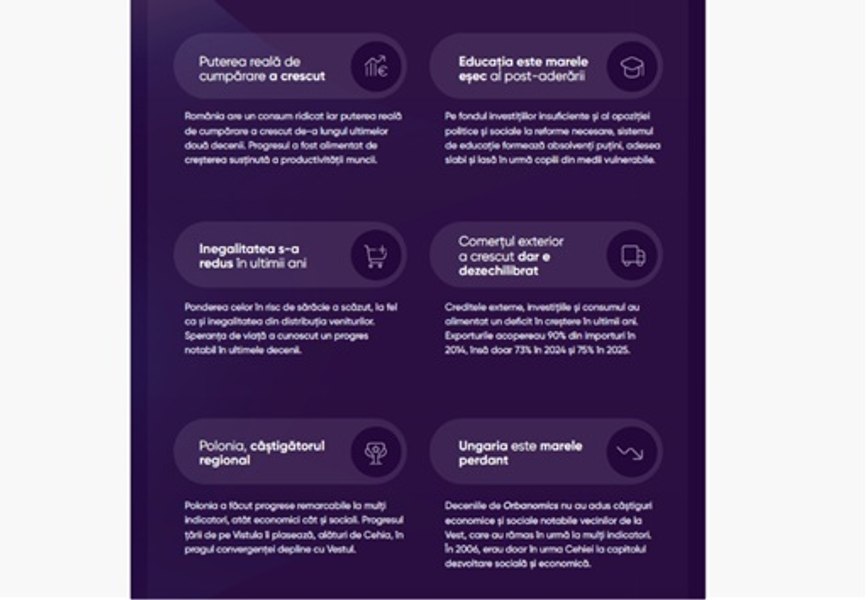
The report from the Rethink think tank corroborates the significant rise in living standards, with individual consumption steadily increasing. Romania's individual consumption has climbed from less than half the EU average in 2006 to approximately 86% by 2025. Radu Nechita, an economics professor, affirmed that the benefits of accession are evident across key areas such as GDP per capita, income levels, wages, household consumption, and life expectancy, underscoring the overall positive impact of EU membership.
If I had to summarize everything in one sentence, it would sound like this: the benefits of accession are evident and impressive in almost all relevant areas – GDP per capita, incomes, salaries, level and evolution of family consumption, life expectancy.
DistantNews Editorial
Originally published by Adevărul in Romanian. Translated, summarized, and contextualized by our editorial team with added local perspective. Read our editorial standards.
More Stories

From Our Blog

What Gets Lost (and Found) When News Is Translated

The Critical Role of Diaspora Media in Global News

What Travellers Should Know About Countries with Restricted Press

A Digital Nomad's Guide to Following Local News

How the Same Story Looks Different in Different Countries
