

Romanian farmers to sow on credit as diesel prices top 10 lei
Translated from Romanian, summarized and contextualized by DistantNews.
At a glance
News
Sources not specified
Context piece
- Romanian farmers are commencing their autumn sowing campaign amid soaring fuel and fertilizer costs, with diesel prices exceeding 10 lei per liter.
- High operational expenses and difficult access to financing are pressuring farmers, who are planting crops despite the risks.
- Farmers express concern over profitability and the late arrival of subsidies, potentially leading to losses without adequate financial support.
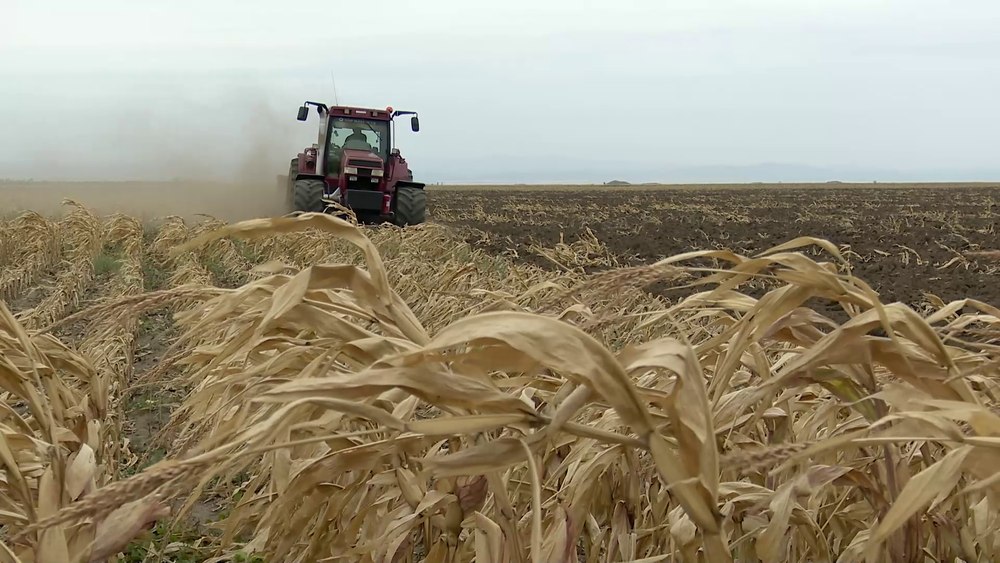
Romanian farmers are embarking on their crucial autumn sowing campaign, but face a challenging economic landscape marked by sharply increased operational costs. The price of diesel fuel has surged past 10 lei per liter, while phosphate fertilizers have reached approximately $1,000 per ton, creating significant financial strain.
We will sow. On credit. With enormous costs. And we don't know what will happen, that's the truth.
Despite these hurdles, farmers are committed to planting autumn crops. Călin Cozma, a farmer with Mureș Agrar, stated that sowing will proceed "regardless of the risks." He highlighted the impact of fuel costs, estimating an annual consumption of 90-100 liters of diesel per hectare. A 4-lei increase per liter translates to an additional 400 lei per hectare, a cost not fully offset by the 2.40 lei subsidy. For a 1,000-hectare farm, this amounts to an extra 400,000 lei solely for diesel.
For diesel, the annual consumption is 90-100 liters/ha. With a price difference of 4 lei, there will be 400 lei extra per hectare just from diesel. The subsidy is 2.40 lei. On a 1,000 ha farm, 400,000 lei extra will be the costs for diesel.
Cozma also pointed to issues with the subsidy payment system, noting that payments are often delayed and only benefit a portion of farmers, primarily smaller operations. This, he argues, does not foster a healthy agricultural sector. Furthermore, the cost of financing working capital presents a major obstacle. He criticized the limited options offered by banks, with the APIA credit being insufficient. "Without financing, there will be no profit margin in agriculture. None. If all calculations don't end up in the red," Cozma warned.
The bigger problem farmers have is the cost of financing working capital. Banks offer very few solutions besides the APIA credit, which isn't excellent.
He believes that agriculture requires more affordable financing products, suggesting that loan costs of 2-3% are not unrealistic, citing Germany as an example of a country with such support. Facing these conditions, farms must begin autumn fieldwork before revenues from the previous harvest have fully covered expenses. "We will sow. On credit. With enormous costs. And we don't know what will happen, that's the truth," Cozma concluded. Alexander Degianski, president of the Romanian Farmers' Club, acknowledged the pressure from diesel prices but also drew attention to risks associated with spring crops.
I think we need to ask for a financing product for agriculture at a cost of 2-3%. It's not utopia. Germany, for example, has it.
DistantNews Editorial
Originally published by Adevărul in Romanian. Translated, summarized, and contextualized by our editorial team with added local perspective. Read our editorial standards.
More Stories

From Our Blog

What Gets Lost (and Found) When News Is Translated

The Critical Role of Diaspora Media in Global News

What Travellers Should Know About Countries with Restricted Press

A Digital Nomad's Guide to Following Local News

How the Same Story Looks Different in Different Countries
