


Romanian 'Living Human Treasure' preserves village's embroidery history in home-museum
Translated from Romanian, summarized and contextualized by DistantNews.
At a glance
In-depth
Named sources
Context piece
- Olga Alexandrina Filip, recognized as a "Living Human Treasure," is preserving traditional Romanian embroidery in Cezieni.
- Her home serves as a workshop and museum, housing hundreds of items, including over 100-year-old embroidered blouses and dowry chests.
- Filip actively collects and preserves these artifacts, aiming to educate younger generations about their cultural heritage.
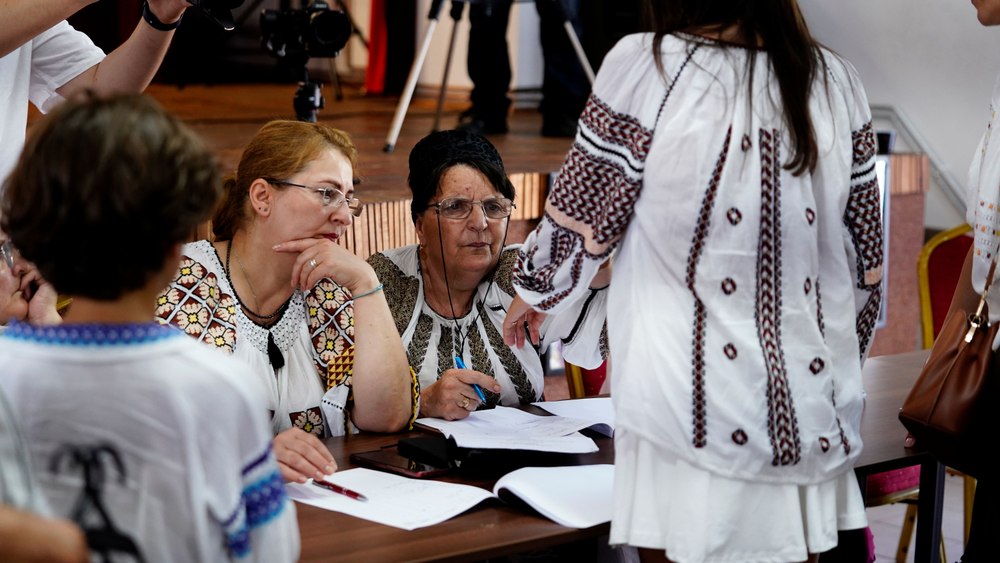
In the village of Cezieni, time seems to stand still within the workshop-museum of Olga Alexandrina Filip, a "Living Human Treasure" dedicated to preserving the rich history of Romanian embroidery. Filip's home is more than just a living space; it's a vibrant hub where traditional sewing and weaving techniques are kept alive, and where each collected object tells a story.
Filip, who was honored as a "Living Human Treasure" and later became an honorary citizen of Cezieni in June 2026, plays a crucial role in maintaining the tradition of "ia" (traditional blouse) making in the area. She recalls that 20-30 years ago, the village was known for other things, but today, the "ia" festival in late June draws visitors and returning children to the streets of Romanați.
Years ago, visitors interested in the "ia" festival also sought to purchase old objects, embroideries, and textiles. During that time, people often sold family heirlooms for little money or discarded them. Filip recognized this loss of heritage and began acquiring or receiving donations of these items, sparking the idea for her museum.
Today, her home workshop houses hundreds of objects, including dozens of embroidered shirts, some over a century old, and dowry chests. These items, once used daily in rural homes over half a century ago, are now introduced to children and young people for the first time. A standout piece is a dowry chest over 100 years old, brought from across the Danube by oxcart, a testament to the deep historical roots of these traditions.
S-au dus tata și cu bunicu’ și au luat-o de dincolo
DistantNews Editorial
Originally published by Adevărul in Romanian. Translated, summarized, and contextualized by our editorial team with added local perspective. Read our editorial standards.
More Stories


From Our Blog

What Gets Lost (and Found) When News Is Translated

The Critical Role of Diaspora Media in Global News

What Travellers Should Know About Countries with Restricted Press

A Digital Nomad's Guide to Following Local News

How the Same Story Looks Different in Different Countries
