


Romanian Researcher Creates Map That 'Sees' Through Forests, Revealing Hidden Secrets
Translated from Romanian, summarized and contextualized by DistantNews.
At a glance
In-depth
Named sources
Context piece
- Romanian researcher Alexandru Hegyi developed a public application using LiDAR technology to explore Romania's terrain in detail.
- The RO-LiDAR GeoQuickView app reveals hidden landscape features, ancient roads, and potential archaeological sites beneath vegetation.
- LiDAR data has previously aided discoveries of Dacian settlements and Roman military camps in Romania.
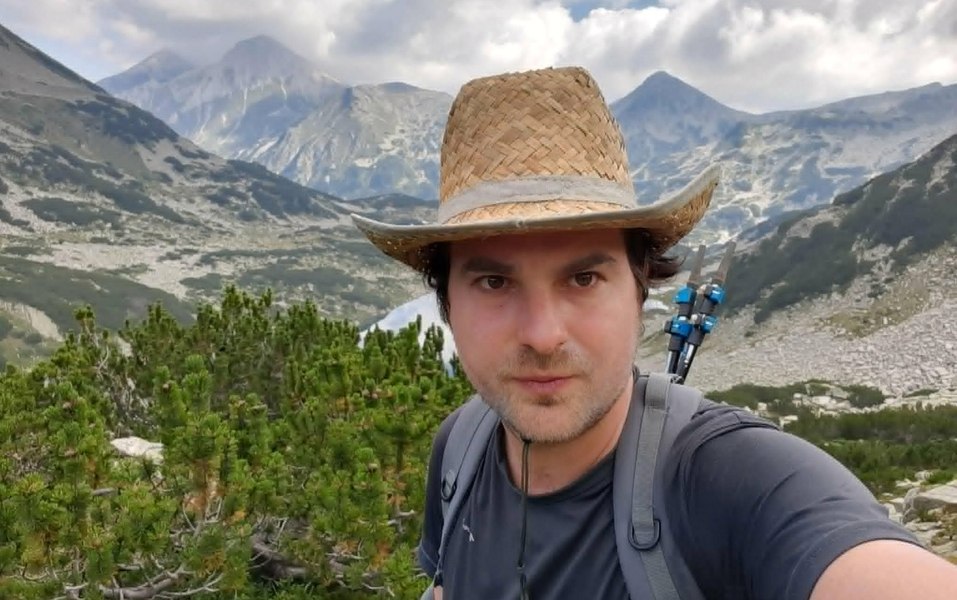
A groundbreaking application developed by Romanian researcher Alexandru Hegyi is allowing people to explore Romania's terrain with unprecedented detail, revealing hidden historical secrets beneath the landscape. The RO-LiDAR GeoQuickView app utilizes advanced LiDAR (Light Detection and Ranging) technology, a form of aerial laser scanning and digital mapping, to create highly detailed digital terrain models. These models can uncover subtle features often obscured by dense vegetation, such as ancient roads, former settlements, and potential archaeological vestiges that are difficult to detect with conventional maps. Hegyi, a researcher at the Department of Geosciences at the University of Oslo, explained in an interview with "Adevărul" that the idea for the app stemmed from a practical need to make valuable, publicly available LiDAR data more accessible. "The LiDAR data available publicly through the ANCPI projects... are extremely valuable, but they are not always easy to explore by the general public or even by researchers who do not regularly work with large volumes of geospatial data," Hegyi stated. The project began in 2024 with an initial visualization platform for western Romania, later evolving into the more flexible web-based application. This technology has already proven its worth in archaeological research within Romania. Previous studies using LiDAR have helped scientists map extensive settlements around Dacian fortresses like Sarmizegetusa Regia and Piatra Roșie, and identify Roman marching camps from the Daco-Roman Wars. These discoveries have contributed to a more accurate reconstruction of Emperor Trajan's route and a better understanding of Dacian defensive systems. Hegyi's work, often in collaboration with researcher Aurora Pețan, highlights how digital models derived from LiDAR data can reveal the complexity of sites hidden by vegetation. His research also extends to Roman camps at Porolissum and Ungra, investigated using geophysical methods. The RO-LiDAR GeoQuickView app aims not only to identify physical features but also to aid in recovering local place names and preserving collective memory.
The LiDAR data available publicly through the ANCPI projects are extremely valuable, but they are not always easy to explore by the general public or even by researchers who do not regularly work with large volumes of geospatial data.
DistantNews Editorial
Originally published by Adevărul in Romanian. Translated, summarized, and contextualized by our editorial team with added local perspective. Read our editorial standards.
More Stories

From Our Blog

What Gets Lost (and Found) When News Is Translated

The Critical Role of Diaspora Media in Global News

What Travellers Should Know About Countries with Restricted Press

A Digital Nomad's Guide to Following Local News

How the Same Story Looks Different in Different Countries
