


Roosevelt's Failed Court Reform Echoes in Hungary, Warning Against Undermining Institutions
Translated from Hungarian, summarized and contextualized by DistantNews.
At a glance
Analysis
Sources not specified
Context piece
- The article draws a parallel between Franklin D. Roosevelt's failed "court-packing" plan in 1937 and current political movements in Hungary.
- Roosevelt's proposal to expand the Supreme Court to create a liberal majority faced significant opposition and was seen as an "attempted dictatorship."
- The author argues that leaders attempting to radically alter institutions when they obstruct their agenda risk democratic stability, a lesson Roosevelt's failure and Hungary's current situation illustrate.
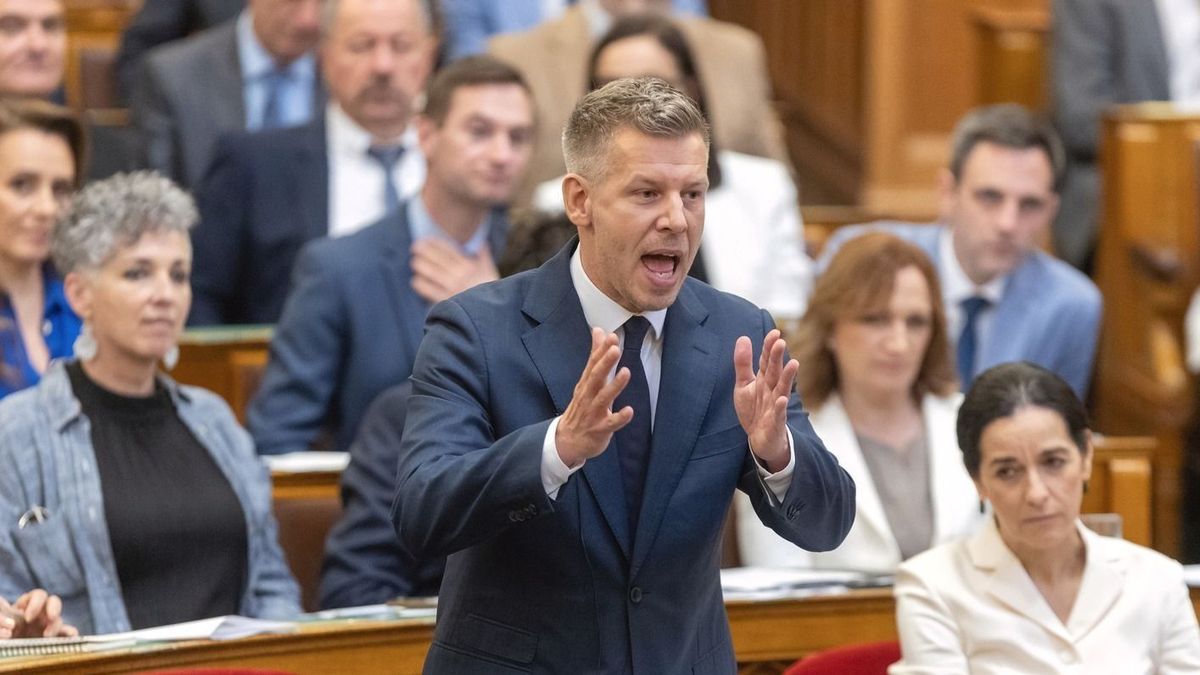
The article draws a stark parallel between Franklin D. Roosevelt's controversial attempt to reform the U.S. Supreme Court in 1937 and contemporary political dynamics in Hungary, particularly referencing the actions of Péter Magyar.
Roosevelt's "court-packing" plan aimed to increase the court's efficiency by allowing the president to appoint an additional justice for every sitting justice over the age of 70 who did not retire, potentially expanding the nine-member court to fifteen. The explicit goal was to create a liberal majority that would support his New Deal policies, which had faced resistance from a conservative court. However, the proposal ignited fierce opposition, not only from Republicans but also from a significant portion of Roosevelt's own Democratic Party. Senators decried it as a violation of constitutional balance, and the press labeled it an "attempted dictatorship," fueling public fears about the erosion of democratic checks and balances.
The plan ultimately failed in the Senate, dealing a blow to Roosevelt's prestige. While the court later became more amenable to New Deal programs, partly due to political pressure, Roosevelt's failed initiative served as a potent warning. It highlighted a recurring tendency for strong leaders, or those perceived as such, to seek radical institutional changes when faced with opposition. The article emphasizes that when such ambitions involve dismantling constitutional checks and balances, the long-term survival of democracy is at stake.
Drawing a direct line to Hungary, the author suggests that leaders proclaiming "revolution" against institutions often overlook that these bodies serve not only to protect the "old elite" but also the majority against overreaching leaders. Roosevelt nearly faltered, and the article posits that Péter Magyar is now encountering a similar institutional resistance, mistakenly believing his approach will yield different results due to perceived uniqueness. The piece concludes with a cynical historical observation: "History has already seen this movie. The Hungarian dubbing won't change the ending."
DistantNews Editorial
Originally published by Magyar Nemzet in Hungarian. Translated, summarized, and contextualized by our editorial team with added local perspective. Read our editorial standards.
More Stories



From Our Blog

Countries Without a Free Press: What You Need to Know

What Press Freedom Means for the News You Read

What Gets Lost (and Found) When News Is Translated

The Critical Role of Diaspora Media in Global News

What Travellers Should Know About Countries with Restricted Press
