

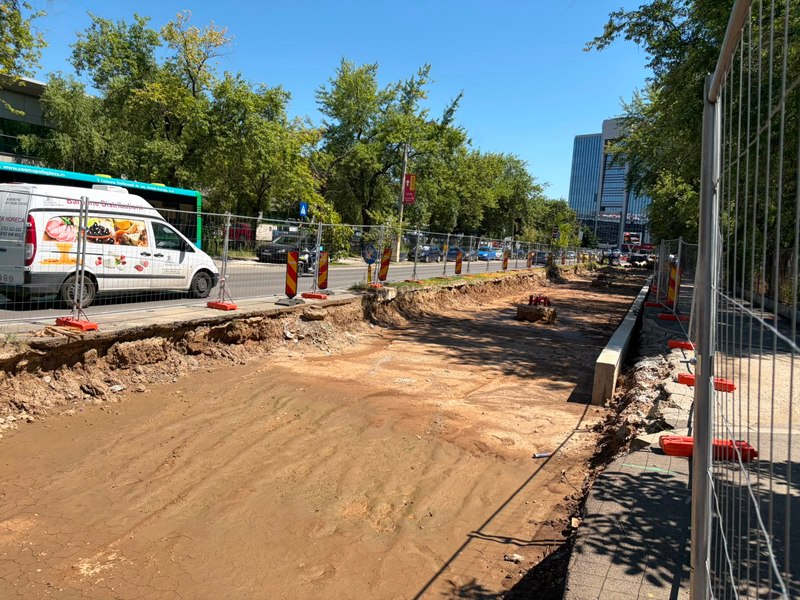
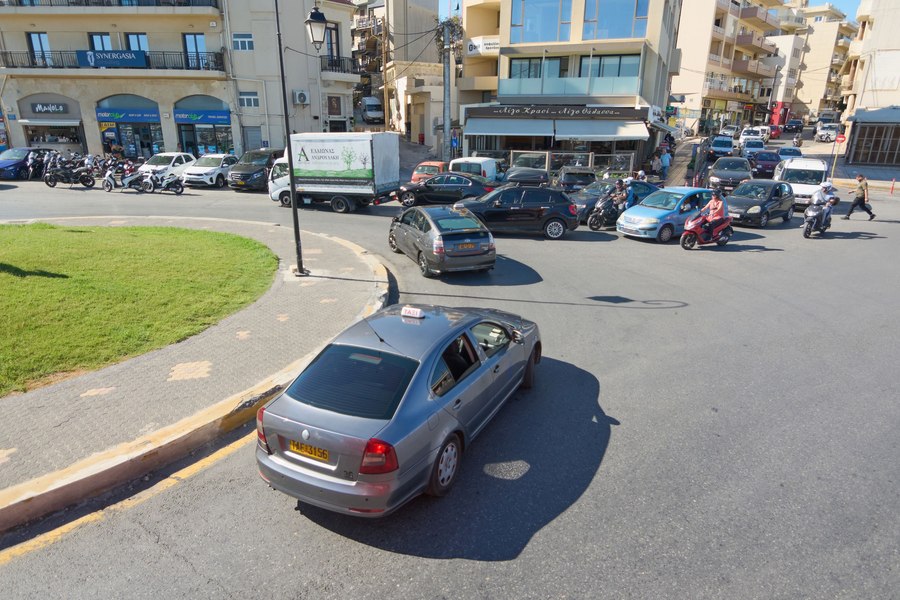
Roundabouts are safer than signalized intersections, studies show
Translated from Romanian, summarized and contextualized by DistantNews.
At a glance
News
Sources not specified
Context piece
- Roundabouts significantly improve road safety, reducing serious injuries by 75% and total accidents by 37% compared to signalized intersections, according to US studies.
- They decrease speeds, eliminate the temptation to speed through intersections, and reduce the risk of head-on or side collisions.
- While initial costs are comparable, roundabouts offer long-term savings due to lower maintenance needs and continuous traffic flow, though they are not suitable for every intersection.
Roundabouts are emerging as a superior solution for enhancing road safety and traffic flow, according to numerous studies by American infrastructure and road safety specialists. Research indicates a substantial reduction in severe accidents and fatalities when compared to intersections controlled by traffic lights or stop signs.
A study by the Insurance Institute for Highway Safety (IIHS) found that converting traditional intersections into roundabouts reduces injury-causing accidents by 75%. Further research from IIHS and the Federal Highway Administration (FHWA) points to a 37% decrease in overall accidents, a 75% drop in crashes involving injuries, and up to a 90% reduction in fatal accidents. Pedestrian accidents also see a significant decrease of approximately 40%.
Specialists attribute this enhanced safety primarily to reduced speeds. Drivers are compelled to slow down and yield to vehicles already in the roundabout, typically maintaining speeds between 25 and 30 km/h. The absence of traffic signals removes the temptation for drivers to accelerate to beat a red light. Furthermore, the single-direction flow of traffic significantly minimizes the risk of head-on or side collisions, which are among the most dangerous types of accidents.
Contrary to some drivers' perceptions, roundabouts also contribute to smoother traffic flow. Unlike signalized intersections where vehicles must stop, roundabouts require yielding only when necessary. Studies from Kansas State University suggest that converting intersections to roundabouts can reduce waiting times by about 20%. Other IIHS research indicates an 89% reduction in delays and a 56% decrease in vehicle stops.
While initial construction costs for roundabouts are comparable to signalized intersections, they offer greater long-term economic benefits. They eliminate the need for traffic signal installations, electricity, and periodic maintenance of signaling systems, which can amount to thousands of dollars annually. Additionally, roundabouts function during power outages without requiring police intervention for traffic control. However, specialists emphasize that roundabouts are not a universal solution and require careful analysis of accident history before implementation.
Transformarea intersecțiilor în sensuri giratorii a redus timpii de așteptare cu aproximativ 20%.
DistantNews Editorial
Originally published by Adevărul in Romanian. Translated, summarized, and contextualized by our editorial team with added local perspective. Read our editorial standards.
More Stories


From Our Blog

What Gets Lost (and Found) When News Is Translated

The Critical Role of Diaspora Media in Global News

What Travellers Should Know About Countries with Restricted Press

A Digital Nomad's Guide to Following Local News

How the Same Story Looks Different in Different Countries
