

Royal Malaysian Navy's hyperbaric expertise aids recreational divers
Translated from Malay, summarized and contextualized by DistantNews.
At a glance
News
Sources not specified
Context piece
- The Royal Malaysian Navy (TLDM) extends its role beyond national defense, assisting the public through Civil-Military Cooperation (CIMIC) programs.
- TLDM utilizes its hyperbaric facilities, specifically Recompression Chambers (RCC), to treat recreational divers suffering from Decompression Sickness (DCS).
- These facilities, while prioritizing naval operations, have treated 61 civilian recreational divers for diving-related illnesses between 2022 and 2026.
The Malaysian Armed Forces (ATM) and the Royal Malaysian Navy (TLDM) contribute significantly to national peace and sovereignty. Beyond their defense duties, they also extend vital support to the public through Civil-Military Cooperation (CIMIC) programs, leveraging their specialized facilities and expertise.
DCS occurs when inert gas absorbed by the body during diving cannot be naturally expelled due to not adhering to safe ascent rates or decompression schedules, among other factors.
One such critical service is the provision of hyperbaric treatment for recreational divers experiencing complications. TLDM's Recompression Chambers (RCC), commonly known as 'kebuk mampat,' serve not only military operations but also act as a lifeline for divers suffering from Decompression Sickness (DCS). This condition, also known as 'the bends,' occurs when dissolved gases in the body cannot be expelled naturally due to rapid ascent from depth or failure to adhere to decompression schedules.
Symptoms experienced by victims include joint pain, numbness or weakness in limbs, dizziness, shortness of breath, and in serious cases, can lead to paralysis or be life-threatening if hyperbaric treatment is not given.
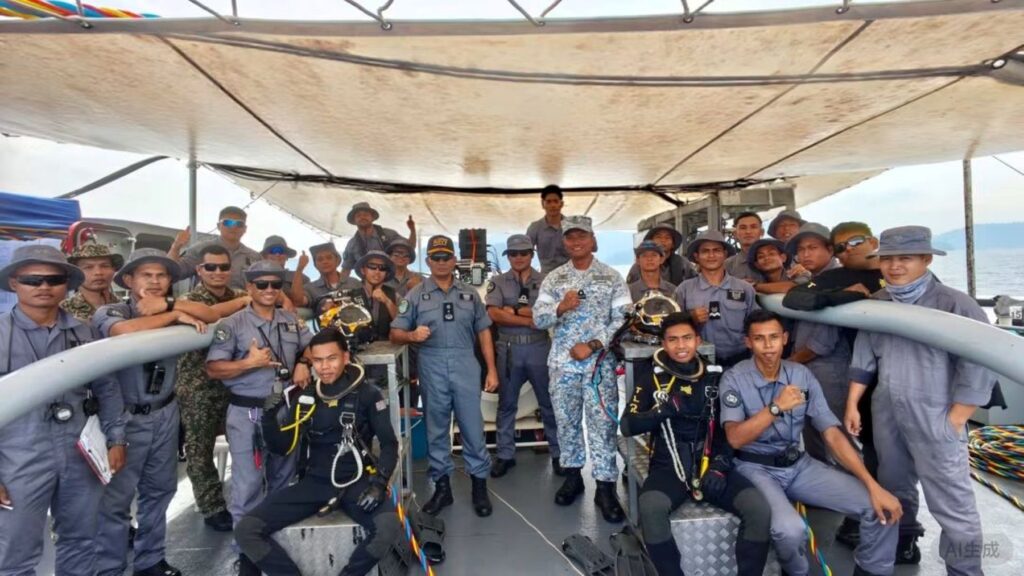
According to KD DUYONG Commanding Officer Commander Mohammad Kamil bin Abdul Rahman, DCS symptoms can range from joint pain, numbness, dizziness, and shortness of breath to severe paralysis or life-threatening situations if hyperbaric treatment is not administered promptly. TLDM currently operates 14 RCCs of varying capacities, Ten Men, Six Men, and Two Men Two Compartment, strategically located across its units and bases to support diving operations.
The TLDM's RCC facilities are also used by the public, limited to treating diving illnesses, subject to assessment and approval by a Diving Medical Officer (DMO) before implementation.
While TLDM's RCCs primarily support naval diver requirements, they are also accessible to civilians for diving-related illnesses, subject to assessment and approval by a Diving Medical Officer (DMO). The RCC at KD DUYONG is prioritized for naval needs, with civilian cases in the Lumut area typically referred to the 96 Armed Forces Hospital. Between 2022 and 2026, TLDM's RCC facilities provided treatment to 61 civilian recreational divers diagnosed with DCS.
However, the RCC at KD DUYONG is prioritized for supporting TLDM's operational needs. Treatment needs for the public around Lumut will be referred to 96 Armed Forces Hospital, Lumut.
DistantNews Editorial
Originally published by Utusan Malaysia in Malay. Translated, summarized, and contextualized by our editorial team with added local perspective. Read our editorial standards.
More Stories


From Our Blog

What Gets Lost (and Found) When News Is Translated

The Critical Role of Diaspora Media in Global News

What Travellers Should Know About Countries with Restricted Press

A Digital Nomad's Guide to Following Local News

How the Same Story Looks Different in Different Countries
