

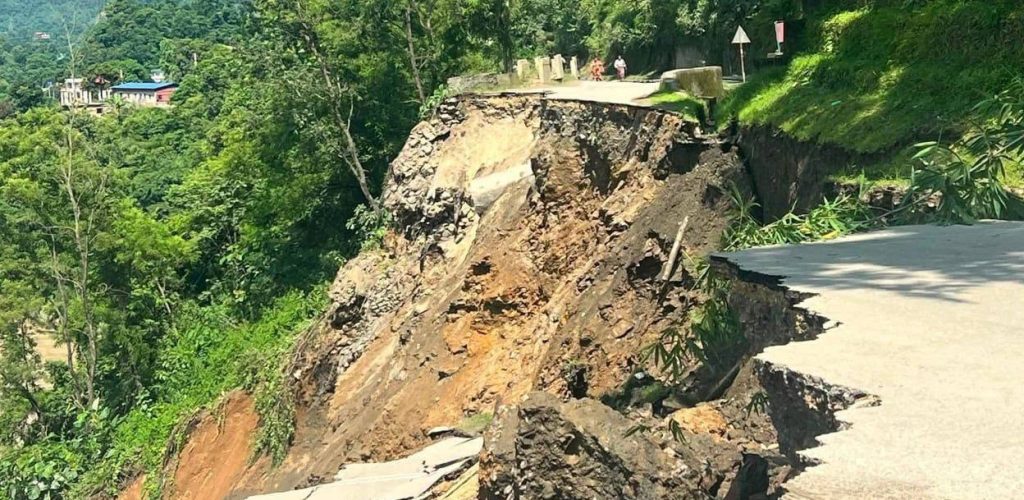
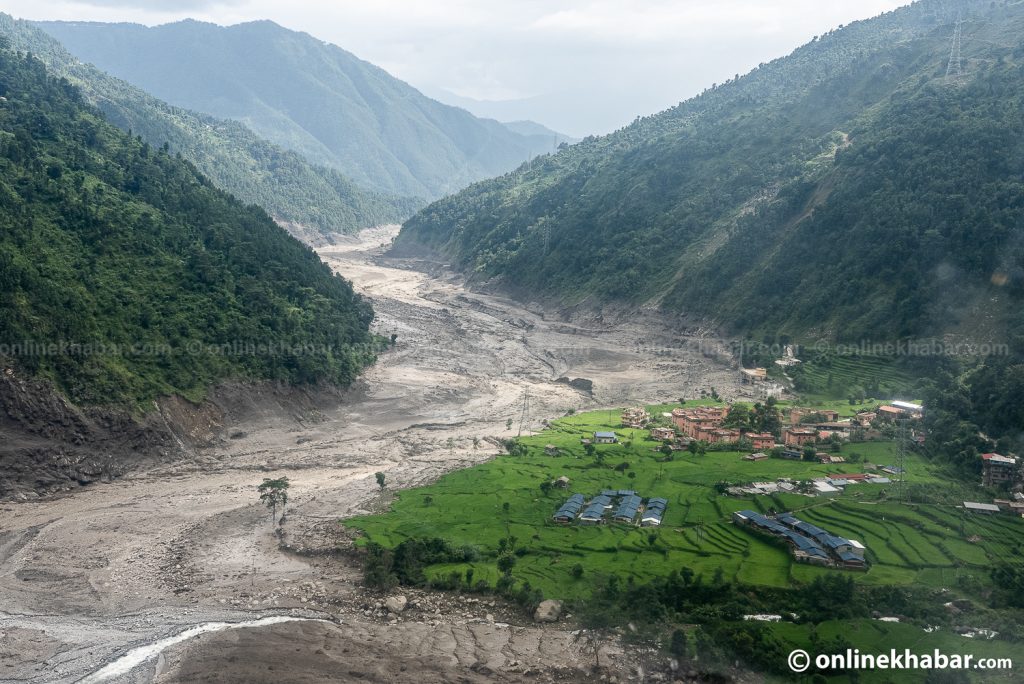
Rs 6.5 billion in bank loans at risk after floods damage four hydropower projects
Summarized by DistantNews. Read the original for the full story.
At a glance
News
Named sources
Ongoing story
- Floods on August 26 damaged four bank-financed hydropower projects in Nepal, putting about Rs 6.5 billion in loans at risk, according to a preliminary assessment by the Nepal Bankers’ Association.
- The affected projects include facilities in Rasuwa and Nuwakot, with loans led or provided by NMB Bank, Laxmi Sunrise Bank and Nabil Bank.
- The flooding has highlighted risks in hydropower lending, which banks have expanded partly because Nepal Rastra Bank requires 10% of total loans to go to the energy sector.
Flood damage to four hydropower projects in Nepal has put about Rs 6.5 billion in commercial-bank loans at risk, according to a preliminary assessment by the Nepal Bankers’ Association.
The damaged facilities include the 5-megawatt Mailung Khola project in Rasuwa, which received Rs 258 million from a consortium led by NMB Bank, and the 20-megawatt Langtang Khola project, where banks have invested Rs 2.5 billion under a consortium led by Laxmi Sunrise Bank.
The 37-megawatt Trishuli project in Nuwakot was also damaged by flooding along the Bhotekoshi and Trishuli river systems. Nabil Bank has invested Rs 3.3 billion in that project. The floods also damaged the Rasuwa Gadhi project, where Nabil Bank provided Rs 498 million in loans.
The association said several other bank-financed projects were not damaged, including Blue Energy, Energy Engineering, Hiraratna Hydropower and Prime Hydropower. Because several banks invested in some of the affected projects, the association said it did not yet have a detailed breakdown of each bank’s exposure.
Eight hydropower projects with bank investment operate across Rasuwa, Nuwakot and Dhading, and four of the larger projects were damaged by the Rasuwa flood. Banks and financial institutions have increased energy-sector lending since Nepal Rastra Bank made such investment mandatory, requiring them to direct 10% of total loans to the sector.
A banker said hydropower projects often require infrastructure in geographically difficult areas exposed to natural disasters. The banker said lending could decline after the floods, while also noting that project-based loans offer banks little incentive without the central bank’s requirement.
Hydropower projects require infrastructure to be built in geographically difficult locations, where there is always a risk of natural disasters. That also puts banks’ investments at risk.
About this summary
Originally published by OnlineKhabar English. Summarized and contextualized automatically by DistantNews, with a note on how the source frames the story. Not individually reviewed before publishing. How this works.
More Stories


From Our Blog

What Gets Lost (and Found) When News Is Translated

The Critical Role of Diaspora Media in Global News

What Travellers Should Know About Countries with Restricted Press

A Digital Nomad's Guide to Following Local News

How the Same Story Looks Different in Different Countries
