


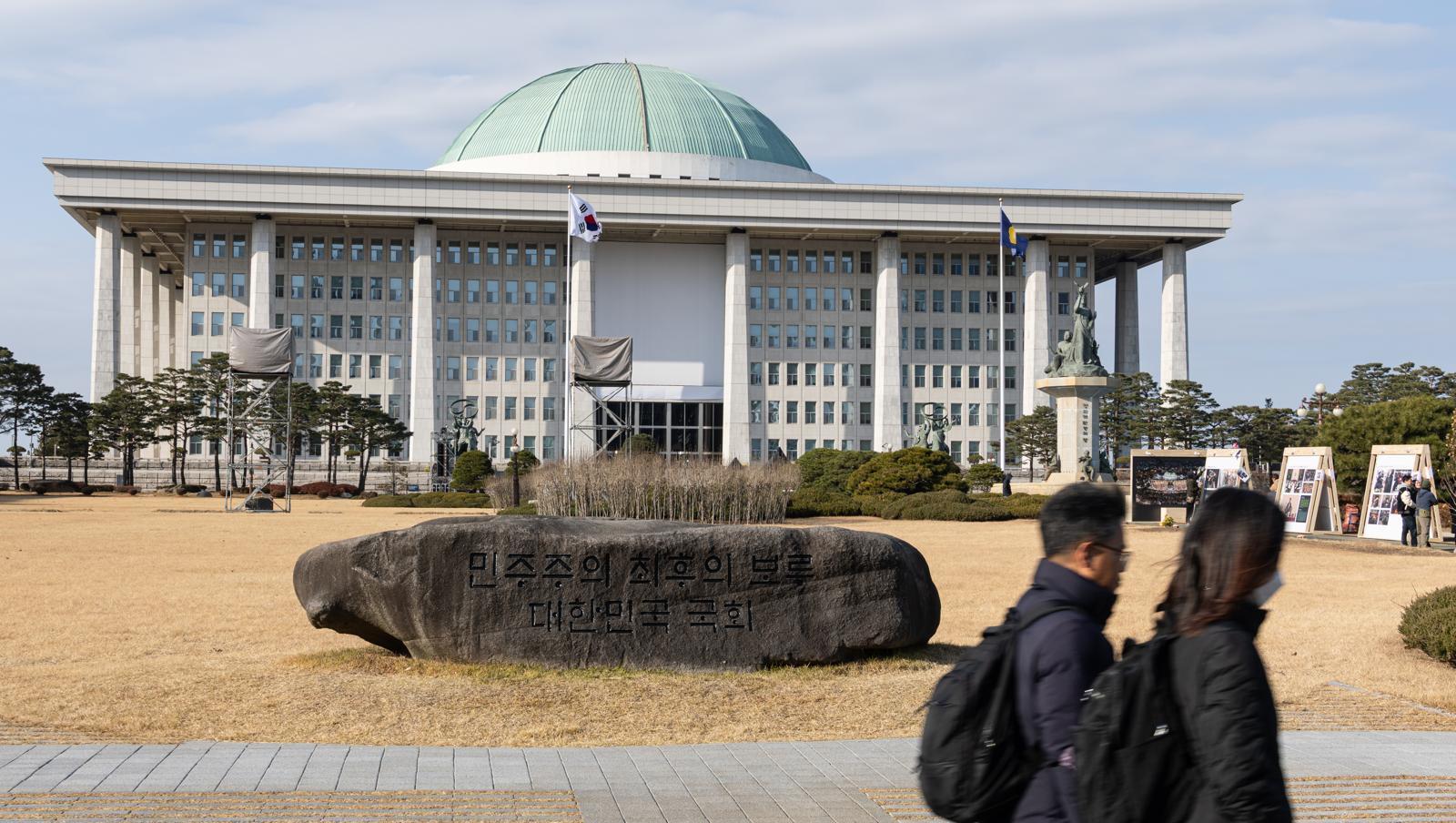
Ruling Parties Defy Public Will After Elections
Translated from Korean, summarized and contextualized by DistantNews.
At a glance
News
Sources not specified
Context piece
- South Korea's ruling parties are acting against the public will expressed in the recent local elections.
- The Democratic Party is considering taking all standing committee chair positions, while the People Power Party's leadership denies responsibility for election losses.
- The election results suggest a need for restraint from the ruling party and transformation from the opposition.
South Korea's major political parties are demonstrating behavior that defies the public's mandate following the recent local elections. The Democratic Party faces accusations of potentially monopolizing all standing committee chair positions in the upcoming parliamentary session, a move reminiscent of their actions after the 2020 general election. This potential move, where committee chairs are typically divided based on proportional representation, risks being perceived as a continuation of the ruling party's unilateral approach.
Meanwhile, the People Power Party's leadership is reportedly refusing to accept responsibility for their significant electoral defeat. Despite the Democratic Party winning 12 out of 16 provincial governorships, the People Power Party's leadership is attempting to frame their loss in the Seoul mayoral election as a success, even though the incumbent mayor, who distanced himself from the party leader, secured victory. Criticism is mounting within the party, with some lawmakers calling for an end to the party leader's claims of election fraud and his focus on a new election.
The Democratic Party is considering taking all standing committee chair positions, while the People Power Party's leadership denies responsibility for election losses.
Both major parties stand at a critical juncture. The public is observing whether the Democratic Party will restore a "politics of consultation" by acknowledging the opposition as a vital partner in governance. Simultaneously, the People Power Party is being watched to see if it can shed its "extreme elements" and fulfill its role as the primary opposition party capable of checking the government.
The election results suggest a need for restraint from the ruling party and transformation from the opposition.
DistantNews Editorial
Originally published by Dong-A Ilbo in Korean. Translated, summarized, and contextualized by our editorial team with added local perspective. Read our editorial standards.
More Stories

From Our Blog

What Gets Lost (and Found) When News Is Translated

The Critical Role of Diaspora Media in Global News

What Travellers Should Know About Countries with Restricted Press

A Digital Nomad's Guide to Following Local News

How the Same Story Looks Different in Different Countries
