


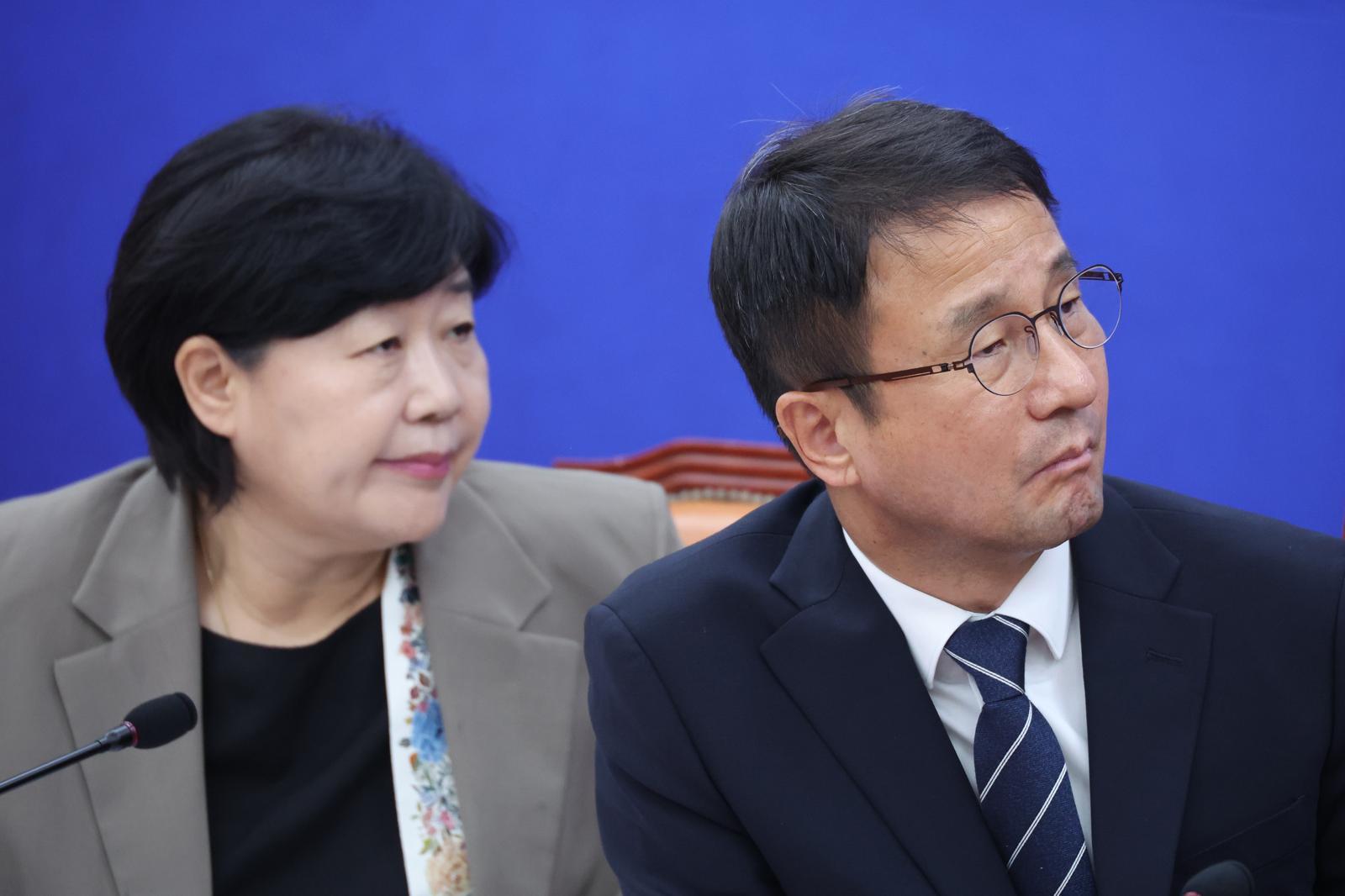
Ruling Party Dismisses Unconstitutionality Claims Over Prosecutor Powers
Translated from Korean, summarized and contextualized by DistantNews.
At a glance
News
Named sources
Approved/passed
- South Korea's ruling Democratic Party dismissed claims that abolishing prosecutors' investigative powers is unconstitutional.
- The opposition People Power Party urged President Lee Jae-myung to exercise his veto power against the revised law.
- The Democratic Party stated that separating investigative and prosecutorial powers has been repeatedly upheld by the Constitutional Court as a legislative matter.
South Korea's ruling Democratic Party has forcefully rejected arguments that the recent abolition of prosecutors' investigative powers is unconstitutional. The opposition People Power Party, however, has escalated its protest, holding a rally outside the presidential office and calling on President Lee Jae-myung to veto the revised Criminal Procedure Act.
Rep. Seo Young-kyo, chairperson of the National Assembly's Legislation and Judiciary Committee, asserted that the Constitutional Court has consistently ruled in favor of legislative authority in similar cases concerning the separation of investigative and prosecutorial powers. She described the revised law as a significant improvement to the Criminal Procedure Act, noting provisions for a "major crimes investigation agency" to probe potential police misconduct.
The revised bill is a much-improved Criminal Procedure Act.
Meanwhile, the Democratic Party's interim leader and floor leader, Han Byung-do, pledged to establish follow-up regulations and detailed guidelines to mitigate confusion arising from the law's implementation. The party also plans to form an internal task force dedicated to strengthening victims' rights. The ongoing dispute highlights a deep political divide over the future of the country's investigative and prosecutorial system.
We promise to establish follow-up regulations and detailed guidelines to reduce confusion in the field.
DistantNews Editorial
Originally published by Dong-A Ilbo in Korean. Translated, summarized, and contextualized by our editorial team with added local perspective. Read our editorial standards.
More Stories


From Our Blog

What Gets Lost (and Found) When News Is Translated

The Critical Role of Diaspora Media in Global News

What Travellers Should Know About Countries with Restricted Press

A Digital Nomad's Guide to Following Local News

How the Same Story Looks Different in Different Countries
