


Ruling Party Lawmakers Voice Concerns Over Prosecution's Investigation Rights Abolition
Translated from Korean, summarized and contextualized by DistantNews.
At a glance
News
Named sources
Ongoing story
- Some lawmakers within South Korea's ruling Democratic Party are expressing concerns about the complete abolition of the prosecution's supplementary investigation rights.
- They argue that the proposed changes to the Criminal Procedure Act need more thorough deliberation to avoid potential miscarriages of justice, particularly for vulnerable victims.
- The party plans to hold a general meeting to discuss the issue, with internal opposition potentially weakening the push for full abolition.
Internal dissent is emerging within South Korea's Democratic Party regarding the complete abolition of the prosecution's supplementary investigation rights. Several lawmakers, particularly those on the Legislation and Judiciary Committee, are voicing concerns that the proposed changes to the Criminal Procedure Act are being rushed and could lead to negative consequences.
The system should not change without sufficient deliberation.
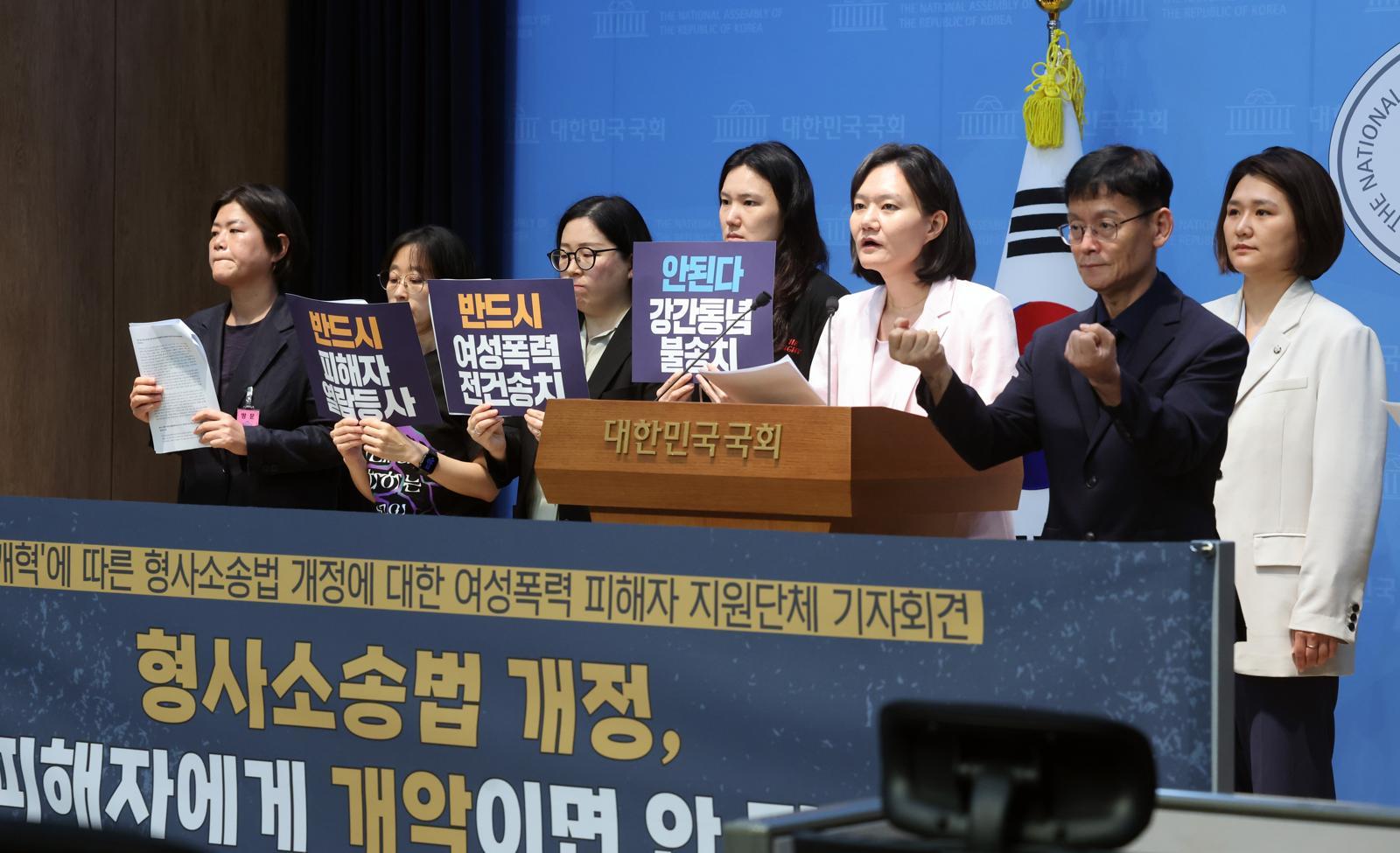
"The system should not change without sufficient deliberation," stated several Democratic Party lawmakers on July 13. This sentiment was echoed by Reps. Kim Nam-hee and Kim Dong-a of the Democratic Party, along with Rep. Son Sol of the Progressive Party, who held a press conference with victim support groups. They emphasized that "even if the direction of reform is right, there should be no unfair victims."
These lawmakers argue that while prosecutorial reform is necessary, the current proposed changes could exacerbate existing problems faced by victims, particularly women and those with disabilities. They point to issues like investigation delays that have occurred since the 2021 adjustment of investigative powers. "We must amend the law in a way that can prevent harm to the public," Rep. Kim Nam-hee urged.
even if the direction of reform is right, there should be no unfair victims.
Rep. Son Sol of the Progressive Party added that "the important thing is the flawless design of the Criminal Procedure Act." She stressed the need for careful consideration to ensure "victims' voices are reflected." Concerns were raised about potential side effects, such as victims having to appeal to the same police force that initially handled the case, even if they have objections. "We take the concerns from the field seriously," Son stated.
We must amend the law in a way that can prevent harm to the public.
The debate comes as the party prepares for a general meeting to gather opinions from its members. Significant opposition within the party could potentially derail the current push for a complete abolition of the prosecution's supplementary investigation rights. Other party members, like Rep. Lee So-young, have argued that given the restrictions on the prosecution's initial investigative powers, allowing them to review and supplement police investigations is a necessary safeguard. The issue remains a point of contention, highlighting the complexities of balancing prosecutorial reform with the protection of victims' rights.
the important thing is the flawless design of the Criminal Procedure Act. Victims' voices must be reflected.
DistantNews Editorial
Originally published by Dong-A Ilbo in Korean. Translated, summarized, and contextualized by our editorial team with added local perspective. Read our editorial standards.
More Stories


From Our Blog

What Gets Lost (and Found) When News Is Translated

The Critical Role of Diaspora Media in Global News

What Travellers Should Know About Countries with Restricted Press

A Digital Nomad's Guide to Following Local News

How the Same Story Looks Different in Different Countries
