


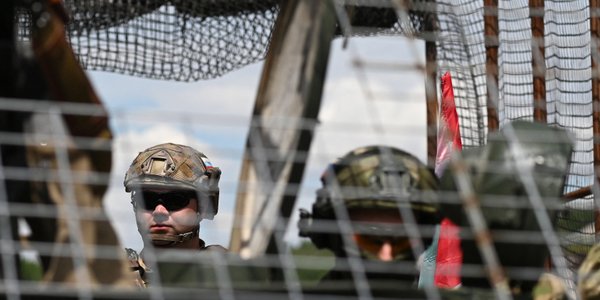
Russia preparing new type of provocation, Polish general warns
Translated from Polish, summarized and contextualized by DistantNews.
At a glance
News
Named sources
Context piece
- A former Polish Air Force inspector warns of a new type of provocation being prepared by Russia against Poland and other NATO countries.
- General Tomasz Drewniak believes Russia is not ready for a full-scale conflict with NATO but is prepared to continue its hybrid warfare tactics.
- He anticipates unconventional actions, possibly under a false flag, to sow fear and division within Poland and the wider alliance.
Russia is preparing a new type of provocation against Poland and other NATO countries, according to General Tomasz Drewniak, former inspector of the Polish Air Force. He assesses the threat to Poland and its allies as "completely real," but does not expect a conventional military incursion.
It won't be a situation where Russian tanks cross the border of the Baltic states, Poland, or any other country. I think it will be another provocation, perhaps under a false flag, or in a way that cannot be directly linked to Russia.
"It won't be a situation where Russian tanks cross the border of the Baltic states, Poland, or any other country," Drewniak told Wirtualna Polska. "I think it will be another provocation, perhaps under a false flag, or in a way that cannot be directly linked to Russia." He explained that Russia is not currently prepared for a full-scale conflict with NATO but remains committed to its ongoing hybrid warfare against Western nations.
The general anticipates novel actions from Moscow, stating, "I expect something that perhaps hasn't happened yet. There have been drones, anchors, cable cuts, and various other incidents. So, I think we can expect another installment of this kind of warfare."
I expect something that perhaps hasn't happened yet. There have been drones, anchors, cable cuts, and various other incidents. So, I think we can expect another installment of this kind of warfare.
Drewniak suggested that a missile attack is unlikely, as it would be difficult to disguise the origin. "You can't do a missile strike under a false flag or pretend it's not our missile, so I think it will be something else," he noted. He emphasized that such provocations should be expected, as Russians are "quite inventive in creating such situations" and intelligence specialists are aware of these plans.
You can't do a missile strike under a false flag or pretend it's not our missile, so I think it will be something else.
This warning echoes recent statements from Poland's Deputy Minister of National Defence, Stanisław Wziątek, who cautioned about potential Russian sabotage and cyberattacks targeting critical infrastructure. Wziątek stated that provocations aim to create fear and disunity within Poland, NATO, and the EU, urging resilience against such tactics. The "Washington Post" also reported that officials have observed signs of Russia actively considering attacks on NATO targets, with the U.S. alerting allies to the threat.
There exists a threat of diversion from Russia. Sabotage incidents may occur, as well as threats to critical infrastructure. Provocations aim to build fear and a lack of unity in Poland, but also in NATO and the EU.
DistantNews Editorial
Originally published by Rzeczpospolita in Polish. Translated, summarized, and contextualized by our editorial team with added local perspective. Read our editorial standards.
More Stories


From Our Blog

What Gets Lost (and Found) When News Is Translated

The Critical Role of Diaspora Media in Global News

What Travellers Should Know About Countries with Restricted Press

A Digital Nomad's Guide to Following Local News

How the Same Story Looks Different in Different Countries
